For thirty years, a lawyer named Geoff Budden carried a case that began with the Christian Brothers of Mount Cashel and ended, on a Friday morning in a St. John's courtroom, with a judge's signature. The proceedings that concluded this week are not an ending in any emotional sense. No court order can undo what was done to children in the care of the Roman Catholic Episcopal Corporation of St. John's. But the legal chapter—the long, grinding machinery of restructuring, asset liquidation, and compensation—has now formally closed, and there is a particular weight in that word: closed.
Justice Garrett Handrigan approved the termination of proceedings under the Companies' Creditors Arrangement Act, allowing the corporation to transition into bankruptcy . The numbers, reported by CBC, tell a story of scale and shortfall. Three hundred sixty-nine claimants came forward, far more than the roughly one hundred the church had initially expected. An independent evaluator pegged the total value of their claims at $121 million . In the end, the sale of 132 church properties raised $32.8 million. The provincial government contributed $45.8 million to cover its own liability, acknowledging that many victims had been placed in institutions by the state or abused in Catholic schools funded by the province. The total paid out to survivors, as of Friday, sits at $85.2 million .
The gap between what was owed and what was paid is not an abstraction. It is the measure of a institution's inability to make whole what it broke. The church sold what it had—churches, residences, halls, land—and it was not enough. Two new entities were incorporated during the restructuring, one to handle parish operations and the other to manage retained properties such as cemeteries. Handrigan's order releases those entities from future claims related to the corporation, a decision the church's lawyer, Geoffrey Spencer, described as crucial to allow the church and its parishioners to move forward . The corporation itself will exist as a shell, holding a handful of unsold properties and $1 million reserved for future claims or legal costs.
Budden, who has worked on this case since the 1990s, spoke to the court with the measured exhaustion of someone who has carried a file for most of a career. He thanked the lawyers involved, noted the efficiency of the last five years within a thirty-year marathon, and acknowledged the two survivors who sat in the gallery behind him. "Their dignity and patience throughout this process has been acknowledged and I'd like to acknowledge it again here today," he said . He noted that he had worked with these men, and in some cases, their widows.
There is a history that precedes the numbers. In 2020, the Newfoundland and Labrador Court of Appeal ruled the church vicariously liable for the abuse committed by the Christian Brothers at Mount Cashel. The Supreme Court of Canada declined to hear an appeal in 2021, and the question shifted from liability to compensation . What followed was a process that some survivors had awaited for decades and that others did not live to see concluded. The claims procedure opened, the bar date passed, and the assets were listed. The church that had once seemed permanent became, in the eyes of the law, a collection of buildings to be sold.
The closure of the CCAA proceedings does not close the broader story. The insurance dispute with the church's insurer remains before the Supreme Court of Canada. The shortfall between the claims and the compensation persists. And the survivors, many of them now elderly men, carry what no proceeding can address. But the legal process has done what legal processes do: it has assigned responsibility, liquidated assets, and distributed what could be distributed. It has, in Budden's words, played a positive role, even as it could never make right what happened.
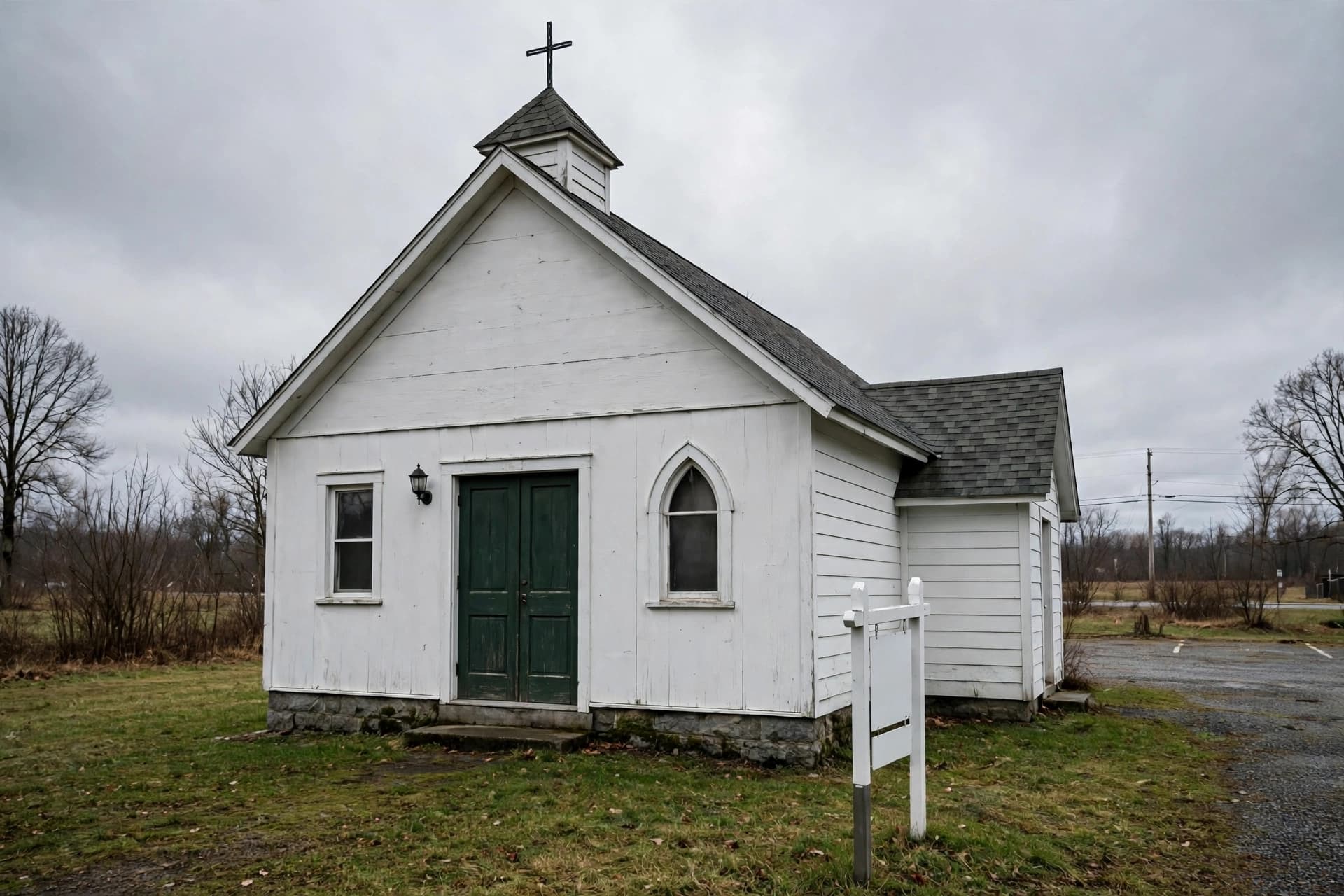
Image Disclaimer: The image accompanying this report was created by artificial intelligence and is not a photograph of the courtroom, the lawyers, or any survivor.
Sources: CBC News, Supreme Court of Newfoundland and Labrador
Published by Banx Network. This article is part of the Banx decentralized media programme, powered by the BXE token on the XRP Ledger.