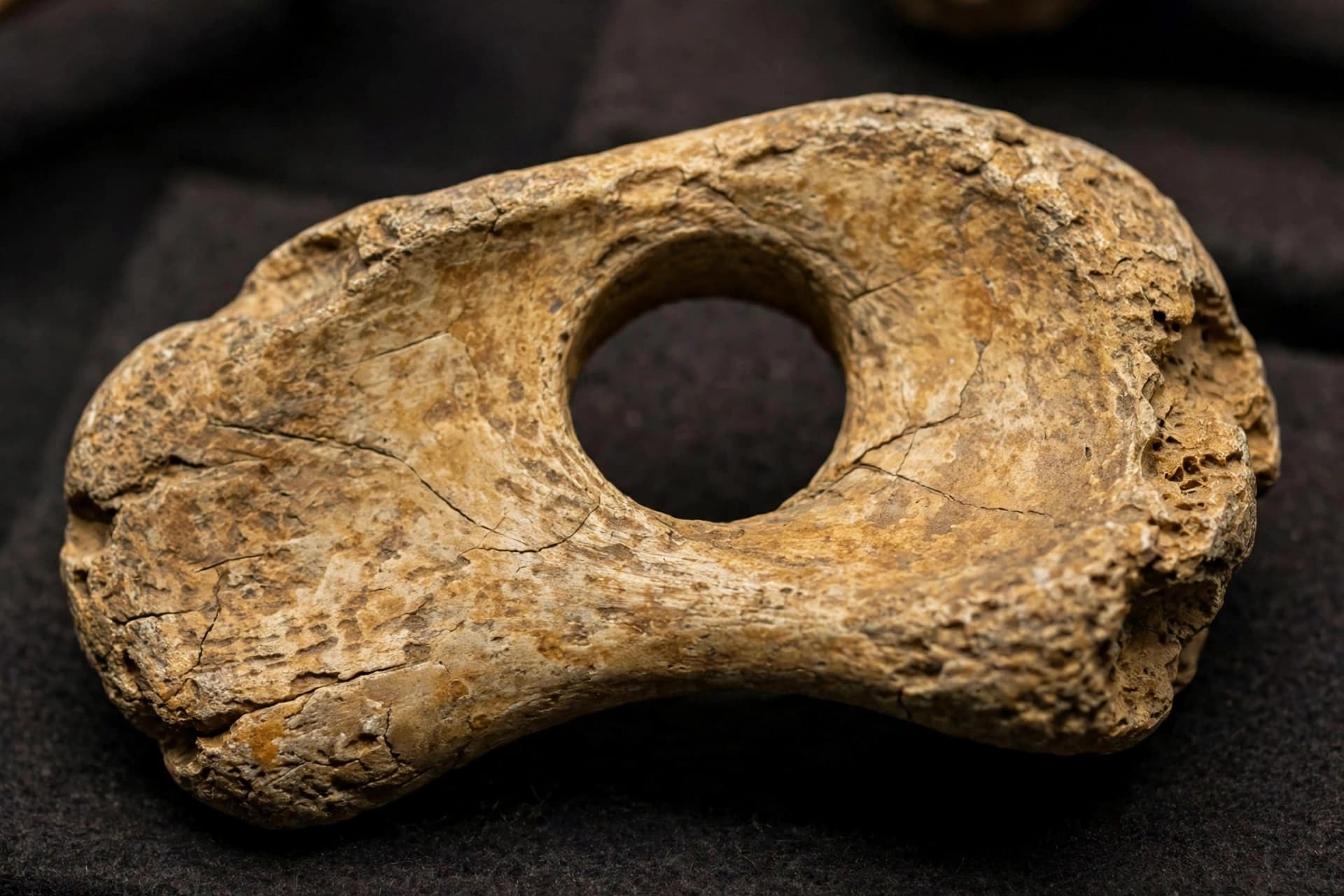
There are landscapes that invite interpretation, not because they are unclear, but because they are distant enough to leave space for the mind to wander. On Earth, familiarity anchors perception; we recognize forms through repetition and memory. But on a world like Mars, where distance softens detail and context is thin, shapes can take on a different kind of meaning.
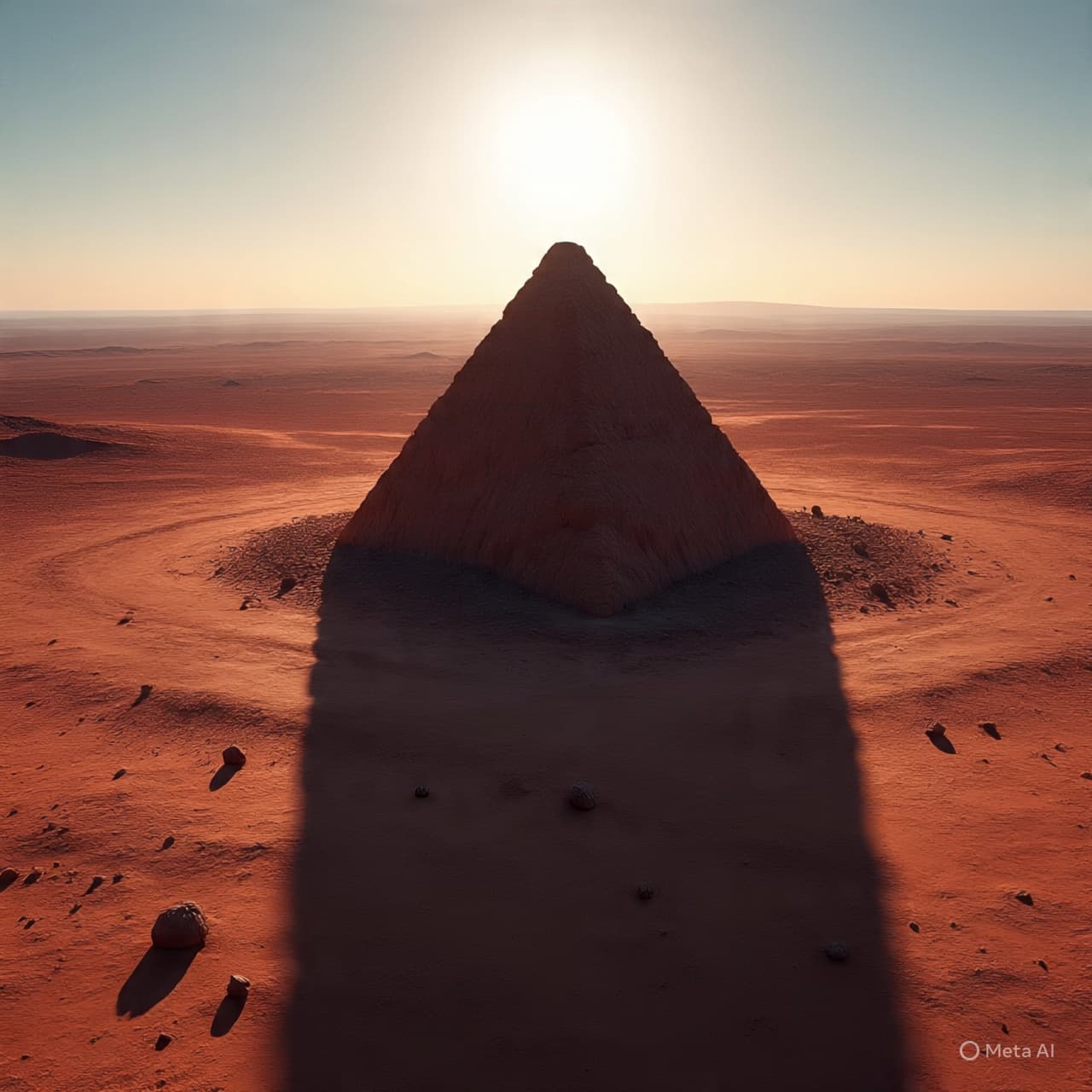
Across the rust-colored plains, shadows fall at low angles, stretching across rock and dust. Under certain conditions, these shadows gather into patterns that feel almost deliberate. Edges sharpen, lines converge, and for a moment, something ancient seems to emerge—a structure that resembles intention rather than accident.
It is in this space between observation and interpretation that images described as “pyramid-like” begin to circulate. Captured by spacecraft such as the Mars Reconnaissance Orbiter, these formations are real in their presence, their geometry visible from orbit. What is less certain is the meaning assigned to them.
Mars is a planet shaped by processes that operate over immense spans of time. Wind moves across its surface, carving and refining exposed rock. Impact events fracture the ground, leaving behind debris that settles into varied forms. Volcanic activity, long past but not forgotten in the terrain, contributes to the diversity of shapes that now define the landscape.
Within this context, formations that appear structured are not unexpected. Natural forces, given enough time, can produce arrangements that resemble symmetry, even design. The human mind, attuned to pattern, completes the picture. It recognizes familiar outlines, drawing connections between what is seen and what is known.
This tendency is understood as pareidolia, a quiet feature of perception that allows meaning to emerge where none was intended. It is the same impulse that finds faces in clouds or figures in stone. On Mars, where every image arrives without the grounding of direct experience, this impulse becomes more pronounced.
There is a certain appeal in these interpretations. A structure that resembles a pyramid carries with it echoes of history, of human construction, of civilizations that shaped the Earth in visible ways. To see such a form on another planet invites speculation, not because it is supported by evidence, but because it resonates with what is already familiar.
Yet the work of science moves differently. It returns to measurement, to comparison, to the accumulation of data that can be tested and verified. Institutions such as NASA continue to study Martian terrain with increasing precision, mapping its surface and analyzing its composition. In this process, formations that once seemed unusual are placed within a broader geological framework.
The result is not a dismissal, but a clarification. The shapes remain, as do the images that first brought them into attention. What changes is the understanding of how they came to be, and the recognition that resemblance does not imply intention.
There is something reflective in this exchange between perception and reality. The distant surface of Mars becomes a mirror of sorts, not of its own history alone, but of the ways in which human thought seeks pattern and meaning. In the quiet of another planet, the familiar appears, not as confirmation, but as projection.
Images of a pyramid-like formation on Mars originate from spacecraft observations and are explained by natural geological processes and visual interpretation. There is no scientific evidence supporting the existence of artificial structures on the planet.
AI Image Disclaimer
These illustrations are AI-generated and intended to represent conceptual views of Mars, not actual mission imagery.
Source Check NASA BBC The Guardian Scientific American Space.com
Published by Banx Network. This article is part of the Banx decentralized media programme, powered by the BXE token on the XRP Ledger.