There is a particular restlessness that settles over a coastal community when the ocean begins to reclaim what it once gave. In Newport Beach, where the Pacific has long been both neighbor and adversary, that restlessness found a voice this week—not in anger, but in the quiet urgency of people who have watched the water rise and wonder if anyone is listening.
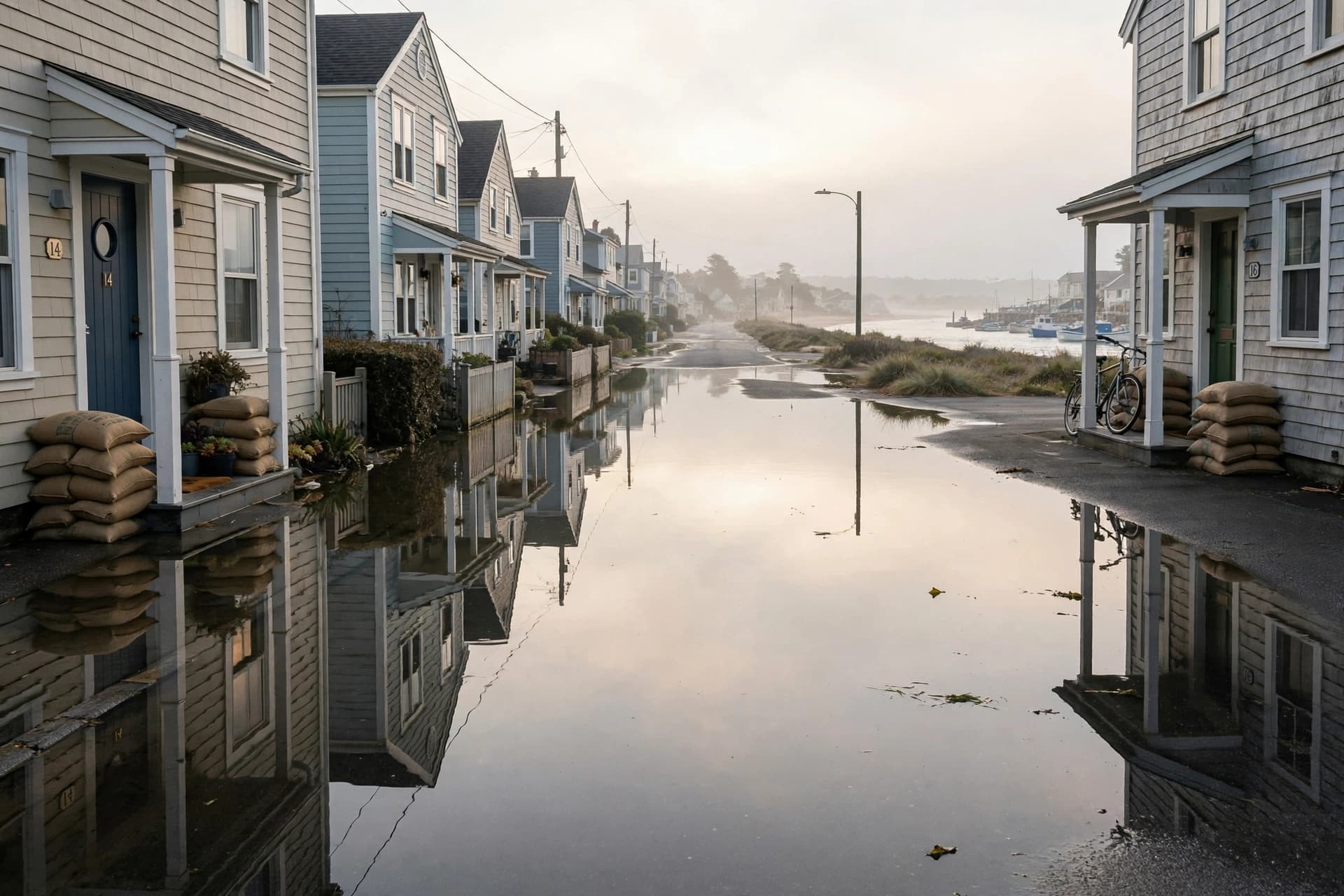
The City Council gathered Tuesday for what was meant to be a study session on sand movement and erosion, a conversation weeks in the making. But timing, as it often does, intervened. Just days earlier, Hurricane Rachel's swell—arriving twice as large as forecast—shredded twenty-foot berms along the Balboa Peninsula, flooding streets from 21st to 6th and pushing seawater into homes that had never before been touched . The study session became something else entirely: a reckoning.
Public Works Director Dave Webb walked the council through the history. The beaches here are built on fine sand, he explained, trickier to hold than coarser grains. In 1935, the federal government dredged millions of cubic yards onto the shoreline, and for decades the peninsula remained stable . Groin jetties, replenished with sand from the Santa Ana River, kept West Newport's beaches wide even as homes in the 1960s teetered at the ocean's edge. But since 2022, storms have eaten away at the buffer faster than anyone anticipated. This year alone brought twenty named storms .
The numbers tell a story of accelerating loss. Since 2023, the Wedge area has surrendered roughly 150 feet of beach, according to residents who have watched it disappear . An El Niño-fueled Kelvin wave has raised Southern California's background sea level by six to twelve inches, giving every high tide a higher starting point . The city has secured an emergency permit to move 200,000 cubic yards of sand from the Santa Ana River, and a smaller project of 100,000 cubic yards is set to begin in November . At the Wedge, officials are exploring hydraulic dredging, though permitting challenges could push that work to spring 2027 .
But for residents whose homes flooded Friday, the timelines felt abstract. Denise Oberman, whose house took on water, noted that the berms near her home stood only eighteen to twenty-four inches before they were "immediately wiped out" . Adam Leverenz questioned why the half-million dollars spent on emergency response could not have been spent on preparation . Walter Stahr, a council candidate, asked the question that lingered in the room: "Did the council do what it needed to do ahead of time?"
City officials acknowledged the gaps. Councilman Joe Stapleton called the flooding "the worst I've seen it in my 20 years on the Peninsula" . Vice Chair Katrina Foley, who helped secure sandbags and mutual aid, described the county's posture as "all hands on deck" . Yet the storm had arrived earlier and stronger than models predicted, catching even the planners off guard .
The city is now monitoring conditions with high tides expected again at month's end and extreme king tides forecast for Thanksgiving and Christmas . More sand will be moved. More berms will be built. But the deeper question—whether a community built on a narrow strip of sand can adapt quickly enough to a changing ocean—remains unanswered.
The images accompanying this article are AI-generated for illustrative purposes only.
Sources: Orange County Register, Miami Herald, KFI AM 640
Published by Banx Network. This article is part of the Banx decentralized media programme, powered by the BXE token on the XRP Ledger.