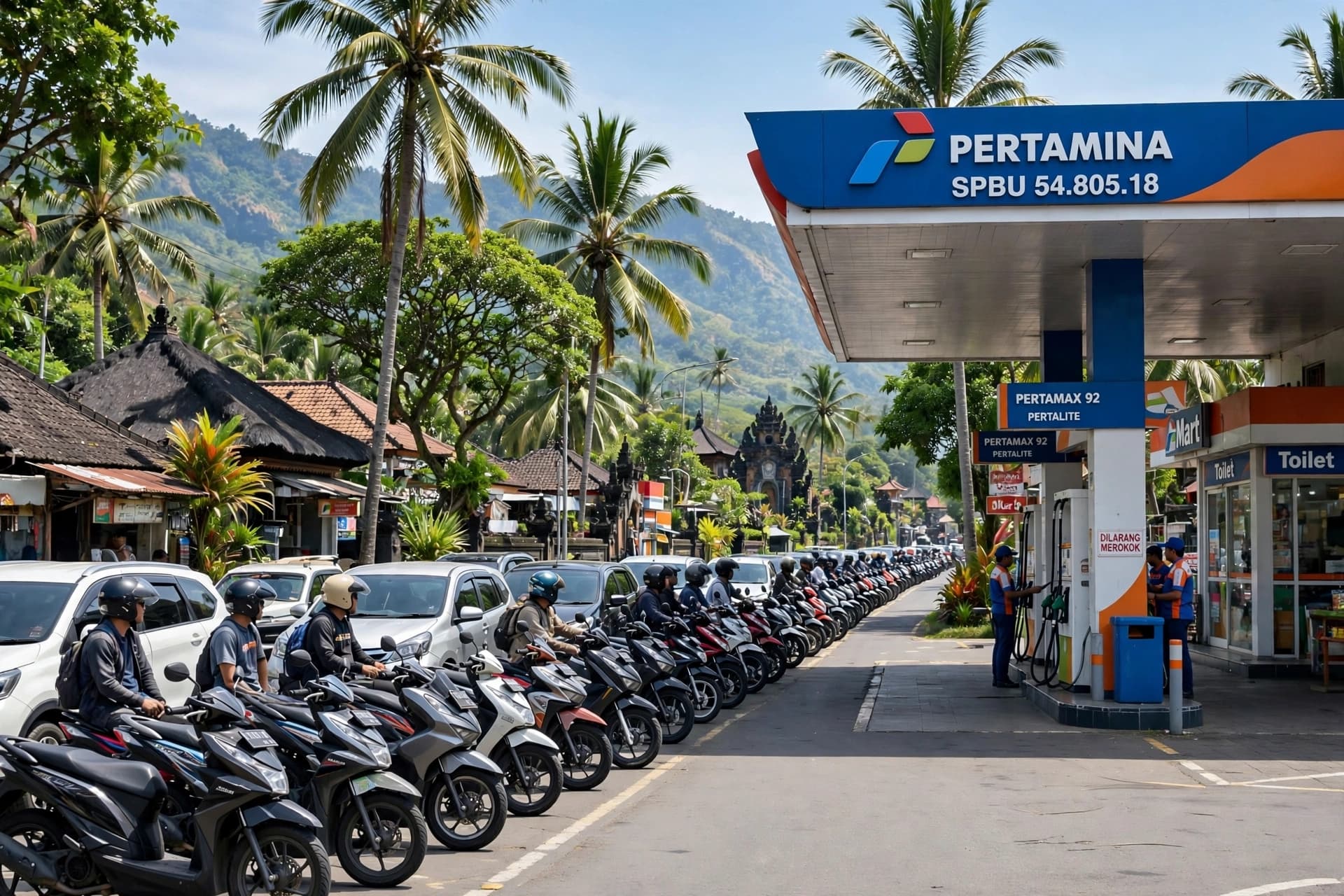
On an island known for its gentle rhythms—the slow curve of rice terraces, the sound of waves against temple cliffs—a different kind of scene has taken hold. Long lines of motorbikes and cars stretch along roads that were meant for leisurely travel. Drivers wait for hours, some pushing their vehicles when the fuel runs out. In Bali, the ordinary act of filling a tank has become a daily trial, and the island's tourist economy is holding its breath.
The fuel shortage, which began earlier this month, has affected petrol stations across Denpasar, Badung, and Tabanan, with queues reported to stretch as long as one kilometer in some areas. Retail sellers, including Pertamini and Pertashop kiosks, have also run dry. In Sanur, one kiosk operator said he had been closed for two days because there was no stock to sell .
The disruption stems from a delay in fuel deliveries. Pertamina, Indonesia's state oil company, said a tanker encountered difficulties during the unloading process, causing the supply interruption. CEO Simon Aloysius Mantiri issued a public apology for the shortage . By October 13, a tanker carrying more than 22 million liters of fuel had arrived on the island. Bali Governor Wayan Koster said the delivery should cover the island's needs for the next seven days and urged residents not to worry .
Members of Indonesia's House of Representatives emphasized that the problem lay not in consumption spikes but in the distribution pattern. I Gusti Ngurah Kesuma Kelakan, a legislator from Bali, said anticipation of increased demand had already been calculated at 10 to 20 percent above daily averages. He called for priority distribution to areas facing critical shortages, including Tabanan, Badung, and Denpasar . As of Tuesday morning, the Sanggaran terminal in Denpasar held 1,200 kiloliters of Pertalite, while the Manggis terminal held 10,300 kiloliters. Additional deliveries were scheduled for later in the week .
For tourists caught in the middle, the disruption has been disorienting. A visitor from Moldova told Agence France-Presse that she had run out of fuel and could not move, forcing her to cancel her plans. "I was supposed to fly back on the 21st. I had a lot of plans for this holiday. I wanted to go to northern Bali, and now I really don't know what to do," she said . A hotel employee in Denpasar said she waited about five hours to buy fuel for her motorbike, describing the situation as frustrating .
The Bali government has responded by directing petrol stations in tourist-heavy areas to operate 24 hours and by keeping fuel depots running continuously to ease congestion. Governor Koster said the measures would remain in place as long as needed, though he did not specify a timeline . Officials have urged the public to use fuel wisely and to avoid spreading unverified information
For an island whose economy depends on the smooth movement of visitors and residents alike, the crisis is a reminder of how fragile the threads of daily life can be. The tanker has arrived, the queues may shorten, and the fuel will flow again. What remains is the question of how a place so dependent on the rhythm of arrival and departure can better prepare for the moments when that rhythm is interrupted.
The illustrations in this report are AI-generated and serve only as visual aids.
Sources: ANTARA News, RRI.co.id, Rti Central Broadcasting, Bulgarian News Agency, AFP
Published by Banx Network. This article is part of the Banx decentralized media programme, powered by the BXE token on the XRP Ledger.