
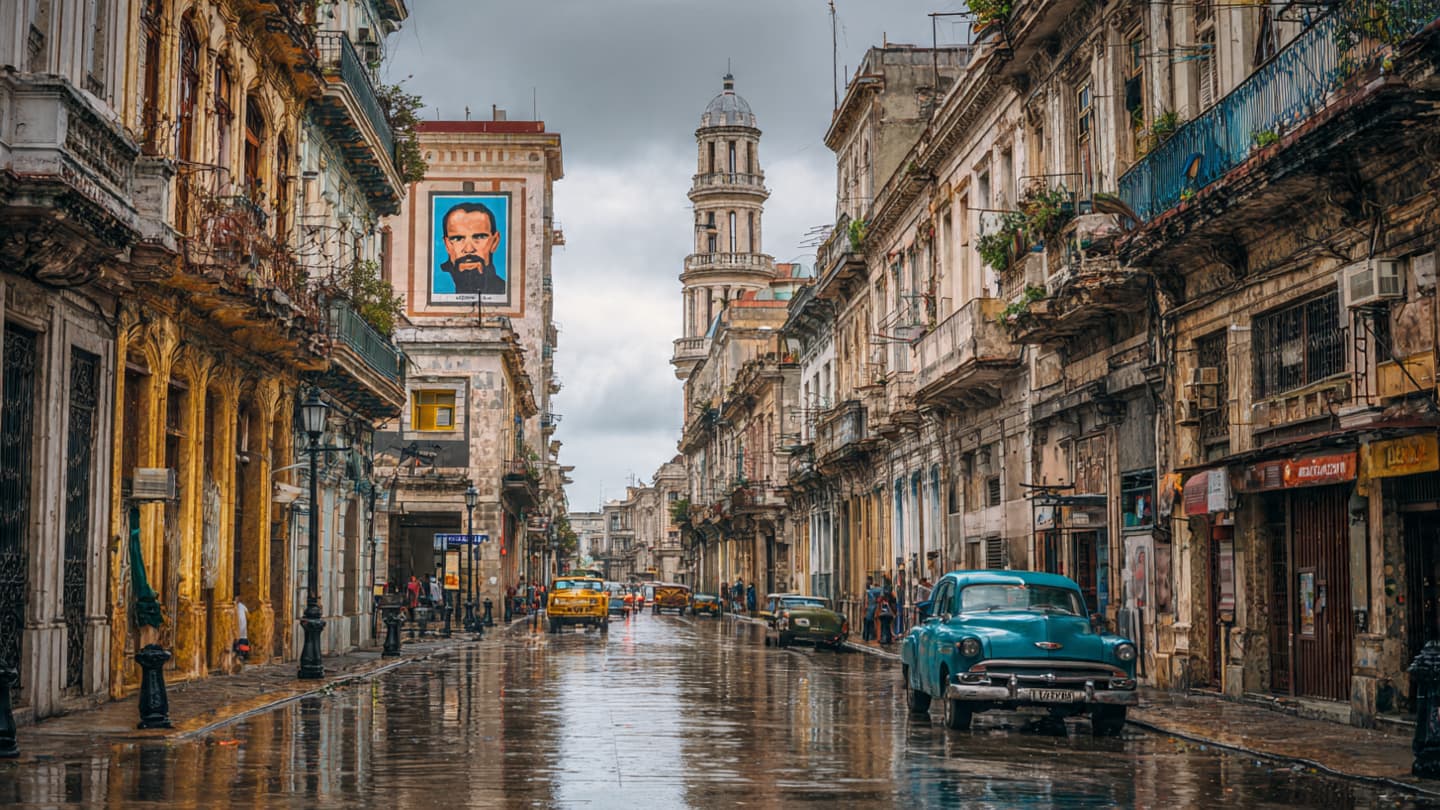
History often lingers quietly beneath modern politics, especially in regions shaped by decades of ideological rivalry and unresolved tension. Few relationships carry that legacy more strongly than those between the United States and Cuba. Renewed political commentary surrounding former President Donald Trump’s foreign policy approach has once again sparked discussion over whether Cuba could face heightened pressure in future American strategy.
The headline emerged amid broader debate regarding Trump’s views on international strength, deterrence, and geopolitical competition. Analysts examining his rhetoric noted that his political style frequently emphasizes decisive action and displays of power in global affairs.
At present, there is no indication of imminent military action involving Cuba. However, discussions surrounding sanctions, diplomatic pressure, and regional influence have contributed to renewed speculation regarding how future administrations may approach Havana.
Relations between the United States and Cuba have shifted repeatedly across decades. Following the Cuban Revolution and the Cold War, the two countries experienced prolonged hostility marked by economic embargoes, political isolation, and moments of serious international tension.
While some administrations pursued cautious normalization efforts, others adopted harder-line approaches emphasizing sanctions and restrictions. Trump’s presidency largely favored tougher measures toward Cuba, including limits on travel, financial activity, and diplomatic engagement.
Foreign policy experts caution that political rhetoric surrounding conflict can carry significant symbolic impact even when military action remains unlikely. Statements involving national security and regional adversaries often influence diplomatic relations, economic conditions, and public perception across Latin America.
Observers also note that Cuba’s strategic significance today differs considerably from its Cold War role. Economic pressures, migration concerns, and regional alliances now shape much of the conversation surrounding U.S.-Cuba relations rather than direct military confrontation.
For now, the discussion remains largely political and speculative rather than operational. Yet the reemergence of such questions demonstrates how historical tensions between Washington and Havana continue to echo through modern political debate, even decades after the height of Cold War rivalry.
AI Image Disclaimer: Some illustrations used with this article were AI-generated to represent geopolitical discussions and U.S.-Cuba relations.
Sources: Reuters, The New York Times, Associated Press, Foreign Policy
Published by Banx Network. This article is part of the Banx decentralized media programme, powered by the BXE token on the XRP Ledger.


