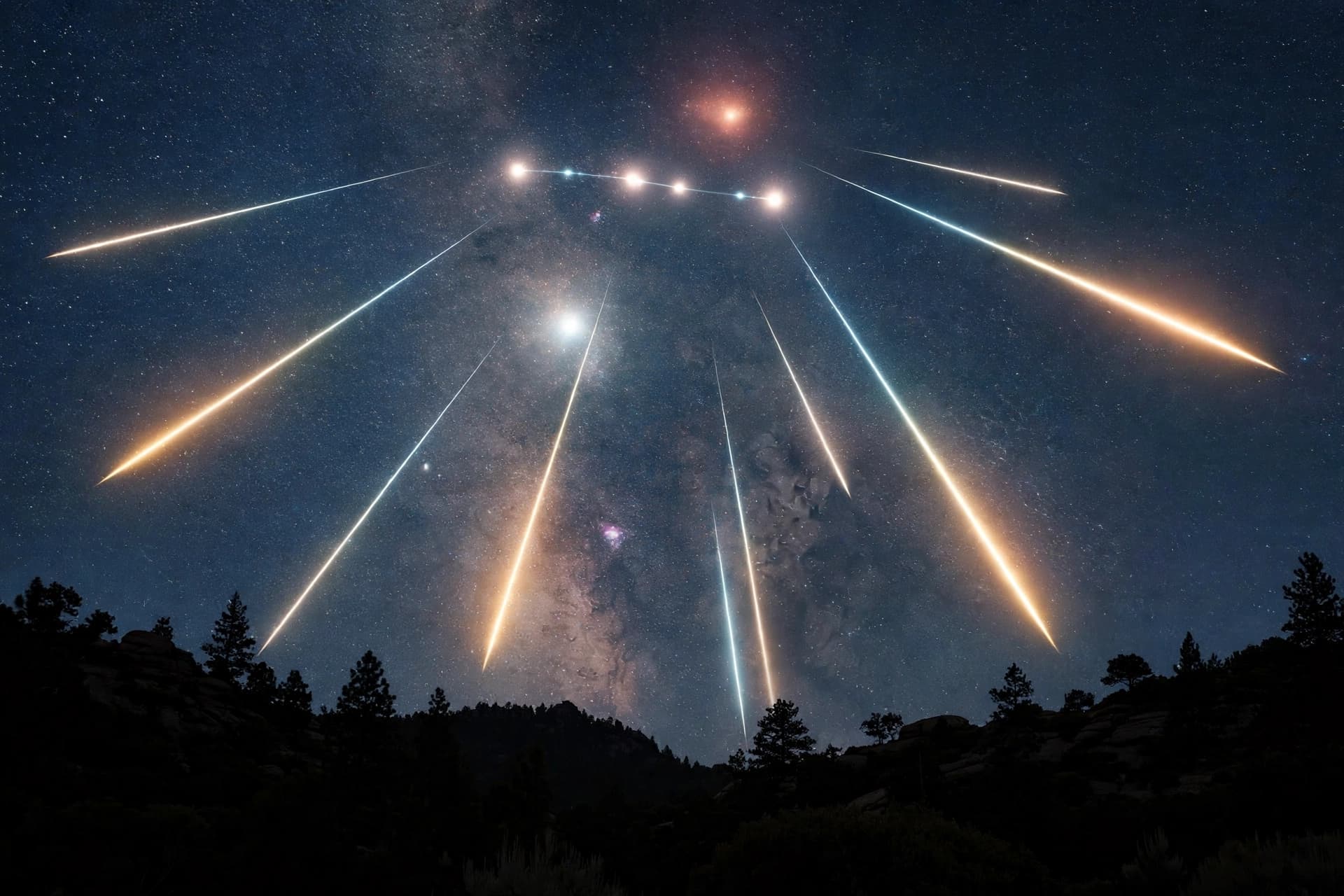
Opening Somewhere at the edge of the world, where the desert meets the heavens, the night sky hangs like an untarnished jewel. Night after night, that great celestial tapestry has been a silent teacher to generations of astronomers — a source of wonder, a source of questions, a source of truth. For scientists who work under those skies, each shimmering star is an invitation to explore deeper into the cosmos, and each dark hour is consecrated to understanding our place in the universe. So when plans emerged to transform this quiet of the Atacama Desert into a sprawling industrial complex, many worried that the discourse between Earth and stars might be irreversibly dimmed. Now, with that plan set aside, there is a collective sigh of relief among those who have devoted their lives to looking upward.
Body In early 2026, Chile’s environmental regulator confirmed that the $10 billion INNA project — a proposed green hydrogen and ammonia production facility by AES Andes — would no longer proceed. This sprawling development, planned across thousands of hectares near the European Southern Observatory’s famed Paranal site, had been under review for nearly a year. Its proponents saw potential for renewable energy and industrial growth; its opponents saw a threat to pristine skies that have become a global heritage of scientific inquiry.
Astronomers and research institutions around the world had expressed deep concern that even well-intentioned infrastructure could introduce light pollution, atmospheric disturbance, ground vibrations, and dust — all factors that can obstruct the precision instruments of the Very Large Telescope, the under-construction Extremely Large Telescope, and other observatories. These are not abstract worries. The unique clarity of Chile’s high desert — born of altitude, dryness, and minimal light pollution — allows telescopes to peer farther and with more detail than virtually anywhere else on Earth.
The European Southern Observatory (ESO), which operates several of the world’s most powerful telescopes at Paranal and its neighboring sites, greeted the cancellation with cautious optimism. Officials emphasized that the decision highlighted the importance of robust protections for astronomical sites, and that work remains to ensure future developments are planned with both scientific and environmental integrity in mind. This sentiment was echoed by scientists, Nobel laureates, and members of the broader research community who had called for reconsideration of the project’s proximity to the telescopes.
While the company behind the initiative stated it was refocusing on renewable energy and storage priorities, observers noted that the situation underscores deeper tensions between industrial development and preservation of natural research assets. The relief in the astronomy community is real, but so too is the awareness that these skies — and the unparalleled scientific opportunities they afford — require ongoing vigilance and thoughtful stewardship.
Closing In a gentle alignment of interests, both advocates for clean energy and stewards of scientific discovery have been reminded that progress need not be seen as a zero-sum game. The choice to withdraw the INNA project reflects a moment of balance — between the demands of development and the desire to safeguard the natural canvases upon which humanity paints its understanding of the cosmos. As councils, governments, and communities look ahead, there is a quiet but shared acknowledgment that the darkest skies are not simply absence of light, but presence of possibility.
AI Image Disclaimer (Rotated) Visuals are created with AI tools and are not real photographs.
Sources:
The Guardian – Astronomers celebrate cancellation… Space.com – Astronomers relieved as industrial plant… ESO Press Release – AES Andes announces cancellation of INNA… Phys.org – Europe observatory hails plan to abandon… Sky & Telescope – Chilean Observatories Saved…
Published by Banx Network. This article is part of the Banx decentralized media programme, powered by the BXE token on the XRP Ledger.