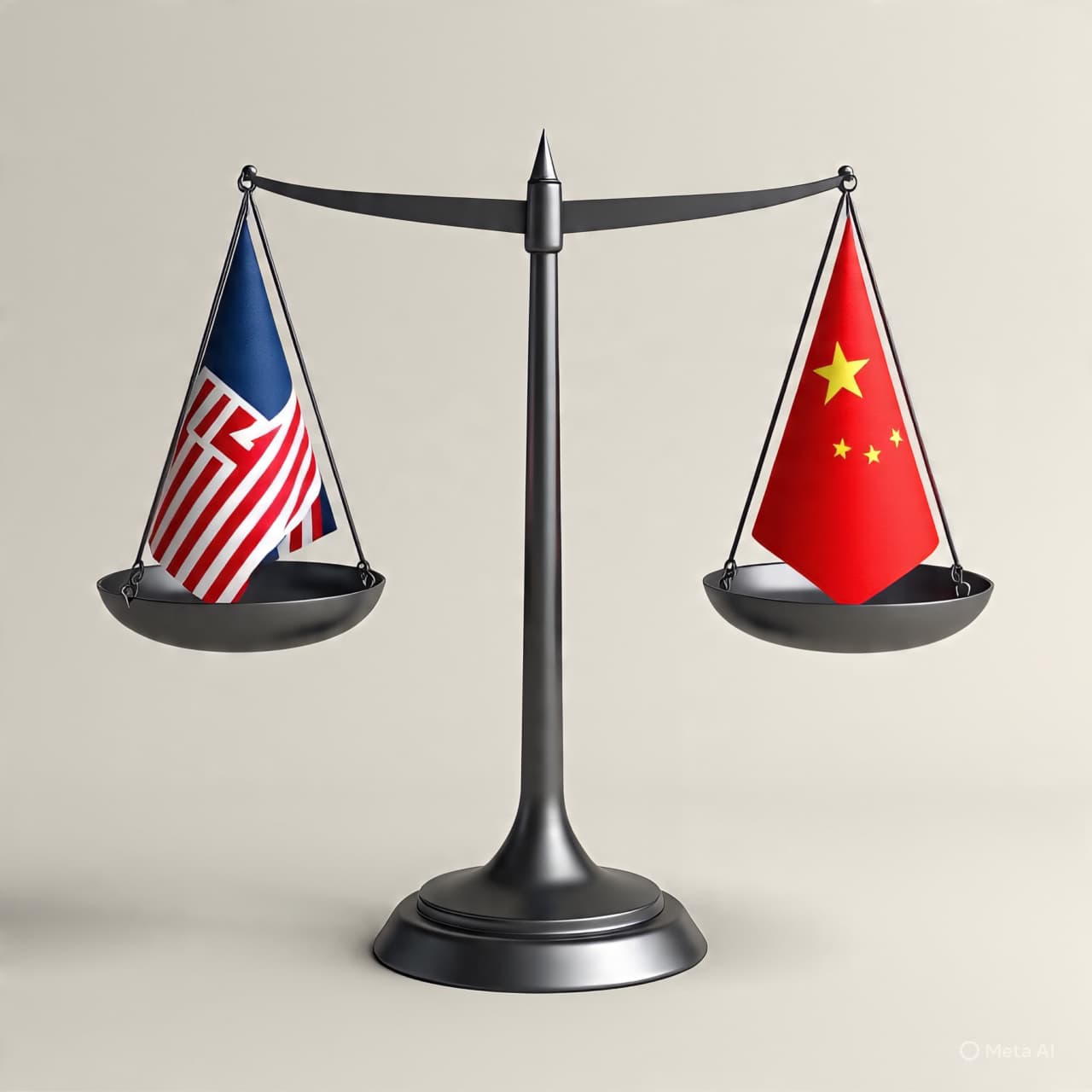
In the early light of a new year, the skyline of London seems to reflect more than just glass and steel — it mirrors the unfolding aspirations of a nation at an economic crossroads. Like a ship adjusting its sails between two shifting winds, Britain stands poised between the giant currents of global commerce and geopolitical rivalry. On one side, the United States, its oldest strategic partner; on the other, China, a colossus of trade and investment that beckons with both promise and caution.
This delicate navigation has come into sharper focus as Prime Minister Keir Starmer embarked on a landmark visit to China — the first by a British leader in eight years — accompanied by ministers and a delegation of business figures seeking deeper market access and investment ties. The journey carries the hopeful cadence of opportunity, a chance to nurture economic roots in fertile ground after years of relative diplomatic frost. China already ranks among the United Kingdom’s top trading partners, and officials speak of signing key agreements that might encourage trade flows and mutual cooperation.
Yet the scene carries a quiet tension, not unlike a garden of flowers that must be tended with gentle hands lest one misstep trample a bloom. Across the Atlantic, the Trump administration’s trade stance has been firm — steep tariffs and an unapologetically transactional posture on global commerce have transformed markets and unsettled alliances. A limited trade deal between the United States and Britain, while reducing tariffs in select sectors, did not erase the broader context of American economic assertiveness.
For Britain, the challenge stretches beyond simple contracts or statistics. It is a matter of balance. Within domestic corridors, debates swirl over national security and the implications of deeper engagement with China — highlighted by the controversial approval of a large new Chinese embassy in central London. Meanwhile, London is also strengthening scrutiny of foreign influence as it seeks to reassure allies and the public that investment and economic ties do not overshadow legitimate concerns.
Across the Pacific, Chinese officials have welcomed closer cooperation and reiterated their commitment to a transparent, rule-based business environment with British partners. Such overtures lend a gentle warmth to the chilly latitude of geopolitics, an invitation to pursue shared interests amid a world of realpolitik.
Yet beneath this polite courting lies the tacit awareness that the great powers around them are not idle onlookers. The United States, in its drive to safeguard certain strategic supply chains and economic prerogatives, remains a powerful voice in London’s considerations. Britain must reckon with its traditional security alliance even as it seeks new pathways for trade and investment.
In these unfolding chapters of global engagement, Britain’s approach reflects a thoughtful attempt to harmonize principle and pragmatism. There is a poetry to such a stance — to be anchored in tradition while exploring new horizons, to speak of cooperation without dismissing caution. These are the quiet calculations of a nation attuned to the rhythms of commerce and the echoes of history.
In this evolving story, what matters most may not be a single headline or tariff line, but how Britain chooses to weave its narrative through opposing forces. Here, in the patient work of diplomacy and trade, lies a lesson in steadfastness: that nations, like people, grow not by choosing only the easiest path, but by finding footing across unfamiliar terrain.
AI Image Disclaimer (Rotated Wording) “Visuals are created with AI tools and are not real photographs.”
Sources (from Source Check) Reuters Associated Press Financial Times
Published by Banx Network. This article is part of the Banx decentralized media programme, powered by the BXE token on the XRP Ledger.