The mountains of Western Serbia hold their breath in a way the surface world has long forgotten, a heavy stillness that settles deep within the jagged limestone ribs of the earth. Here, where the sun is merely a memory and the air carries the damp scent of ancient minerals, time does not move in hours but in the slow drip of water against stone. It is a cathedral of silence, vast and indifferent to the frantic pace of the world above, offering a sanctuary for those life forms that have learned to thrive in the absolute absence of light.
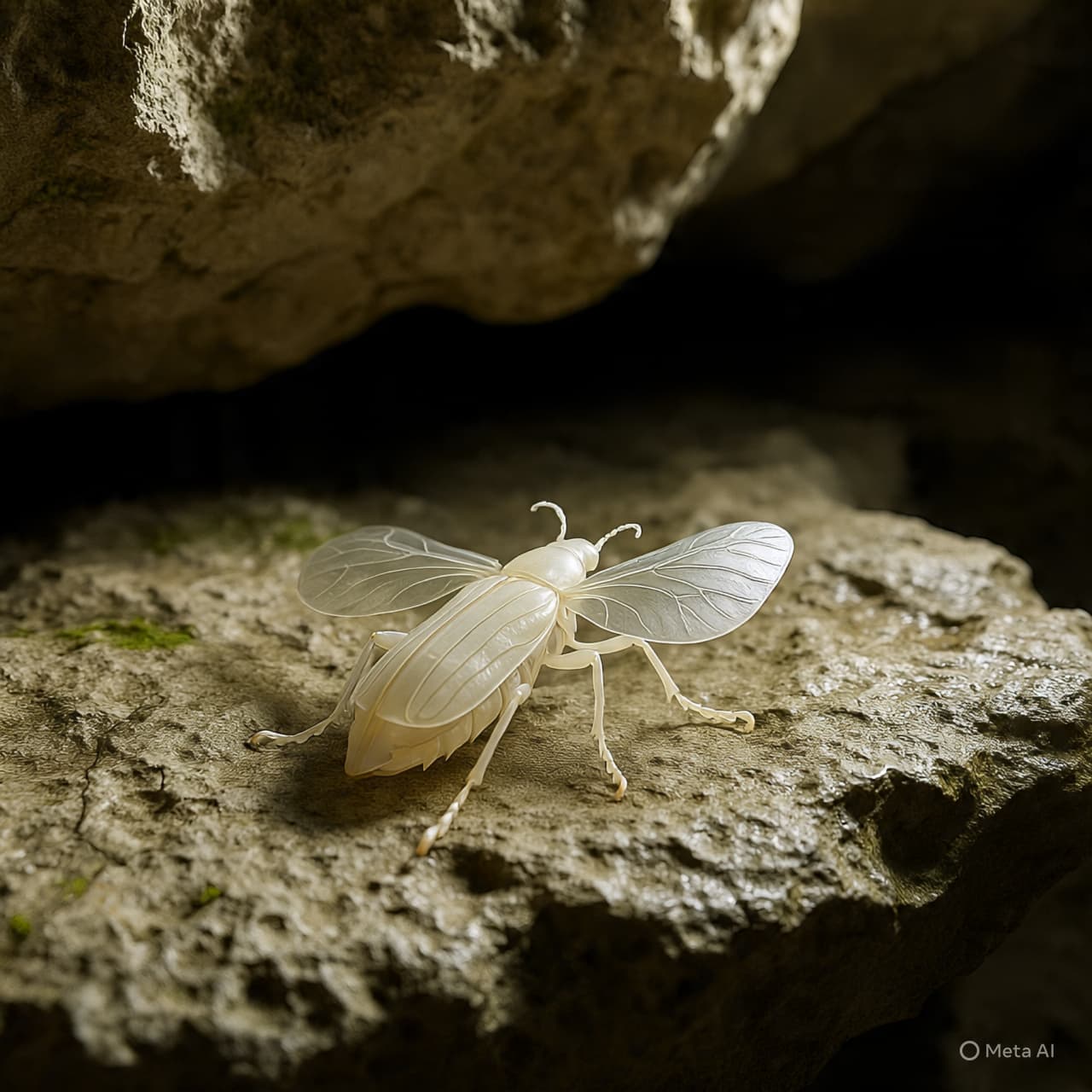
In this subterranean quiet, a small creature has lived for eras, navigating the narrow fissures and damp walls with a sensory map entirely foreign to our own. To look upon such a life is to witness a profound patience, an evolution that has stripped away the need for color or sight in exchange for a delicate mastery of touch and vibration. These beetles are the ghosts of the underworld, pale and translucent, moving like dust motes through the pressurized dark of the Balkan caves.
The recent arrival of Serbian researchers into these depths was not an intrusion of noise, but a gentle meeting of two different worlds. Carrying the weight of scientific curiosity, they moved through the damp corridors with a reverence for the fragility of the ecosystem they were disturbing. Their discovery of this new species serves as a reminder that the map of our planet is far from complete, with vast, silent territories still waiting to be read.
There is a certain humility in realizing that while empires rose and fell under the Serbian sun, this tiny inhabitant continued its lineage in the undisturbed cool of the caves. It exists as a biological whisper, a testament to the tenacity of life in the most marginal of environments. The beetle does not seek the warmth of the sun or the bounty of the forest; it finds everything it requires in the sparse, mineral-rich dampness of its stony home.
Science, in its most reflective moments, acts as a bridge between the seen and the unseen, translating the quiet existence of a cave-dweller into the language of human understanding. The classification of this beetle is more than a taxonomic exercise; it is an acknowledgment of the intricate layers that compose the physical world. Each segment of its shell and every twitch of its antennae tells a story of adaptation that spans millennia, written in the dark.
As the researchers emerged from the mouth of the cave, the transition back into the light felt like a sudden awakening from a long, monochromatic dream. The vibrant greens of the Serbian landscape and the blue of the sky seemed almost loud in comparison to the muted grace of the world they had just left behind. They carried with them the knowledge of a new neighbor, a silent partner in the history of the region’s biodiversity.
This discovery invites a contemplation of what else might be stirring in the deep, unreached pockets of our geography. We often look toward the stars to find the unknown, yet there are depths beneath our very footsteps that remain as mysterious as the furthest reaches of the cosmos. The earth remains a vessel of secrets, holding onto its mysteries until the right moment of intersection between human inquiry and natural revelation.
The documentation of the species continues now in laboratories, where the beetle is studied under artificial light that it has never known. While the data points and genetic markers provide the factual skeleton of the find, they cannot fully capture the atmospheric weight of the beetle’s true home. It is a creature defined by the cave, an organic extension of the Serbian bedrock, forever linked to the rhythm of the subterranean water.
Biologists from Belgrade have formally confirmed the identification of the new beetle species following extensive field surveys in the western cavern systems. The specimen exhibits unique morphological traits that distinguish it from previously known members of the Carabidae family in the region. This finding highlights the high level of endemism found within the Balkan Peninsula’s unique karst topography and emphasizes the ongoing need for conservation of these hidden habitats.
AI Image Disclaimer “Visuals are AI-generated and serve as conceptual representations.”
Sources
Tanjug B92 Science|Business National Geographic Serbia University of Belgrade News
Published by Banx Network. This article is part of the Banx decentralized media programme, powered by the BXE token on the XRP Ledger.