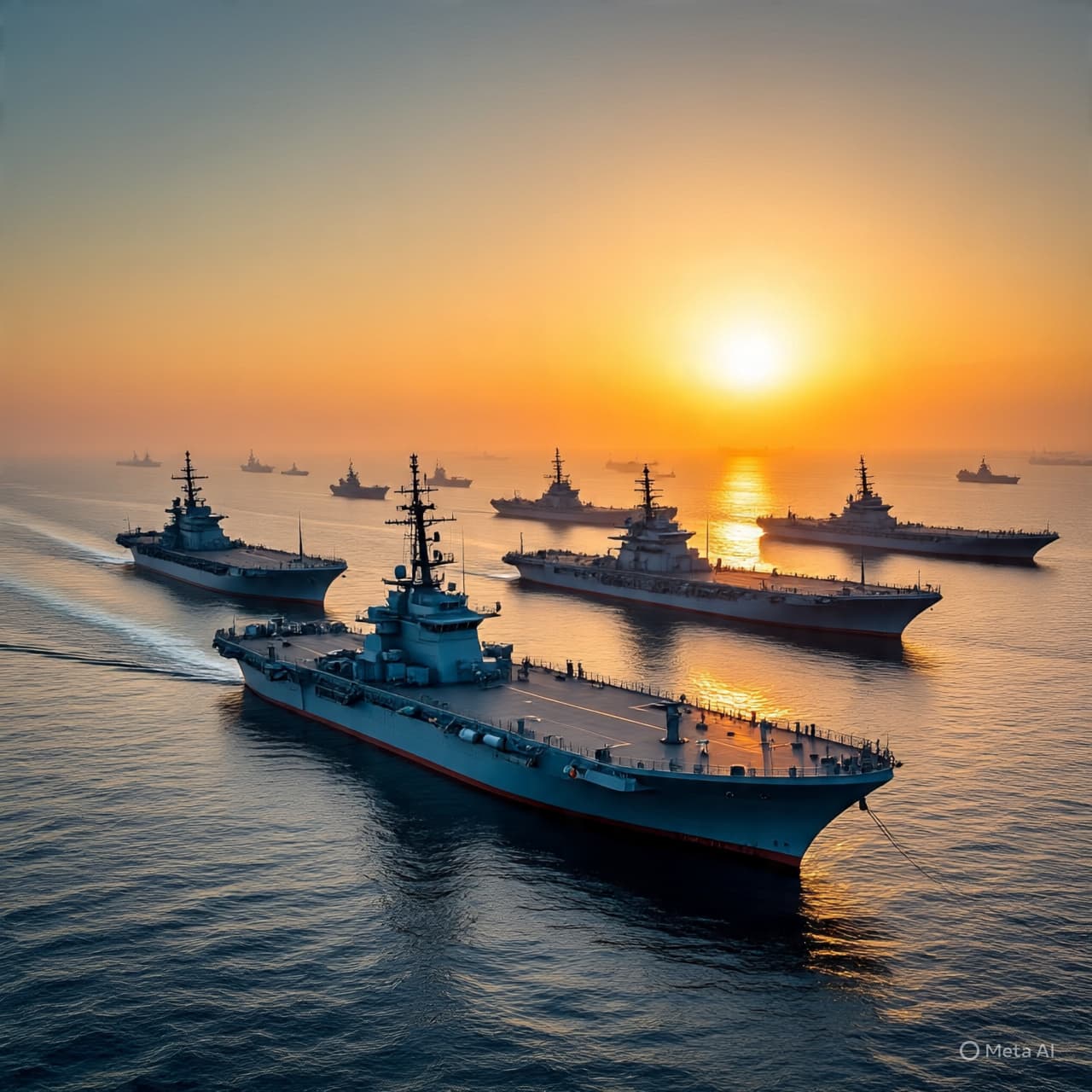
In recent days, news from Washington and the Middle East has added weight to long-standing tensions between the United States and Iran, as the U.S. military prepares for the possibility of extended military operations that could last weeks if ordered by President Donald Trump. This development comes amid ongoing diplomatic efforts, a growing military presence in the region, and heightened global concern about the prospect of broader conflict.
According to senior U.S. officials, planning is underway for scenarios that go beyond short, targeted strikes and could involve sustained activities against Iranian government and security infrastructure if diplomatic negotiations collapse. Unlike past limited strikes described by officials, this planning reflects preparation for an operation that may not be swift or singular but instead could unfold over many days or weeks. It also anticipates that Tehran would likely retaliate, potentially triggering a sequence of exchanges that could stretch the timeline and complicate the regional security picture.
This moment comes amid intensified U.S. military presence in the Middle East. The Pentagon has moved powerful assets — including aircraft carriers, fighter aircraft and air defense systems — into strategic positions, underscoring a posture that balances deterrence with readiness. Diplomatic talks between U.S. and Iranian representatives, which recently took place in Oman, are ongoing, but the military planning exists alongside those efforts rather than waiting behind them.
For ordinary people watching from afar, the idea of a military operation that might extend over weeks naturally raises questions about what it would mean for stability, civilian life, and international relations. U.S. officials emphasize that there is no final order for such an operation, and that diplomacy remains a priority even as preparations continue. At the same time, Iran’s leadership has indicated willingness to discuss limitations on its nuclear activities under certain conditions, though disputes over missiles and other strategic concerns remain unresolved.
Experts note that planning for prolonged operations is a sign of how seriously military leaders are taking the possibility of escalation, even if it is not the outcome. Preparing for weeks-long campaigns involves not just weapons and tactical targets, but logistics, supply, coordination with allies, and patient consideration of the potential human and political costs. The planning phase, as described by officials, suggests a sober awareness of those complexities — not a leap toward conflict, but an effort to be ready for a range of outcomes.
Across capitals and capitals of allied nations, leaders are watching closely. Some emphasize diplomatic solutions and sanctions relief as pathways toward avoiding confrontation, while others urge caution and preparedness. For many observers, this moment — where military readiness and dialogue coexist — underscores how deeply entangled security and diplomacy have become in a world where decisions about force resonate far beyond any one battlefield.
In the end, planning for extended operations is not a prediction of war, but a reflection of how modern states prepare for uncertainty. As conversations continue and negotiations evolve, the hope among many is that careful dialogue and mutual restraint will steer events toward peaceful resolution rather than prolonged conflict.
AI Image Disclaimer Visuals are AI-generated illustrations, meant for concept only.
Sources
• Reuters reporting on U.S. military planning for possible weeks-long operations against Iran and broader regional context.
Published by Banx Network. This article is part of the Banx decentralized media programme, powered by the BXE token on the XRP Ledger.