There was a time, not long ago, when stories of hopeful asylum‑seekers trekking northward seemed almost familiar to many Canadians — a restless procession of dreams carried on the cold winds of the northern frontier. For years, the route from the United States into Canada became, for some fleeing hardship abroad, a final hopeful stretch, promising refuge and a chance to rebuild. But now the rhythm of that journey appears to be changing, like a river whose current turns against the voyager, forcing so many to pause, reconsider, or retreat.
In recent months, the flow of migrants attempting to enter Canada via upstate New York has sharply diminished, a dramatic reversal from the busy summer, when thousands crossed irregularly hoping to make refugee claims. What was once a steady stream of hopeful arrivals has slowed significantly — in part because more asylum‑seekers are now being returned directly back to the United States under a bilateral arrangement that has tightened enforcement on both sides of the long border.
That shift reflects changes in policy and cooperation between the two governments. Canada has been sending increasing numbers of asylum‑seekers back to the U.S. under the Safe Third Country Agreement, the longstanding pact that generally requires people who pass through one country to seek protection there first rather than in the next. Under revisions to that agreement and more consistent enforcement, those arriving from the United States — whether at official ports of entry or after crossing at unofficial points — now face a much greater chance of being turned away and returned south.
The consequences of these returns are complex. On the U.S. side, those sent back may find themselves in Immigration and Customs Enforcement (ICE) custody or caught up in deportation proceedings, facing prolonged detention or eventual removal to their countries of origin. This reality has raised questions among human rights advocates about the adequacy of asylum protections after removal and whether the United States continues to meet its international obligations.
For migrants themselves, the journey has become more uncertain — not only because the policy environment has shifted, but because the narrows of legal protection have grown tighter on both sides of the border. Even as Canadian officials enforce return protocols more consistently, court rulings in the United States continue to challenge policies that accelerate deportations to third countries, creating a legal backdrop that remains unsettled.
Behind the headlines are families and individuals whose choices are shaped by conflict, poverty, and in some cases, the fear of persecution. Their stories, often untold, infuse the statistics with a human urgency that defies simple categorization. As the pace of northward crossings slows and returns to the U.S. increase, the debate continues in communities and courts alike over where asylum protections should begin, how they should be administered, and what balance should be struck between orderly borders and humanitarian obligation.
In this evolving chapter of North American migration, the “dash for Canada” has, for now, lost some of its momentum. But the currents that drive people to seek safety endure beyond policy shifts and geopolitical negotiations, reminding observers that migration is not just a question of law and order — it is a deeply human impulse, born of hope, fear, and the search for security.
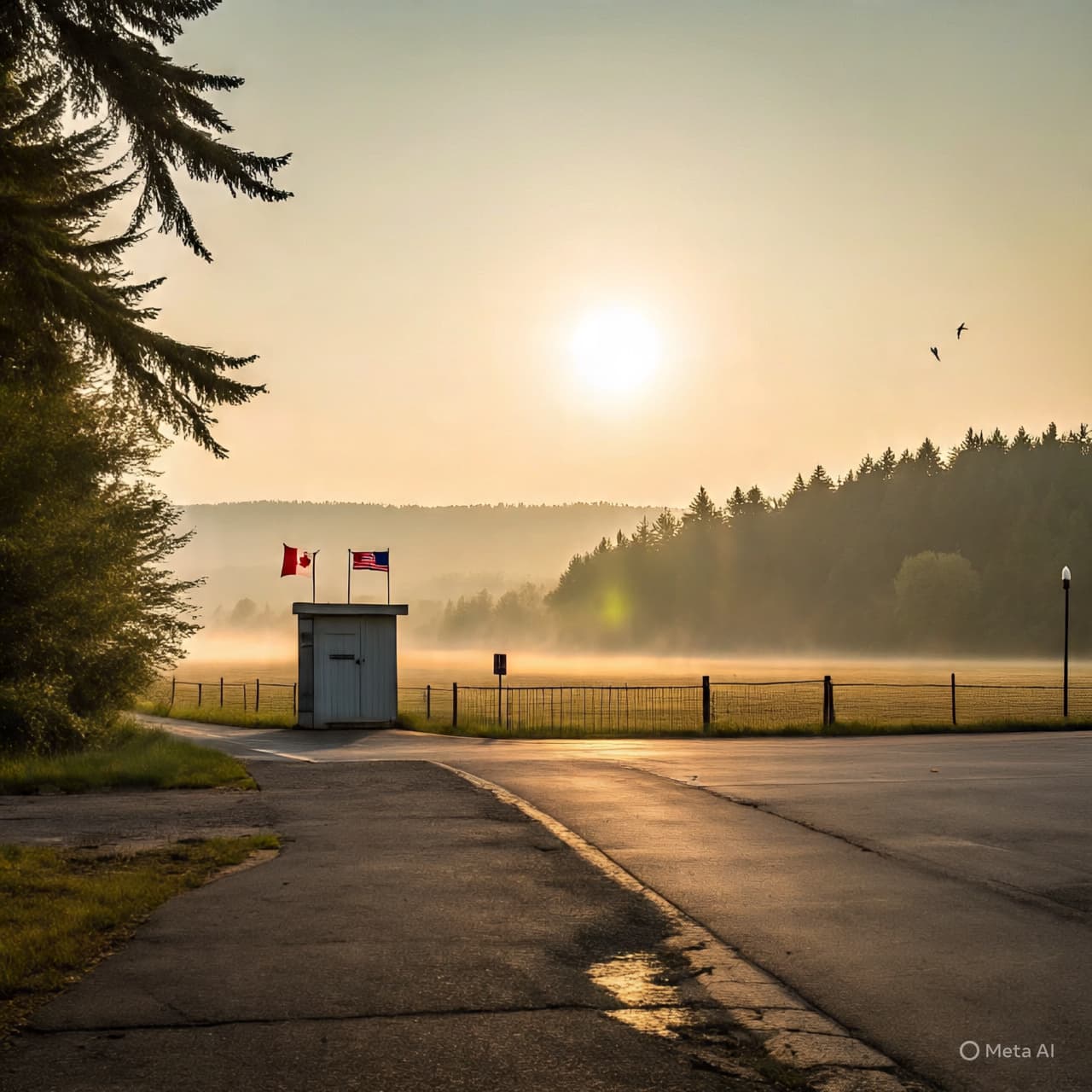
AI Image Disclaimer Visuals are created with AI tools and are not real photographs.
Sources Bloomberg Reuters U.S. Court/Immigration Policy Reports
Published by Banx Network. This article is part of the Banx decentralized media programme, powered by the BXE token on the XRP Ledger.