
Key Highlights
- Six fatalities confirmed after a landslide in Oaxaca, Mexico.
- Two passenger vehicles and a commercial truck were crushed by debris.
- Emergency crews are working to clear the highway and assist victims' families.
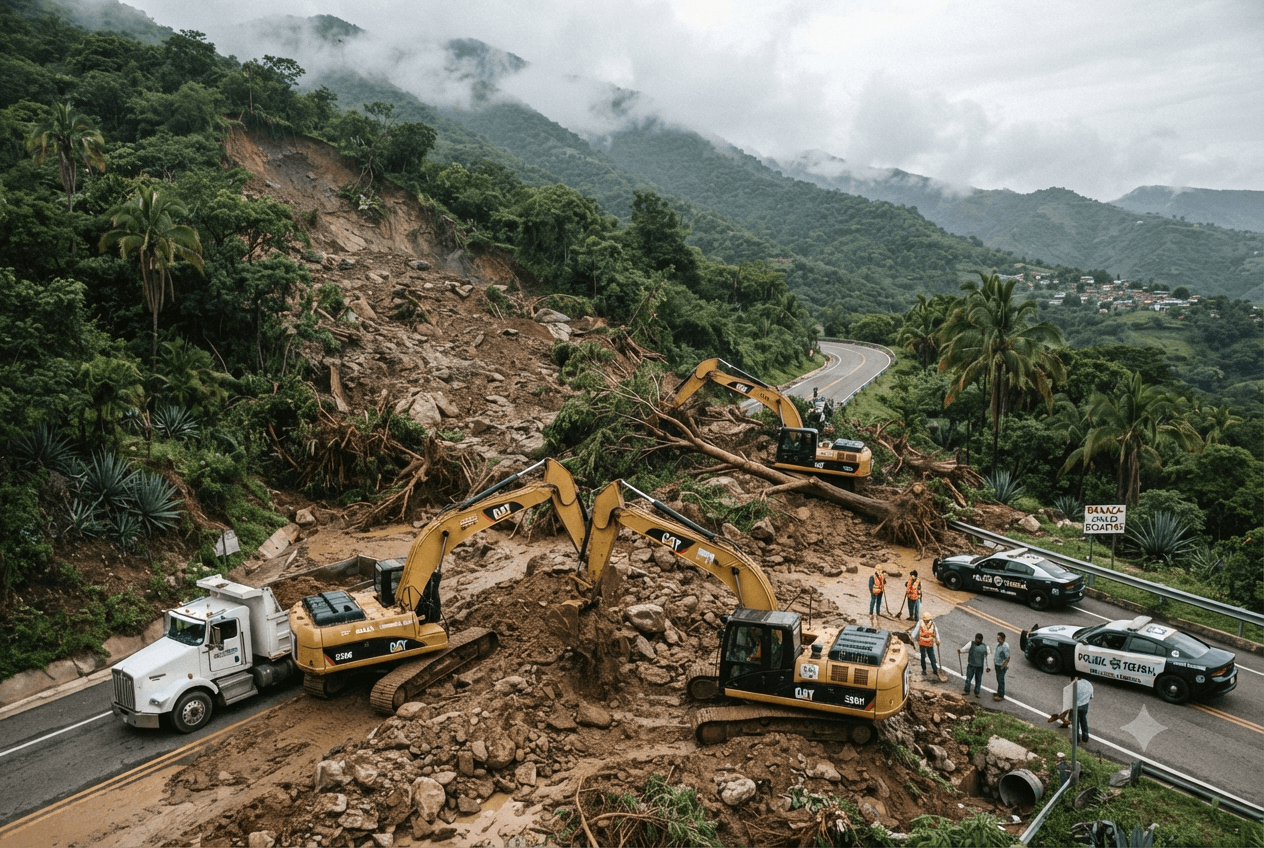
Oaxaca de Juárez, Mexico—A devastating landslide occurred on a federal mountain highway in Oaxaca, burying vehicles and resulting in six confirmed fatalities. The incident took place after torrential tropical storms saturated the hillside, causing thousands of tons of mud, rock, and uprooted trees to cascade onto the road below. The landslide crushed two passenger cars and a commercial pickup truck, prompting a swift response from civil protection rescue squads.
Emergency workers faced challenges accessing the site due to smaller mudslides blocking the roads. Once on the scene, they confirmed the tragic loss of six lives, with the victims recovered from the wreckage of the vehicles. Heavy excavation machinery was deployed to clear the massive earth blockage, which had rendered the highway impassable.
The landslide was triggered by continuous downpours over the preceding three days, which destabilized the steep slopes of the Sierra corridor, known for its geological instability. State transport authorities had previously issued warnings about potential rockfalls in the area. As heavy equipment operators worked under floodlights to remove debris, paramedics set up a staging area on a clear stretch of highway to assist with the rescue efforts.
In response to the disaster, state officials announced the allocation of emergency funds to expedite clearing operations on blocked regional routes. Geotechnical engineers were dispatched to inspect nearby cliff faces for any secondary landslide risks before allowing rescue operations to proceed. Meanwhile, federal road maintenance crews utilized specialized pneumatic rock drills to break up the massive boulders that had fallen onto the highway.
Communication lines were severely impacted by the landslide, isolating several nearby mountain villages. Forensic examiners transported the remains of the victims to the state forensic pathology laboratory for identification and investigation. The tragedy highlights the extreme vulnerability of mountainous transport corridors during the rainy season, raising concerns about infrastructure safety.
Environmental researchers have pointed to deforestation and unpaved slope modifications as significant risk factors contributing to such disasters. In light of this incident, federal lawmakers are facing renewed calls to invest in modern landslide early-warning sensor networks to prevent future tragedies. The highway remains closed to civilian traffic as reconstruction efforts continue, and transport officials are advising motorists to use alternative coastal routes indefinitely.
Published by Banx Network. This article is part of the Banx decentralized media programme, powered by the BXE token on the XRP Ledger.



