

Key Highlights
- NVIDIA's RTX technology aids in brain research.
- VR tools enhance analysis of memory-related conditions.
- Researchers can visualize complex datasets in real-time.
NVIDIA is at the forefront of neuroscience innovation, leveraging its RTX GPU technology and Virtual Reality (VR) tools to tackle one of biology's most intricate challenges: understanding human memory. The Marine Biological Laboratory (MBL) is utilizing NVIDIA's advanced technology to analyze vast amounts of hippocampal imagery data, which were previously deemed too complex to explore efficiently. This collaboration marks a significant advancement in the study of how memories are formed, function, and deteriorate.
The hippocampus, a crucial brain structure involved in learning and memory, generates enormous datasets comprised of ultra-high-resolution images captured over time. Traditional analysis methods often struggle with the scale of this data, leading to delays in discoveries and limiting insights. NVIDIA's RTX-powered visualization technology is changing this landscape by enabling researchers to render massive 3D brain datasets in real time.
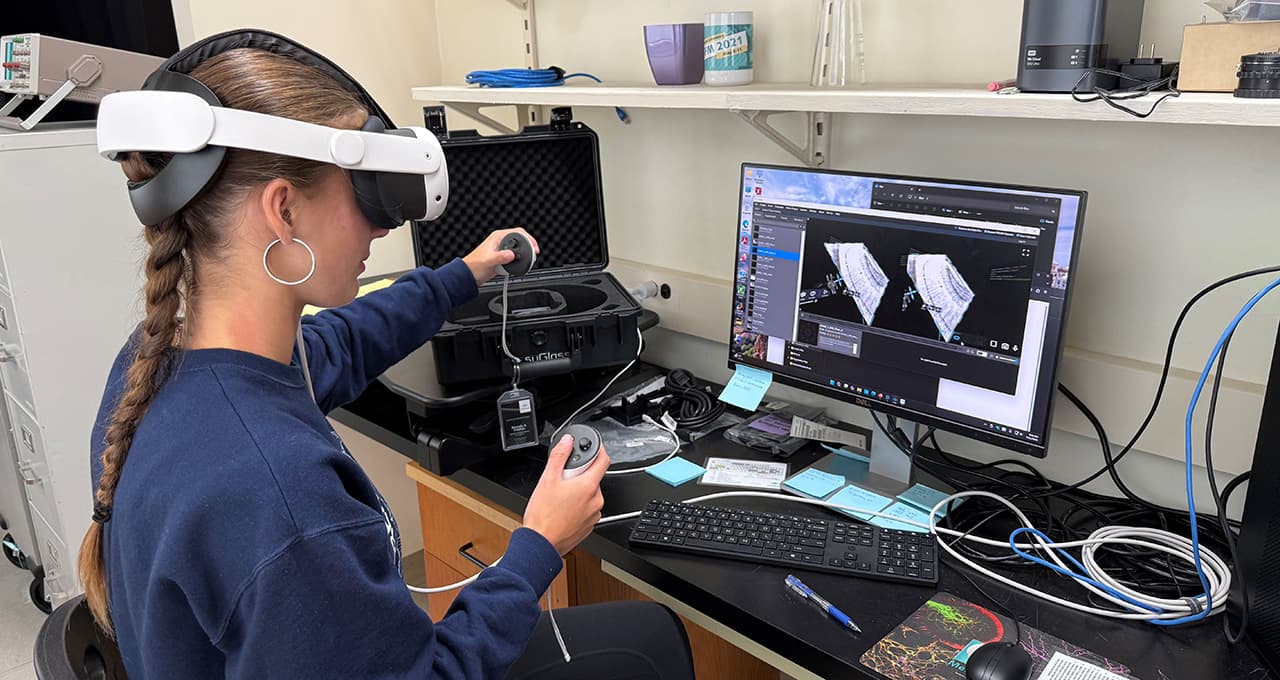
By integrating RTX GPUs with VR headsets, scientists can immerse themselves in the data, allowing them to rotate, zoom, and explore neural structures with a level of precision that flat screens cannot provide. This immersive approach transforms overwhelming datasets into interactive environments, facilitating a deeper understanding of the brain's complexities.
The implications of this technology are profound. It enables rapid navigation through terabytes of biological data, speeds up the identification of neural patterns associated with memory, and enhances our understanding of how memories deteriorate in various diseases. Analysis time has been drastically reduced, with tasks that once took weeks now achievable in mere hours.
NVIDIA's advancements are particularly impactful in the realm of memory-related conditions such as Alzheimer's disease, dementia, and PTSD. By accelerating the interpretation of hippocampal imagery, researchers can make faster progress in their studies, leading to insights that were previously unattainable within a reasonable timeframe.
This development also underscores NVIDIA's expanding role beyond gaming and artificial intelligence. The application of RTX and VR technologies in medical research, neuroscience, and education illustrates how advanced graphics technology can contribute significantly to human health and scientific discovery. As the volume of biological data continues to grow exponentially, tools that enable intuitive interaction with massive datasets will define the future of research.
NVIDIA's collaboration with MBL exemplifies how the convergence of computing power, visualization, and immersive technology can unlock knowledge that lies deep within the brain, paving the way for breakthroughs in understanding human memory and its complexities.
Published by Banx Network. This article is part of the Banx decentralized media programme, powered by the BXE token on the XRP Ledger.




