The idea of a city born in the jungle of Borneo, rising from creeks and palms into the capital of a nation, carried with it a kind of romantic promise. In 2019 the Indonesian government announced the establishment of Nusantara to replace the overburdened, sinking city of Jakarta. The vision was of a sleek, forest-city-capital, one that would place Indonesia’s future in its less-crowded heartlands. Yet as the months unfolded, the silence in Nusantara’s broad boulevards and the sparsity of its resident life began to whisper a softer but deeply uneasy story.
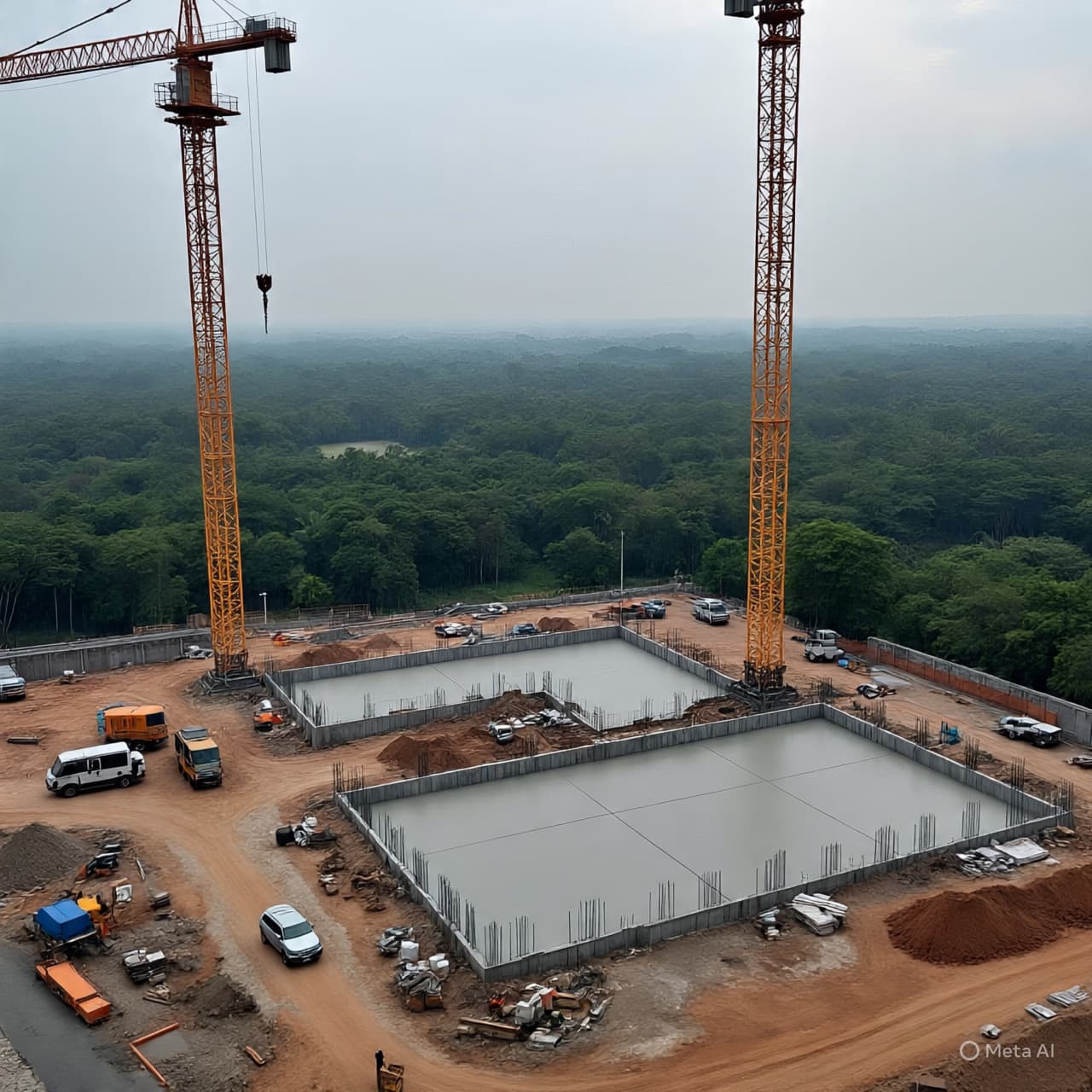
Walking through Nusantara’s planned government zone—an expansive grid of wide avenues and towers of glass that gleam in satellite imagery—one senses not quite a blank canvas, but something close. Reports show that only a fraction of the planned core zone has been built so far: out of the planned 6,600 hectares, only about 800 hectares have been developed to date. The grand population target—nearly two million by 2045—remains far off. The skeleton of a city lies there, but the flesh has yet to arrive.
AI-image disclaimer: “Illustrations generated by AI are for narrative purposes only.”
Published by Banx Network. This article is part of the Banx decentralized media programme, powered by the BXE token on the XRP Ledger.