
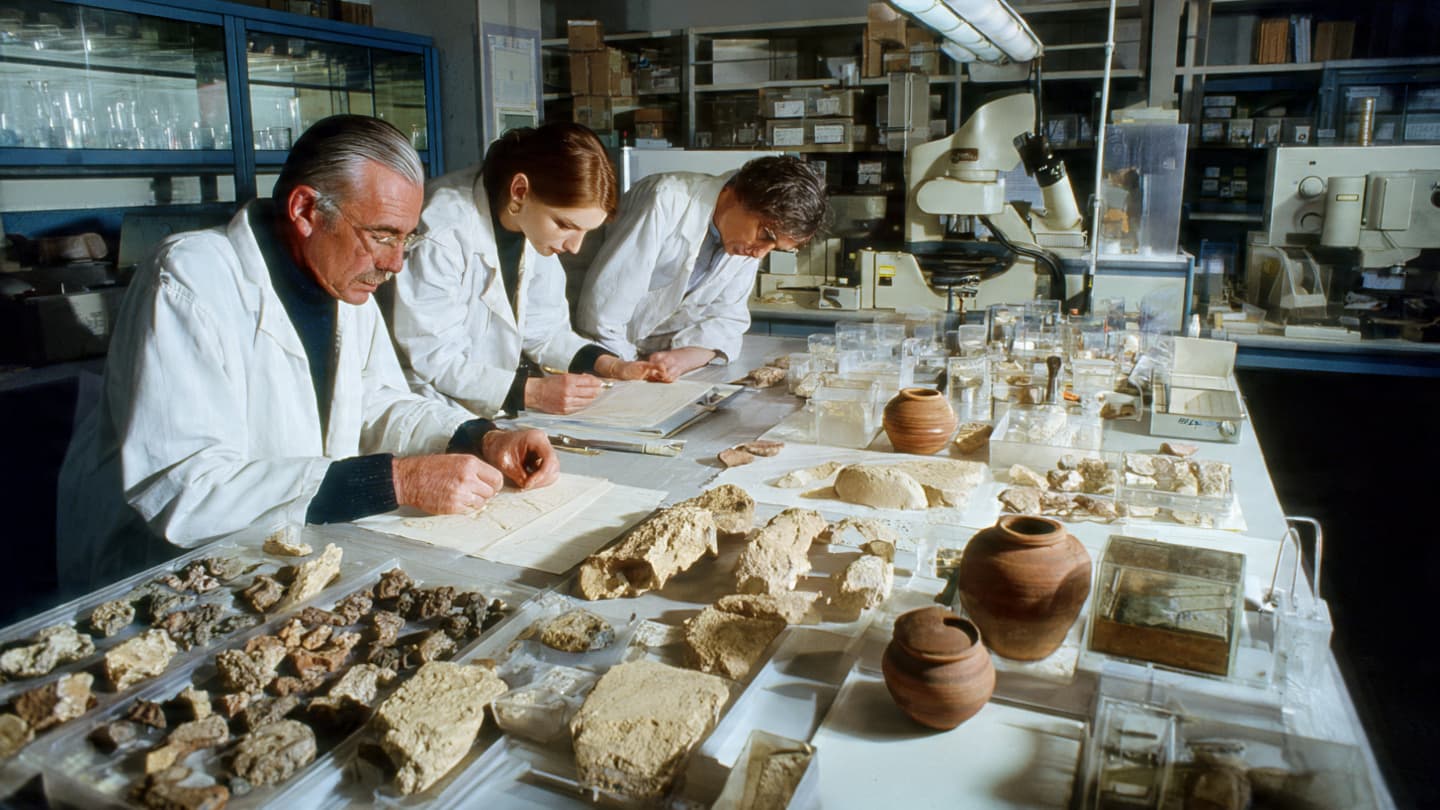
History often survives through fragile objects—fragments of pottery, ancient manuscripts, sculptures, and artifacts that connect modern societies to distant civilizations. Determining the authenticity and origin of these treasures can be a complex challenge. A new international initiative aims to address that challenge using advanced nuclear science techniques.
Body:
The International Atomic Energy Agency (IAEA) has launched a research project focused on improving methods for authenticating cultural heritage artifacts. The effort seeks to enhance scientific tools used to verify an object's origin, age, and historical significance.
Authentication has become increasingly important as museums, collectors, and governments work to combat forgery and illegal trafficking of cultural property. Accurate identification helps protect historical records and supports preservation efforts.
Nuclear analytical methods offer unique advantages because they can examine the elemental composition of artifacts without causing significant damage. These techniques allow researchers to compare materials with known geological and historical sources.
Scientists participating in the project will collaborate across multiple countries and disciplines. Archaeologists, conservation experts, and nuclear researchers are expected to contribute specialized knowledge to the initiative.
By studying trace elements and isotopic signatures, researchers can better understand where raw materials originated and how artifacts were produced. Such information often provides valuable insight into ancient trade routes and cultural exchanges.
The project also highlights the growing role of interdisciplinary science. Technologies originally developed for industrial, environmental, or nuclear applications are increasingly being adapted for heritage preservation.
Experts believe improved authentication methods could strengthen public trust in museum collections while helping authorities identify objects that may have been misclassified or illegally obtained.
Closing:
As scientific techniques become more sophisticated, they continue to deepen our understanding of the past. The new IAEA initiative demonstrates how modern research can help preserve cultural heritage and ensure that historical artifacts remain reliable witnesses to human history.
AI Image Disclaimer: Images used with this article are AI-generated illustrations intended to visualize archaeological and scientific research themes.
Source Verification Check: International Atomic Energy Agency (IAEA), UNESCO, ScienceDaily, Nature, Archaeology Magazine
Published by Banx Network. This article is part of the Banx decentralized media programme, powered by the BXE token on the XRP Ledger.



