
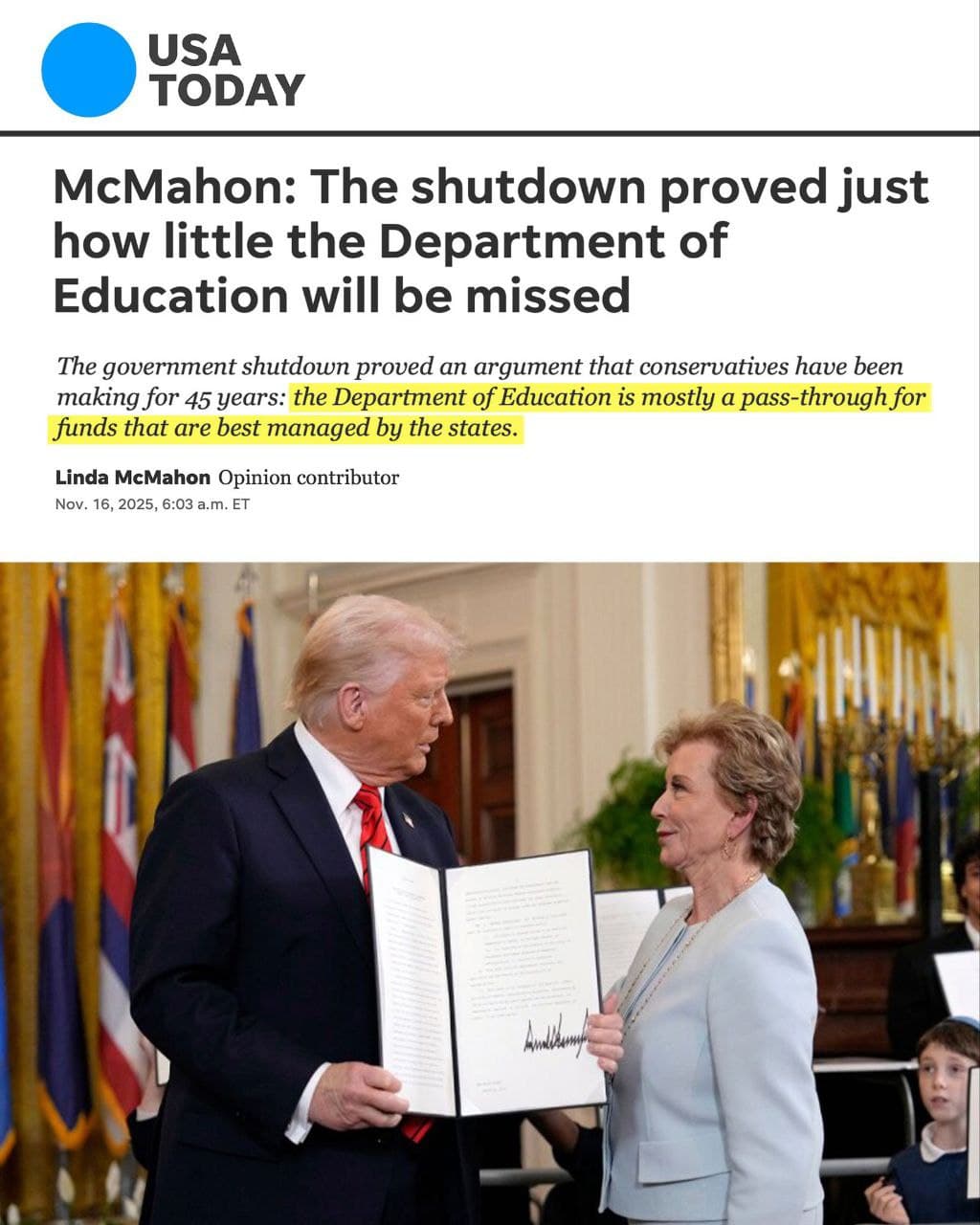
Key Highlights
- Government Shutdown:The recent shutdown highlighted the tension between federal and state powers in education.
- Trump’s Promise: President Trump aims to return educational control to states, allowing for tailored local solutions.
- Local Flexibility:State governance can address unique community needs, enhancing educational outcomes.
The recent government shutdown has underscored the intricate relationship between federal and state powers, particularly in the realm of education. As Congress resumes its functions, the opportunity to reshape national education policy has emerged. President Donald Trump, during his previous administration, made a significant promise: to return educational control to the states. With the shutdown now behind us, this promise can be realized in a meaningful way.
State governance in education presents a vital opportunity to customize educational systems to meet the specific needs of local populations. Rather than adhering to a one-size-fits-all federal mandate, states can develop curricula and allocate resources based on regional requirements and values. This local flexibility empowers communities to tackle their unique challenges and implement innovative approaches that resonate with their citizens.
Empowering states to make decisions regarding education not only enhances accountability but also fosters a sense of ownership among parents, teachers, and educational leaders. Individuals are often more invested in systems they can influence directly, which can lead to improved educational outcomes. Local control encourages schools to adapt more swiftly to socioeconomic changes, shifting demographics, and emerging educational technologies.
Critics of this decentralization may argue that it could exacerbate disparities in educational quality across states. However, this concern often underestimates the potential of states to enact meaningful reforms and improvements. With appropriate oversight mechanisms in place, states can share best practices and collaborate, ensuring that no student is left behind. This collaborative approach can lead to a more equitable educational landscape.
As we move forward, it is crucial to recognize that the commitment to return education to the states is not merely a political statement; it is a call to action. This shift in leadership is about trusting states to innovate, hold themselves accountable, and ultimately enhance educational experiences for all students. Through collaboration and shared visions, we can fulfill the promise of a brighter future for our children and communities, ensuring that education is responsive to the needs of those it serves.
Published by Banx Network. This article is part of the Banx decentralized media programme, powered by the BXE token on the XRP Ledger.



