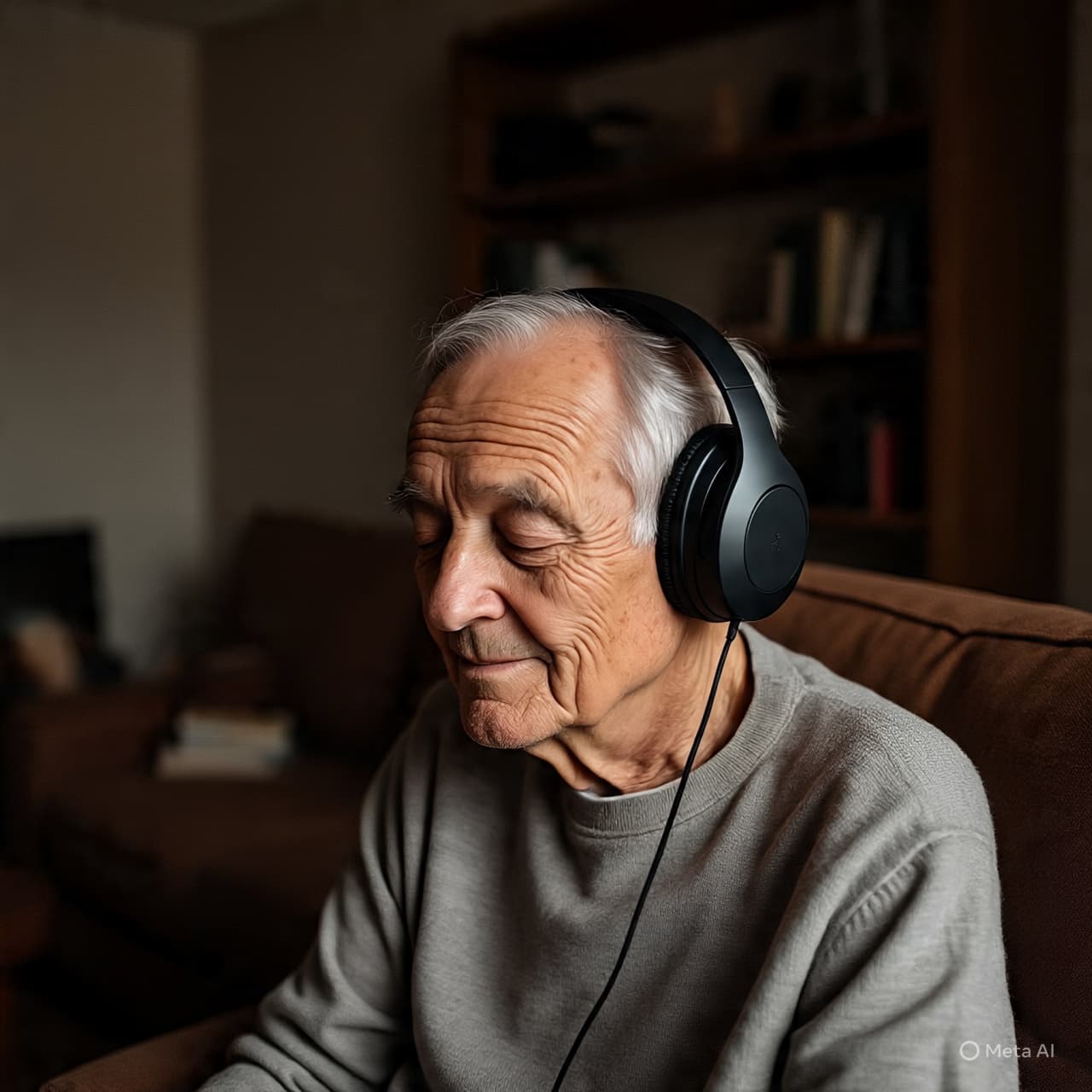
In the hushed space of an aging mind, every memory feels like a faint echo waiting to find resonance. So it might seem almost poetic that the simplest of things — listening to music — may serve as a quiet bulwark against one of our greatest fears: the loss of self, memory and mind. According to a new study led by Monash University, older adults who reported listening to music most days had significantly lower odds of developing dementia over the following years.
The study followed more than 10,800 Australians aged 70 and over, all initially free of dementia, as part of the ASPREE Longitudinal Study of Older Persons. It found that those who “always” listened to music (versus never/rarely/sometimes) had about a 39 % lower risk of dementia. They also had a 17 % lower risk of cognitive impairment — an earlier stage of decline. Meanwhile, playing a musical instrument was also associated with benefits (about a 35 % reduced risk of dementia).
What is perhaps most compelling is that this finds music — something accessible, often joyful — might be part of how we shape our cognitive health, not just wait for it. The authors emphasize that this is an association, not proof of causation: listening to music doesn’t guarantee prevention of dementia, but it correlates with lower risk.
Why might music help? The brain’s response to music is broad: it engages networks for memory, attention, emotion, motor control, even social interaction. Listening to music may stimulate these systems, helping maintain neural pathways and cognitive reserve. In a sense, the brain is doing more than passive listening—it’s being kept richly alive. Some of the study’s authors suggest that this kind of mental “workout” is accessible to most people.
Still, the study also raises caution: people who listen to music most days might differ in other ways (education, lifestyle, social interaction, hearing health) from those who don’t. And the study found stronger associations among participants with higher education. So, we shouldn’t treat music as a magic bullet—rather as one tool among many for supporting brain health.
In practical terms, it suggests that for older adults: turning on music — new or familiar — may be a simple, no-harmful habit that supports cognitive wellbeing. Whether it’s a comforting old record, a streaming playlist, or joining group music sessions, the key is regular engagement.
AI Image Disclaimer: “Visuals are created with AI tools and are not real photographs.”
Sources: Monash University, International Journal of Geriatric Psychiatry, Medical Xpress, Neuroscience News, Men’s Journal
Published by Banx Network. This article is part of the Banx decentralized media programme, powered by the BXE token on the XRP Ledger.