
Key Highlights
- April's full moon, known as the Pink Moon, occurs this week.
- The name originates from seasonal blooms, particularly wild ground phlox.
- Observers can enjoy the moonrise without special equipment.
April brings with it a celestial event that many look forward to: the full moon, commonly referred to as the Pink Moon. Despite its name, the moon will not actually appear pink. The term 'Pink Moon' is derived from the early spring blooms of wild ground phlox, a flower native to North America. This naming tradition connects the lunar event to the natural cycles of the Earth, a practice that has been preserved through generations.
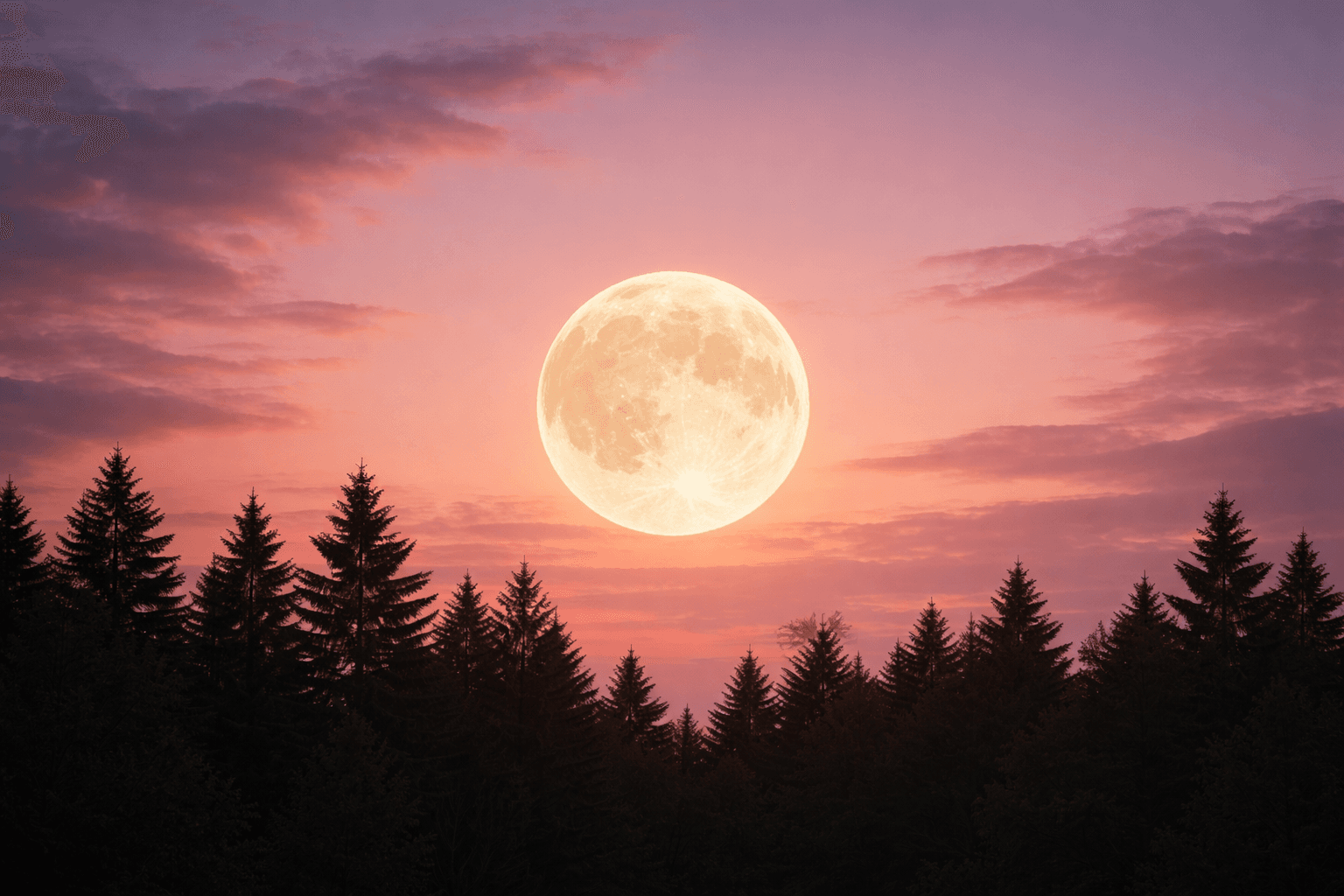
Astronomically, a full moon occurs when the Earth is positioned directly between the Sun and the Moon. This alignment allows sunlight to illuminate the lunar surface fully, making the moon appear especially bright and prominent in the night sky. Observatories note that this year’s Pink Moon will rise shortly after sunset, creating a stunning visual spectacle as it ascends into the sky.
As the moon rises, it will appear larger near the horizon due to a phenomenon known as the 'moon illusion.' This optical illusion makes the moon seem larger when it is closer to the horizon compared to when it is higher in the sky. As it climbs, the moon will take on its usual silvery glow, steady and bright, captivating all who take the time to look up.
The timing of this full moon coincides with the seasonal transition into spring in the Northern Hemisphere. Historically, full moons were used to mark significant agricultural events, such as planting cycles and shifts in daylight. These lunar events were essential for early societies long before the advent of modern calendars and timekeeping methods.
For those wishing to observe the Pink Moon, no special equipment is required. A clear sky and an unobstructed view of the horizon are all that is needed to fully experience this celestial event. The most dramatic moments often occur just after moonrise, when the moon appears largest and most striking against the landscape.
In a world characterized by rapid change, the moon remains a constant presence, returning each month with its familiar rhythm. This week, as the Pink Moon rises, it serves as a reminder of the beauty and continuity of nature, inviting us to pause and appreciate the wonders of the night sky.
Published by Banx Network. This article is part of the Banx decentralized media programme, powered by the BXE token on the XRP Ledger.



