There are origins that arrive quietly—so distant in time that they feel almost unreachable, yet so foundational that they shape everything that follows. Around , four moons have long drifted in silent orbit, their icy surfaces reflecting sunlight without revealing much of what lies beneath. And yet, new research suggests that their story may have begun not in emptiness, but with a subtle inheritance: the building blocks of life, present from the very moment they formed.
These moons—, , , and —are collectively known as the Galilean moons, first observed by in the early 17th century. Each is distinct: Io is shaped by constant volcanic activity, Europa hides a vast ocean beneath its frozen crust, Ganymede carries its own magnetic field, and Callisto preserves an ancient, heavily cratered surface. Together, they form a system as varied as it is intriguing.
The new findings suggest that during their formation, these moons may have incorporated organic molecules—carbon-based compounds considered essential precursors to life. Rather than arriving later through comets or external impacts, these materials may have been present from the beginning, embedded within the disks of gas and dust that surrounded Jupiter as it formed.
This idea reframes how we think about habitability in the outer solar system. If the ingredients for life were present at birth, then environments like Europa’s subsurface ocean become even more compelling. The question shifts—from how such materials arrived, to how they may have evolved over time within these hidden oceans and icy layers.
Still, the presence of building blocks is not the same as the presence of life. Chemistry can set the stage, but it does not guarantee the outcome. What these findings offer is not confirmation, but possibility—a suggestion that the conditions necessary for life may be more deeply rooted in planetary formation than previously assumed.
There is also a broader implication. If Jupiter’s moons formed with these materials already in place, similar processes could occur elsewhere—around other gas giants, in other star systems, across distances we are only beginning to explore. The emergence of life’s ingredients may not be an exception, but a quiet, recurring feature of how worlds come into being.
For now, much remains beneath the surface—literally and figuratively. Future missions, including those aimed at exploring Europa more closely, may provide clearer insight into these hidden environments and the chemistry they contain.
Until then, the Galilean moons continue their steady orbit, carrying within them not just ice and rock, but perhaps the earliest traces of something more. A beginning that, like all beginnings, asks more questions than it answers.
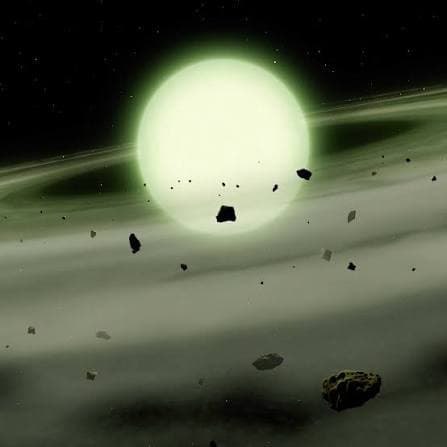
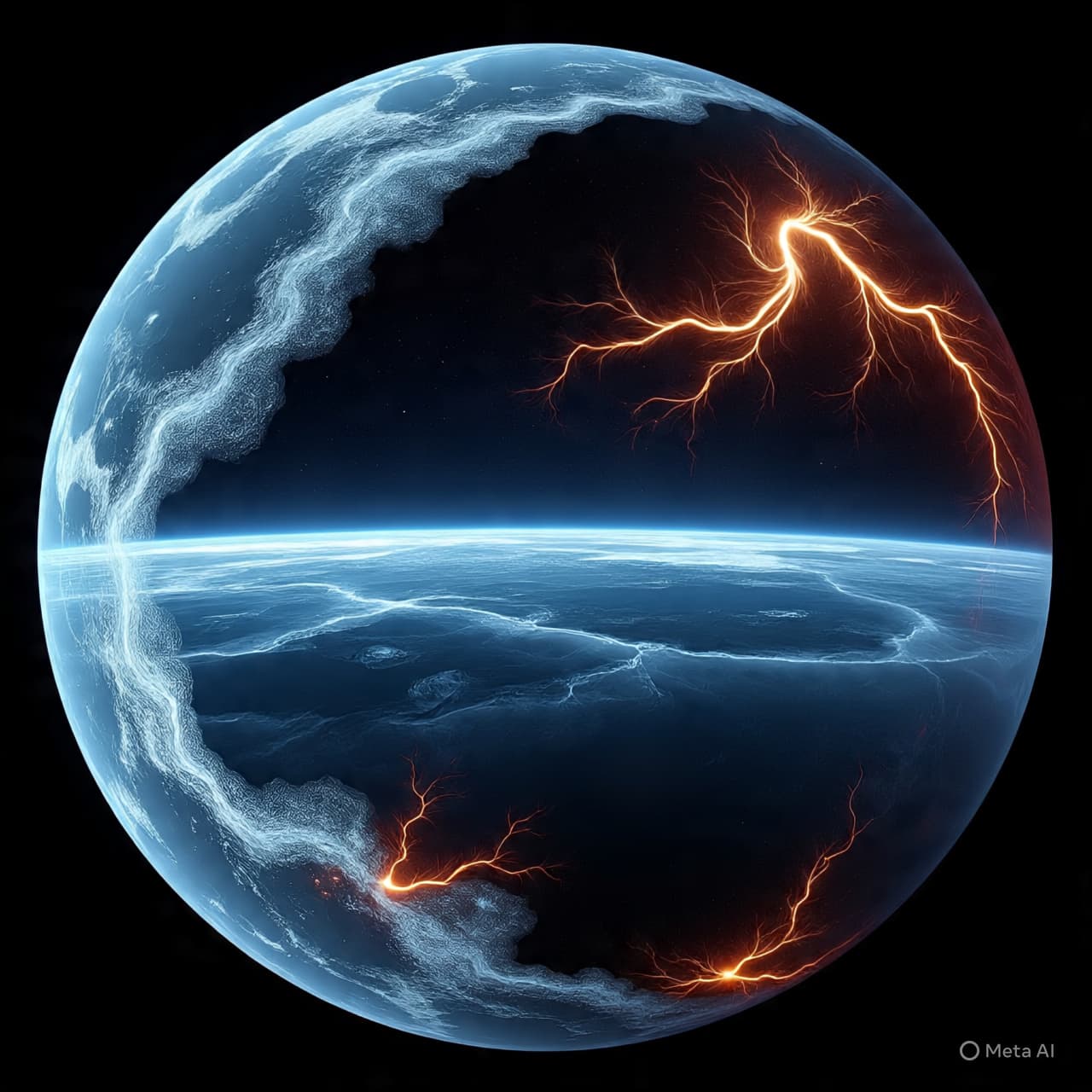
AI Image Disclaimer Graphics are AI-generated and intended for representation, not reality.
Source Check BBC The New York Times Le Monde Reuters The Guardian
Published by Banx Network. This article is part of the Banx decentralized media programme, powered by the BXE token on the XRP Ledger.