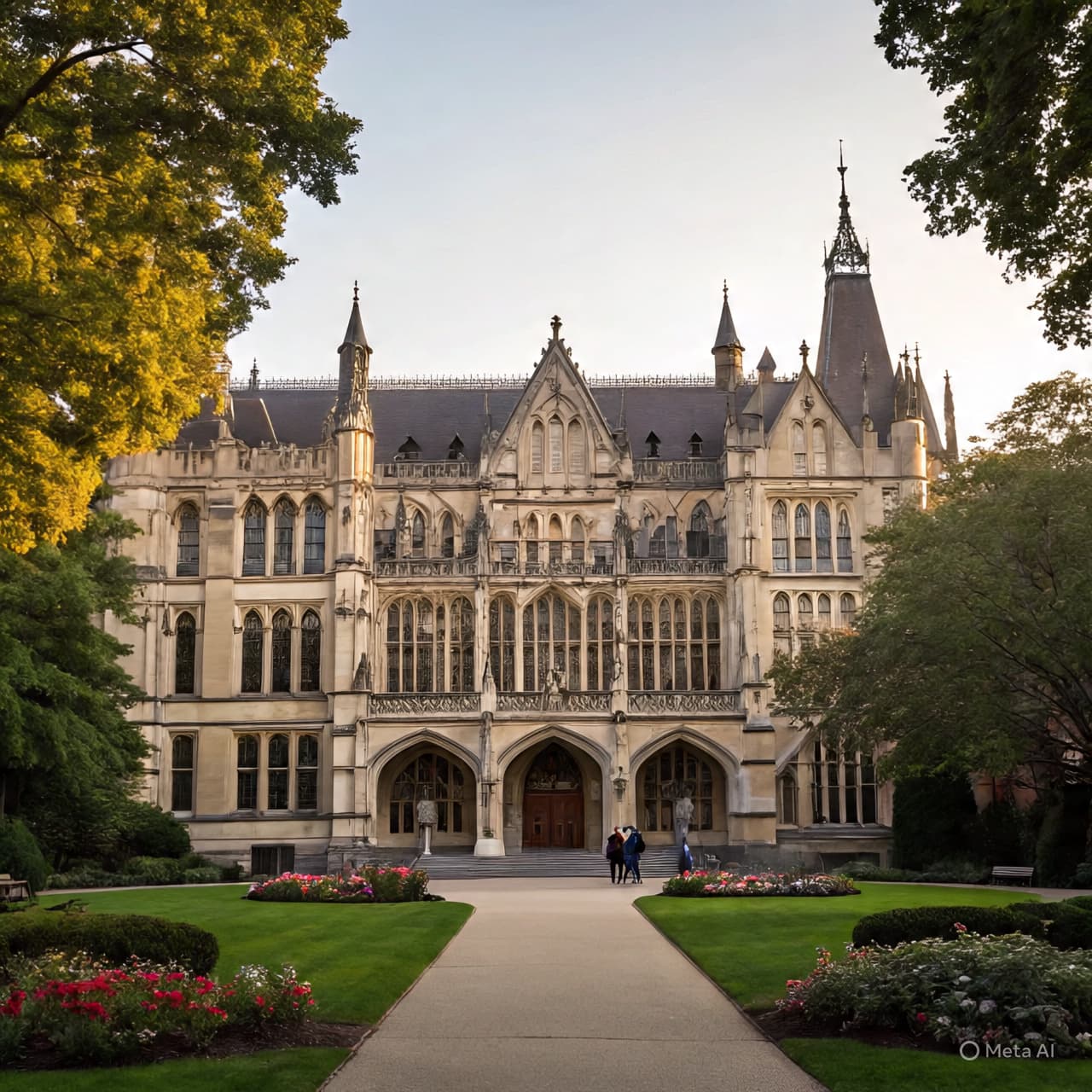
There is a certain quiet power in the word “Oxbridge.” It drifts through school corridors and dinner-table conversations alike, carrying with it images of ancient stone, whispered debates, and futures shaped by intellect. For many students, the dream feels distant — almost mythic — yet each year thousands submit applications hoping to turn that dream into something tangible.
What is less often spoken aloud is that the path into Oxford or Cambridge is not uniform. Some doors are narrower than others, and some — while still demanding — are slightly more open. Understanding this does not guarantee success, but it does offer clarity in a process often clouded by mystique.
Admissions data from both universities shows consistent patterns. Courses with the fiercest competition tend to cluster around high-demand fields such as medicine, economics, law, engineering, and computer science. These subjects attract vast numbers of high-achieving applicants, compressing acceptance rates and intensifying interviews and entrance exams.
By contrast, several humanities disciplines — particularly language-based and specialist courses — regularly show higher offer rates. At Cambridge, subjects such as Modern and Medieval Languages and Classics have historically extended offers to a significantly larger proportion of applicants. Oxford displays similar trends in areas like European and Middle Eastern Languages, where applicant numbers are lower but academic expectations remain exacting.
These figures do not reflect lower standards. Instead, they reveal a quieter truth: fewer students choose these paths, despite the depth and rigor they demand. As a result, strong applicants with genuine interest can find themselves competing in smaller, more focused pools.
Yet Oxbridge tutors are careful to warn against treating admissions like a numbers game. Choosing a course purely because it appears statistically favorable often reveals itself during interviews, where curiosity, depth of reading, and independent thinking are gently but persistently tested. A subject selected without conviction rarely withstands that scrutiny.
The strongest candidates tend to be those whose academic interests have grown naturally — through reading beyond the syllabus, questioning assumptions, and developing ideas rather than rehearsing answers. Admissions teams are not searching for perfection, but for potential: minds that lean forward when challenged.
In this way, understanding which courses offer comparatively better chances is not about gaming the system. It is about alignment — between ability, interest, and opportunity. For students willing to reflect honestly on what they love to study, the data can act not as a shortcut, but as a compass.
Because in the end, an Oxbridge place is not simply won by choosing wisely. It is earned by showing that the learning itself — not the prestige — is what truly calls you forward.
AI IMAGE DISCLAIMER Graphics are AI-generated and intended for representation only, not real photography.
SOURCES The Times (UK Education) BBC News Education The Guardian Education University of Oxford admissions statistics University of Cambridge admissions data
Published by Banx Network. This article is part of the Banx decentralized media programme, powered by the BXE token on the XRP Ledger.