
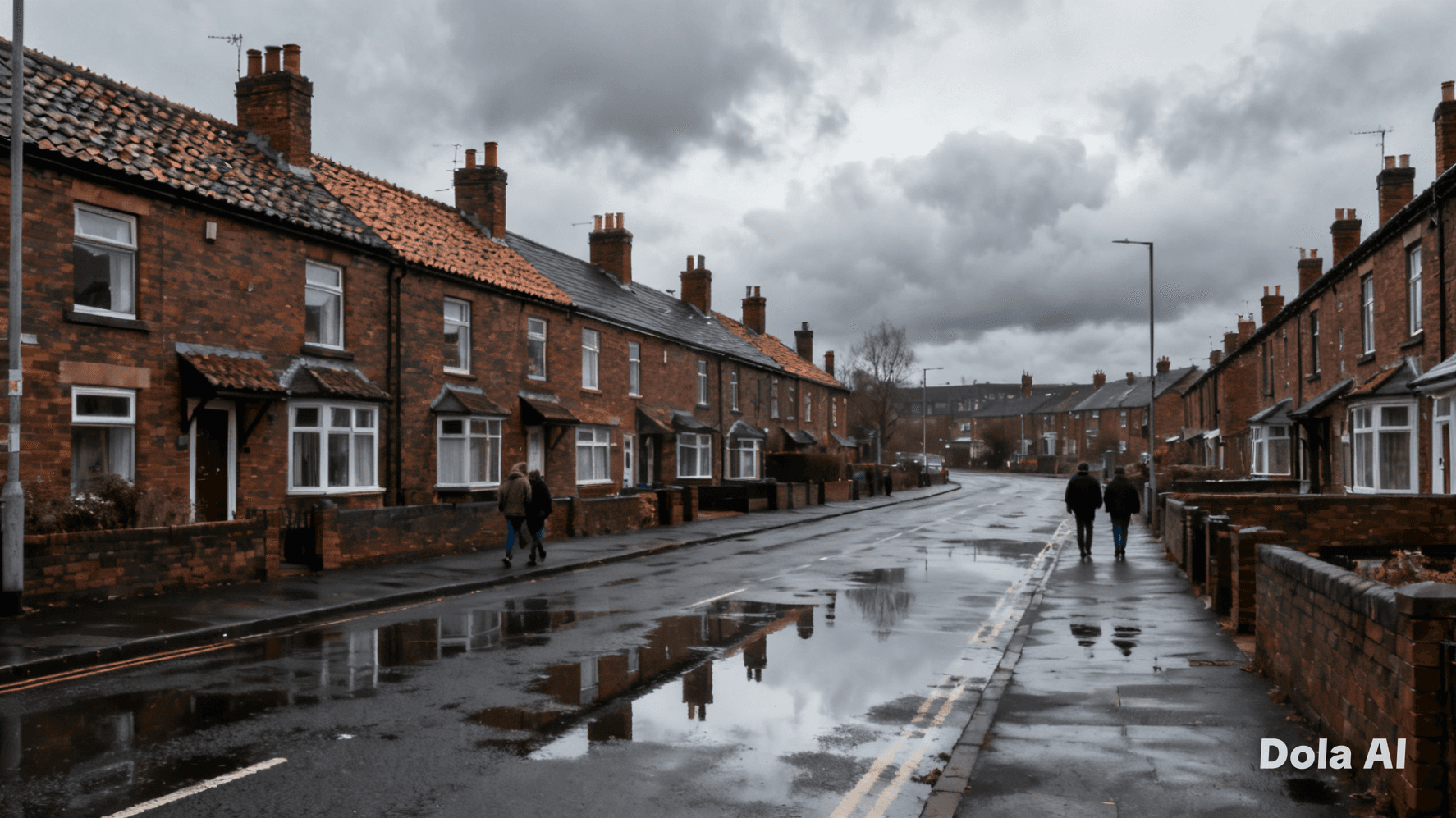
Politics often moves like weather rather than machinery. A shift happens quietly, a name surfaces, and only later does the wider meaning become clear. In Gorton and Denton, the Labour Party’s decision to select Angeliki Stogia as its candidate for the upcoming by-election arrived not as a thunderclap, but as a steady change in the air. It is a moment shaped as much by what is present as by what has been deliberately set aside.
Stogia, a local councillor with roots in the area, steps forward at a time when Labour is seeking to steady its footing and reaffirm its sense of direction. Her selection comes after internal debate, scrutiny, and an unusually public moment of tension within the party, following the blocking of Greater Manchester mayor Andy Burnham from standing. Against that backdrop, the choice of Stogia reads as an effort to return attention to locality, continuity, and grassroots connection rather than internal rivalry.
Those close to the process describe her as a familiar figure rather than a disruptive one. She has worked within local government, understands the pressures of council leadership, and carries the kind of political profile that suggests persistence more than spectacle. For Labour, this appears to be part of the message: stability over drama, presence over personality, and a candidate whose credibility is built slowly rather than announced loudly.
The by-election itself has been shaped by circumstance and absence. Burnham’s exclusion from the race sparked debate about party rules and internal boundaries, drawing national attention to what might otherwise have remained a local contest. Yet Labour’s leadership has sought to close that chapter quickly, presenting Stogia’s candidacy as a forward-looking decision rather than a reactionary one.
In doing so, the party seems intent on shifting the conversation away from internal disagreements and back toward representation. Stogia’s campaign is expected to focus on housing pressures, public services, and the everyday concerns of constituents who often experience politics less as ideology and more as consequence. It is a quieter form of ambition, grounded in the idea that familiarity can still be a strength.
Opposition parties will test that approach, as by-elections often invite sharper contrasts and louder claims. But Labour’s calculation appears measured: that reassurance, rather than confrontation, may resonate most clearly in a seat where trust and continuity matter.
As the campaign unfolds, the selection of Angeliki Stogia will be examined not only for what it says about her prospects, but for what it reveals about Labour’s current instincts. In Gorton and Denton, the party has chosen a path that favors steadiness over surprise, and a candidate who reflects the rhythms of local life rather than the turbulence of internal debate. Whether that choice proves persuasive will be decided at the ballot box, quietly and decisively, as such moments usually are.
AI Image Disclaimer Visuals used in this article are AI-generated illustrations and are intended as conceptual representations rather than real photographs.
Sources : Guardian Independent Yahoo News (PA Media) Rochdale Valley Radio The Times
Published by Banx Network. This article is part of the Banx decentralized media programme, powered by the BXE token on the XRP Ledger.


