
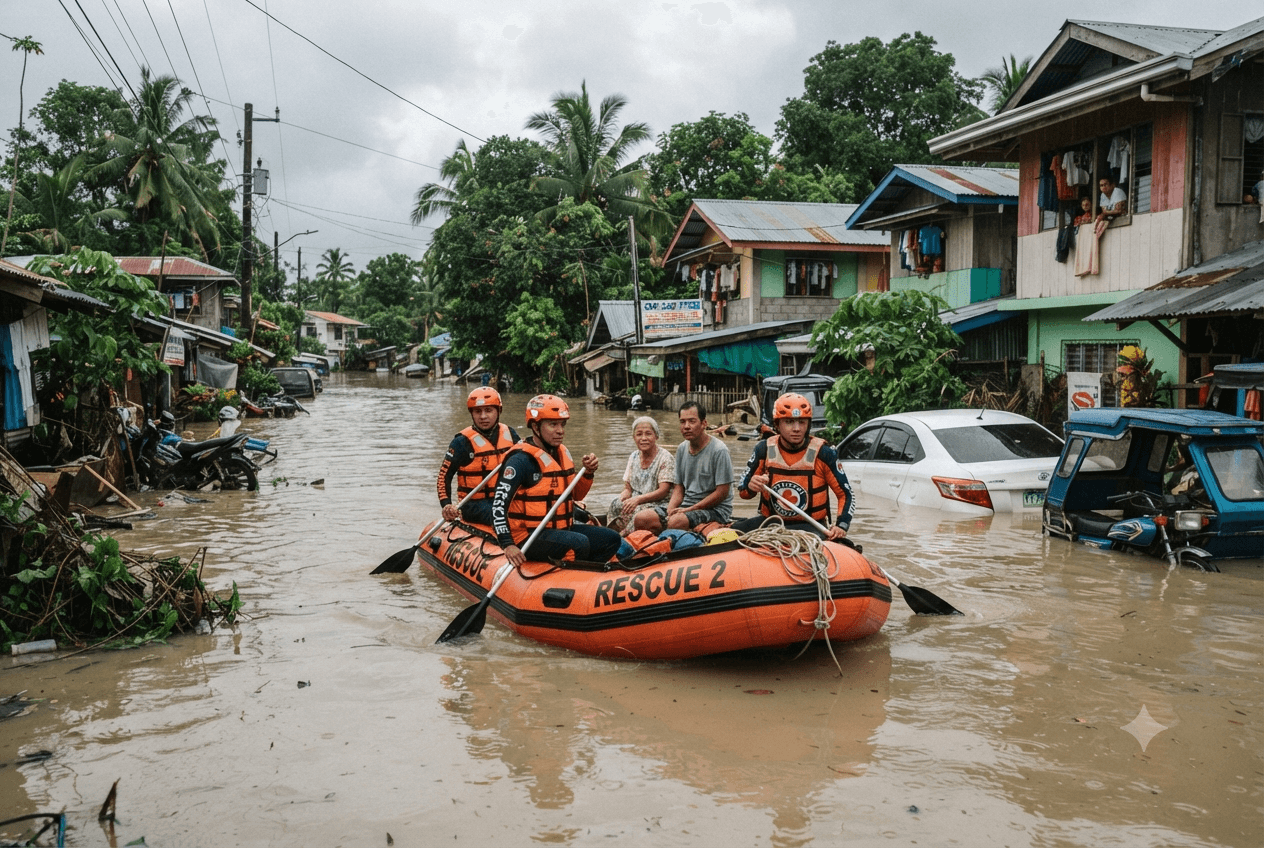
Key Highlights
- Six fatalities confirmed due to flash floods in northern Philippines.
- Emergency response teams deployed to rescue stranded residents.
- Significant damage reported to agricultural lands and infrastructure.
Relentless monsoon downpours triggered sudden flash floods across the northern provinces of the Philippines early Sunday morning. Raging torrents swept through low-lying villages without warning, leading to a tragic toll of six confirmed fatalities during initial rescue sweeps. At least seven other residents sustained injuries from collapsing structures and flying debris, prompting local hospitals to activate triage protocols to handle an influx of trauma cases. The muddy floodwaters breached residential homes up to window height, leaving many families in dire situations.
In response to the crisis, disaster management officials deployed rubber boats to reach families stranded on rooftops. Strong currents rendered several rural access roads impassable for heavy vehicles, complicating rescue efforts. Power grids failed across three municipalities as transformers blew under the heavy strain of the flooding. Municipal workers struggled to clear blocked drainage culverts filled with organic debris, which exacerbated the flooding situation. Evacuation centers filled quickly with displaced villagers carrying minimal belongings, highlighting the urgency of the situation.
Regional police commanders coordinated search operations along swollen riverbanks, where witnesses reported seeing vehicles swept off rural asphalt lanes by the fast-moving water. Civil defense units raised alert levels across adjacent provinces as rain bands continued to expand, with meteorological agencies warning that saturated soil conditions increase the risk of secondary landslides. Local mayors suspended all public transit operations until water levels begin to recede, further illustrating the widespread impact of the disaster.
The agricultural sector suffered extensive damage as crops vanished beneath muddy water, with livestock owners reporting significant losses after pens were overrun by the flash flood. Federal relief supplies began moving toward central distribution points late Sunday afternoon, although distribution logistics remain heavily hampered by damaged bridges and washed-out culverts. Community volunteers joined local rescue units to distribute potable water and basic rations to those in need, showcasing the resilience and solidarity of the affected communities.
Frustrated residents criticized the delayed deployment of heavy earth-moving equipment, with emergency coordinators citing communication blackouts as the primary obstacle to rapid deployment. Medical teams established mobile clinics outside damaged barangay halls to treat minor injuries, while cases of waterborne illnesses remain a growing concern for health inspectors on site. The national government pledged emergency financial assistance for affected municipal units, indicating a commitment to support recovery efforts.
As heavy clouds persist over the northern mountain ranges, forecasters predict additional rainfall accumulation through the early overnight hours. Relief workers continue searching for individuals reported missing by anxious relatives, and the full scale of the structural destruction remains uncalculated. Local authorities maintain strict travel restrictions across the disaster zone to ensure safety and facilitate ongoing rescue operations.
Published by Banx Network. This article is part of the Banx decentralized media programme, powered by the BXE token on the XRP Ledger.



