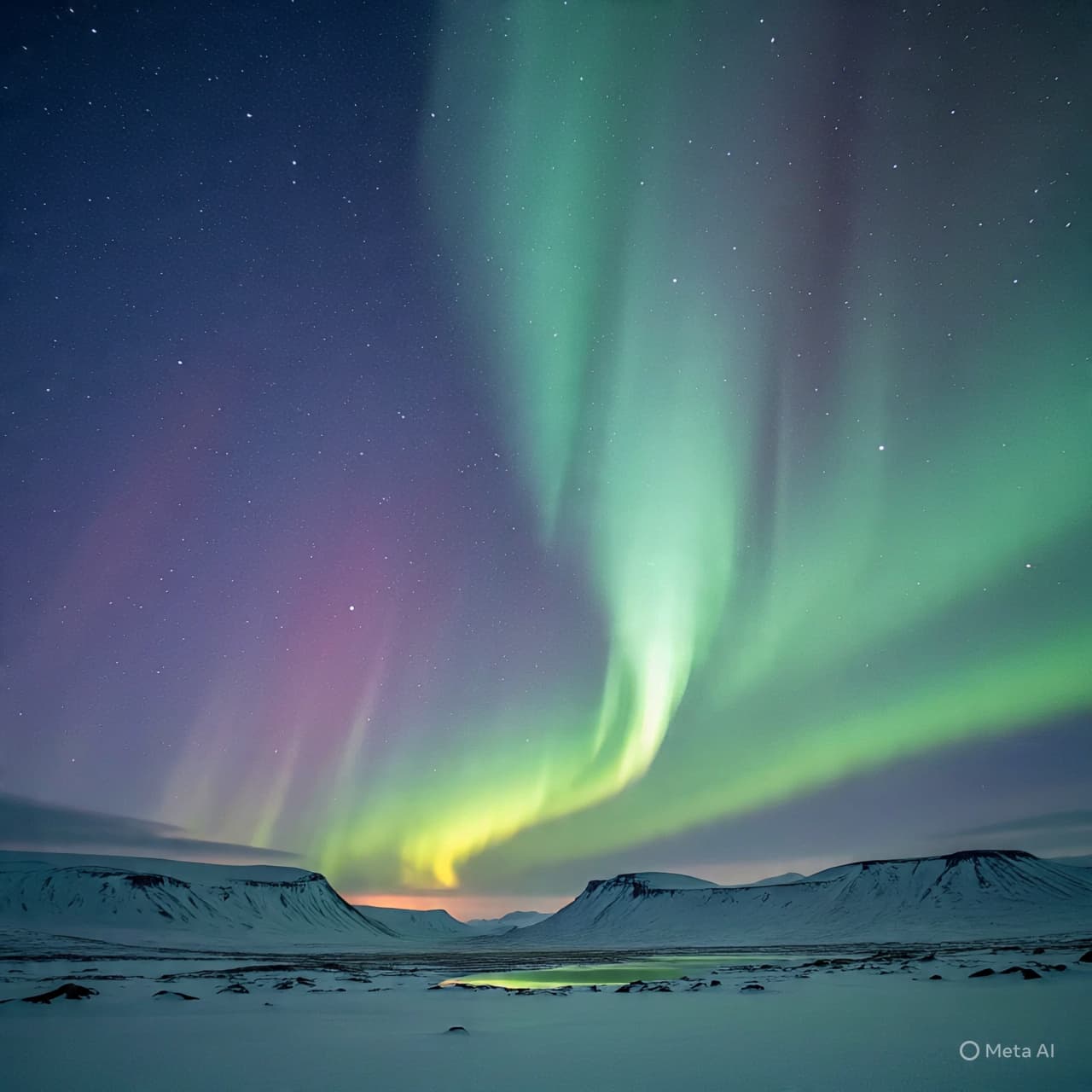
A striking northern glow has been observed across parts of Iceland and Canada, captivating skywatchers and astronomers alike. The phenomenon, known as the aurora borealis, occurs when charged particles from the Sun interact with the Earth’s magnetic field and atmosphere, creating vivid lights in the night sky.
Observers in Iceland reported shimmering curtains of green, pink, and purple light stretching above snow-covered landscapes, while in Canada, residents in northern provinces captured similar displays across wide horizons. Such events are most visible in high-latitude regions, especially during clear nights and periods of heightened solar activity.
The northern lights are caused by solar wind—a stream of charged particles released by the Sun—colliding with oxygen and nitrogen molecules in the atmosphere. These interactions excite the molecules, producing glowing bands and arcs of color that ripple across the sky. Intensity and visibility depend on factors such as solar activity, geomagnetic conditions, and local weather.
The recent widespread display highlights a period of increased solar activity, which also has implications for scientific research. Monitoring auroral events allows scientists to better understand the interactions between the Sun and Earth’s magnetic environment, contributing to knowledge of space weather and its potential impact on satellites, communications, and power systems.
For locals and travelers, the event offered a rare opportunity to witness the beauty of the aurora borealis in both Iceland and Canada, inspiring photography and stargazing activities. Communities in these regions often organize viewing events, combining science education with cultural and recreational experiences.
As solar activity continues to fluctuate, astronomers expect further auroral displays in the coming months, offering additional chances for people across northern latitudes to observe one of nature’s most spectacular light shows.
Published by Banx Network. This article is part of the Banx decentralized media programme, powered by the BXE token on the XRP Ledger.