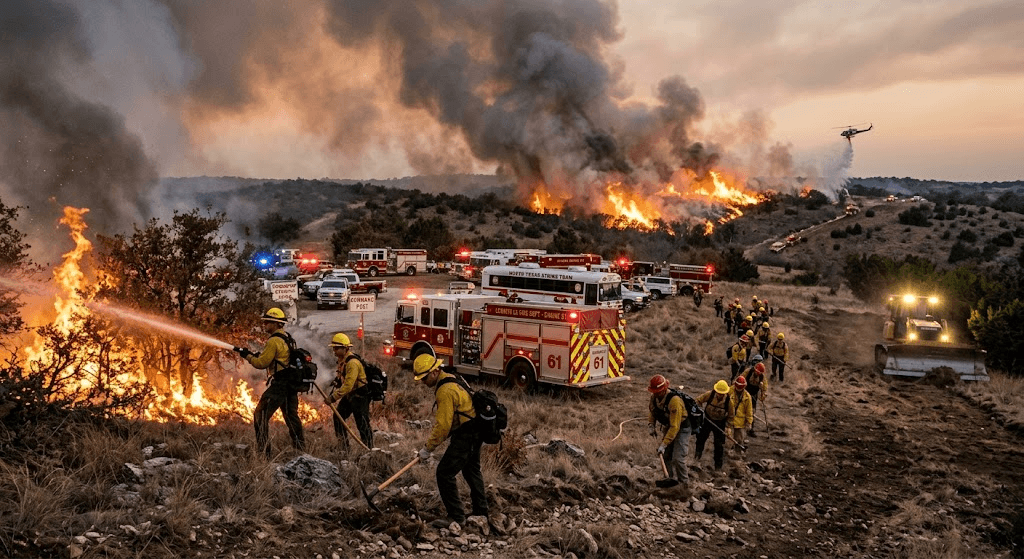
LEWISVILLE, Texas — A specialized crew from the Lewisville Fire Department has deployed alongside a North Texas mutual aid strike team to combat the aggressive Ross Fire, joining hundreds of emergency personnel battling the massive wildfire across Palo Pinto and Jack counties.
Driven by dry vegetation, high heat, and shifting wind gusts, the Ross Fire expanded across tens of thousands of acres of dense brush and timber, threatening regional ranches, rural subdivisions, and essential power infrastructure. Thick plumes of smoke drifted across North Texas as flames jumped natural containment barriers, triggering localized evacuation orders for vulnerable communities in the fire's path. The Lewisville team—equipped with wild land engines designed for rugged terrain—mobilized following an emergency activation through the Intrastate Fire Mutual Aid System (IFMAS).
Upon arriving on scene, the regional strike team was integrated into direct containment and structure-protection operations along the active flank of the fire. Ground crews worked exhausting shifts laying hose lines, digging hand lines through dense scrub, and conducting burn-out operations to clear fuel in front of the advancing fire line.
Heavy air support, including water-dropping helicopters and air tankers coordinated by the Texas A&M Forest Service, worked in tandem with ground units to cool intense hotspots. Local law enforcement and emergency management agency's managed traffic control, cleared access routes for heavy machinery, and established temporary staging areas to support displaced residents and emergency crews.
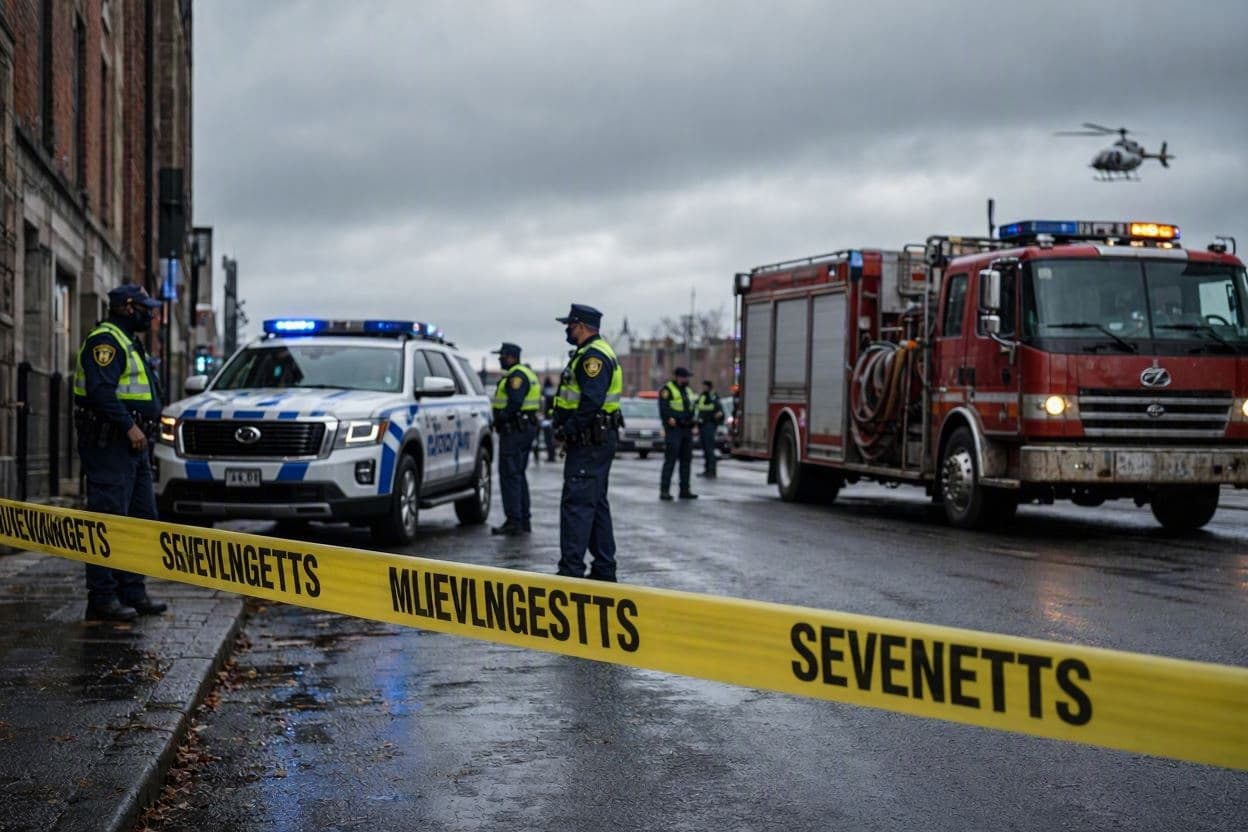
Wildfire investigators from the Texas A&M Forest Service and local law enforcement cordoned off the fire's origin point to conduct a thorough forensic analysis. Initial technical evidence indicates the blaze was human-caused, stemming from a roadside vehicular mechanical failure—specifically a tire blowout—that threw hot debris into dries grass. Damage assessment teams continue to survey the burn scar to catalog destroyed outbuildings, fencing, and residential structures.
The rapid spread of the Ross Fire has reinforced the critical necessity of regional mutual aid networks like IFMAS during extreme Texas wildfire seasons. State forestry officials and regional fire chiefs announced plans to review regional wild land response protocols, expand cross-departmental training for suburban crews deploying to rural brush fires, and launch targeted roadside fire-prevention campaigns aimed at preventing vehicle-related ignitions along major corridors.
Published by Banx Network. This article is part of the Banx decentralized media programme, powered by the BXE token on the XRP Ledger.