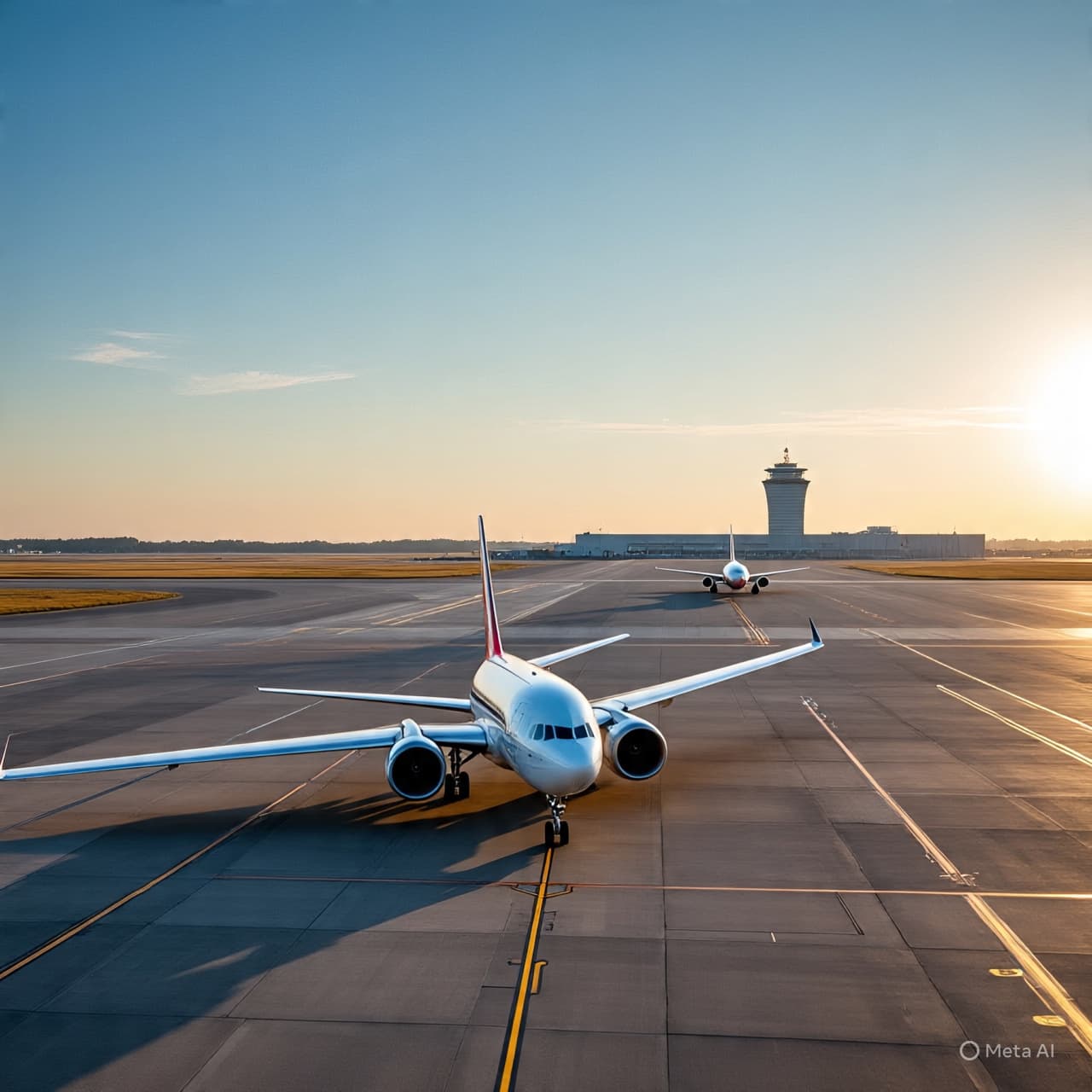
Airports are often places of quiet anticipation, where time stretches between departures and arrivals, and every movement feels part of a carefully choreographed rhythm. Yet sometimes, in the span of just a few heartbeats, that rhythm falters. What is usually routine becomes uncertain, and what is expected gives way to something far more fragile. At LaGuardia Airport, it was in such a fleeting moment—just nine seconds—that an ordinary day was interrupted by an extraordinary chain of events. The kind that leaves behind not only questions, but a lingering sense of how narrowly order can hold. Initial reports suggest that the incident unfolded rapidly, involving a critical situation on or near the runway. Whether it was a mechanical fault, a miscommunication, or an unexpected convergence of aircraft movements, those few seconds became the center of intense scrutiny. In aviation, where precision is measured in milliseconds and margins are carefully calculated, even the smallest deviation can carry immense consequence. Witnesses described a scene that shifted almost imperceptibly at first—an aircraft moving slightly out of sequence, another adjusting course, controllers responding in real time. To passengers, it may have felt like nothing more than a pause, a delay, or a subtle change in direction. But behind the scenes, systems and professionals were working in concert to prevent escalation. What makes such moments profound is not only the risk they carry, but the response they demand. Air traffic controllers, pilots, and ground crews are trained for these instances, rehearsing countless scenarios so that instinct can guide them when time does not allow for deliberation. In those nine seconds, decisions were made that balanced safety, timing, and coordination under immense pressure. The incident has since drawn the attention of aviation authorities, with investigations focusing on reconstructing the sequence of events with exacting detail. Data from flight recorders, radar tracking, and control tower communications will likely be examined to understand how the situation developed and how it was resolved. Such reviews are not merely procedural—they are part of an ongoing effort to ensure that the system learns, adapts, and becomes more resilient. Beyond the technical analysis lies a broader reflection on the nature of modern air travel. It is a system built on trust—trust in technology, in training, and in the invisible network of decisions that guide each flight safely from one point to another. Incidents like this, though rare, remind us of the complexity that underpins that trust. They also highlight the quiet professionalism that often goes unnoticed. For every near-miss or critical moment that reaches public awareness, there are countless others resolved seamlessly, without disruption or recognition. It is in these unseen efforts that the true strength of the system resides. As details continue to emerge, the focus remains on understanding rather than assigning blame. Aviation, perhaps more than any other industry, evolves through reflection—each incident becoming a lesson, each lesson a step toward greater safety. In the end, those nine seconds at LaGuardia do not stand alone as a moment of alarm, but as a reminder of vigilance. Flights continue, schedules resume, and passengers move forward, often unaware of how close routine came to being something else. Authorities have confirmed that the situation was contained without major incident, and investigations are ongoing to determine the precise cause. Operations at the airport have since returned to normal, with safety protocols under careful review.
Published by Banx Network. This article is part of the Banx decentralized media programme, powered by the BXE token on the XRP Ledger.