The night sky is never truly empty; it is a dynamic canvas painted with moving stars, wandering planets, and fleeting meteors. In the week of August 12, 2026, the heavens will be particularly busy, offering a quartet of celestial events that promise to captivate skywatchers. From the peak of the Perseid meteor shower to the brightness of Venus and the subtle presence of a new moon, the cosmos is staging a show of remarkable variety. It is a time to step outside, leave the lights behind, and let the eyes adjust to the darkness. In doing so, we reconnect with a tradition of stargazing that spans millennia, finding wonder in the silent movements above.
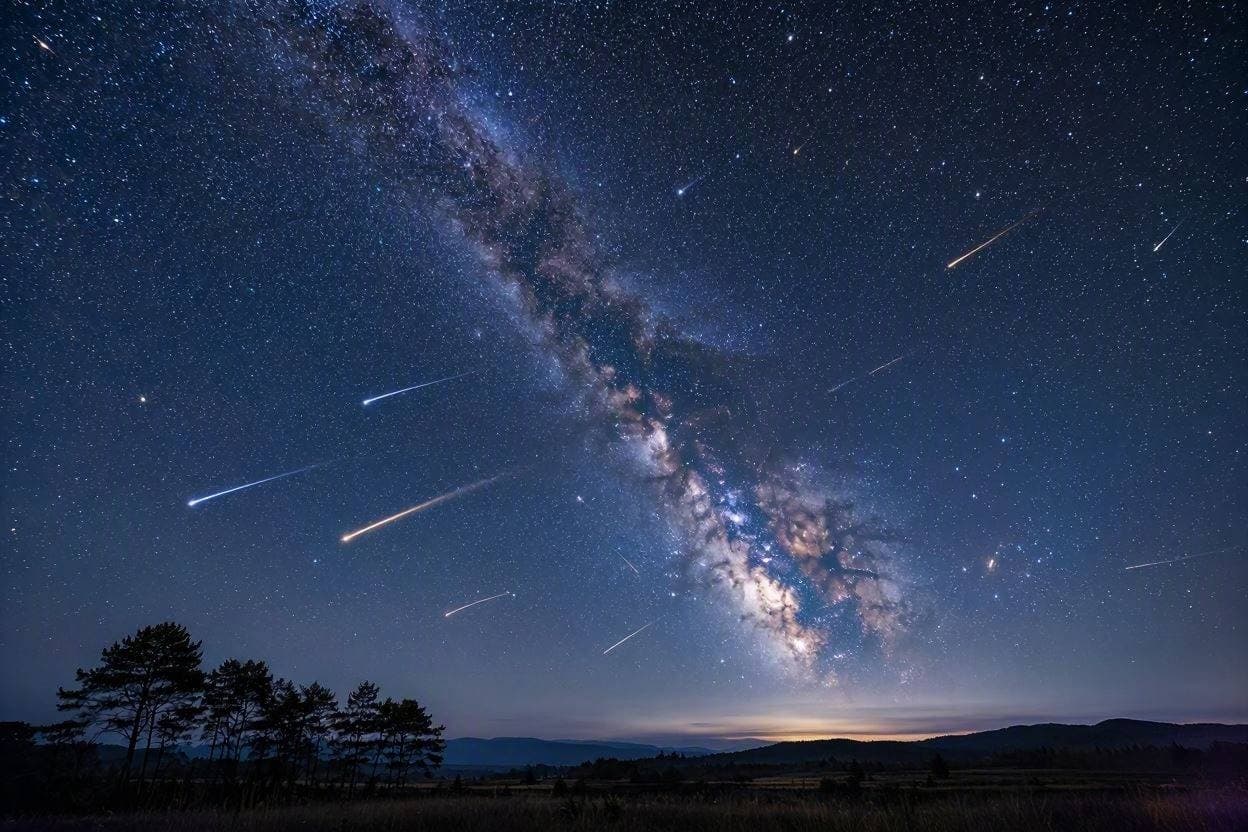
The highlight of the week is undoubtedly the Perseid meteor shower, which peaks around August 12-13. Known for its bright and fast-moving meteors, the Perseids are caused by Earth passing through the debris trail of Comet Swift-Tuttle. Under dark skies, observers can expect to see dozens of shooting stars per hour, streaking across the constellation Perseus. The lack of moonlight due to the new moon phase creates ideal conditions for viewing, allowing even fainter meteors to shine brightly.
Alongside the meteors, Venus will be shining brilliantly in the evening sky. As the brightest planet, it often dominates the western horizon after sunset. Its steady, white light is unmistakable, serving as a beacon for novice astronomers. Observing Venus offers a chance to appreciate the beauty of our planetary neighbors, reminding us of our place in the solar system. Its position and brightness make it a perfect companion to the meteor shower, adding a static point of reference to the dynamic sky.
The new moon, occurring on August 12, plays a crucial supporting role. By hiding its illuminated face from Earth, the moon allows the night sky to reach its darkest potential. This absence of lunar glare is a gift to astronomers, enabling deeper views of the Milky Way and fainter deep-sky objects. It is a reminder that sometimes, what is not there is just as important as what is. The darkness becomes a tool, enhancing our ability to see the light.
Additionally, other planets like Mars and Jupiter may be visible depending on the time and location, adding to the planetary parade. Each planet has its own character and color, offering a diverse visual experience. Tracking their movements over the week provides a sense of the clockwork precision of the solar system. It is a lesson in astronomy that can be learned simply by looking up night after night.
For those eager to observe, finding a dark location away from city lights is key. Patience is also essential, as eyes can take up to 30 minutes to fully adapt to the dark. Bringing a reclining chair and a warm blanket can make the experience more comfortable, turning observation into relaxation. The sky rewards those who take the time to wait and watch.
The week of August 12 offers a rich array of celestial events, led by the Perseid meteor shower and the bright appearance of Venus. With the new moon providing dark skies, conditions are ideal for stargazing. It is a perfect opportunity to disconnect from daily distractions and reconnect with the universe.
AI Image Disclaimer: Visuals associated with this article are AI-generated to illustrate the themes of astronomy and night sky observation.
Sources: NASA American Meteor Society Fox Weather
Published by Banx Network. This article is part of the Banx decentralized media programme, powered by the BXE token on the XRP Ledger.