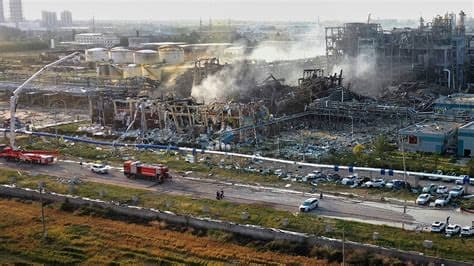
Night fell heavy over the desert, the kind of darkness that seems to carry its own silence. Across bases carved from sand and concrete, lights glowed in measured lines, generators hummed, and watchtowers traced slow arcs against the horizon. Somewhere beyond the perimeter fences, the sky opened in brief streaks of fire.
On the second day of open confrontation between the United States and Iran, the war announced itself not only in statements and briefings, but in the sudden brightness of missiles cutting across the dark. The U.S. military confirmed that three American service members were killed when Iranian-launched missiles struck positions housing U.S. personnel in the Middle East. Several others were wounded. In Washington, officials described the attack as a direct escalation. In Tehran, leaders framed it as retaliation.
The geography of this conflict is wide, but its moments are sharply personal. Radar screens flicker in command rooms; alarms break the rhythm of the night; medics move with urgent precision beneath fluorescent lights. The names of the fallen are withheld at first, as notifications begin their quiet journey toward families who will soon measure time differently—before and after.
The missile strikes followed a day of American operations aimed at Iranian-linked targets, part of a widening exchange that has drawn the region into a tense and uncertain posture. U.S. defense officials said multiple missiles were launched toward facilities where American troops are stationed. Some were intercepted. Others found their mark.
Iranian state media described the attack as a calibrated response. The language on both sides has grown firmer, the vocabulary of deterrence giving way to the cadence of reprisal. Analysts note that this direct exchange between Washington and Tehran marks a departure from years of shadow conflict carried out through proxies and covert operations. What once unfolded in deniable margins now moves under the full glare of acknowledgment.
In capitals across the region, leaders have urged restraint, aware of how quickly a single strike can echo outward. Oil markets have responded with nervous energy. Commercial flights adjust their paths in cautious arcs. Diplomats, long accustomed to balancing on narrow ledges, return to phones and conference tables, seeking pauses in the momentum.
The loss of three troops, however, grounds the narrative in something more intimate than strategy. Military bases, often described in maps and acronyms, are also places of routine: morning briefings, shared meals, letters half-written. The fragility of those routines becomes stark when sirens cut through them.
In Washington, the Pentagon confirmed the fatalities and vowed to assess further responses. Flags on certain posts were lowered. In Tehran, officials signaled that their action was measured and warned against additional escalation. The language is careful, but the trajectory remains uncertain.
As the second day closes, the region stands in a hush between statements and consequences. The desert wind moves as it always has, indifferent to borders and banners. Yet beneath that wind, the calculus of power shifts, recalculates, and waits.
Three lives now mark this widening conflict. Their absence travels quietly across oceans and into homes far from the desert sky. And in that distance—between missile trails and kitchen tables—the true weight of war settles, not in headlines alone, but in the stillness that follows.
AI Image Disclaimer Illustrations were created using AI tools and are not real photographs.
Sources U.S. Department of Defense Reuters Associated Press BBC News Al Jazeera
نُشر بواسطة Banx Network. هذا المقال جزء من برنامج الوسائط اللامركزية من Banx، مدعومًا برمز BXE على شبكة XRP Ledger.