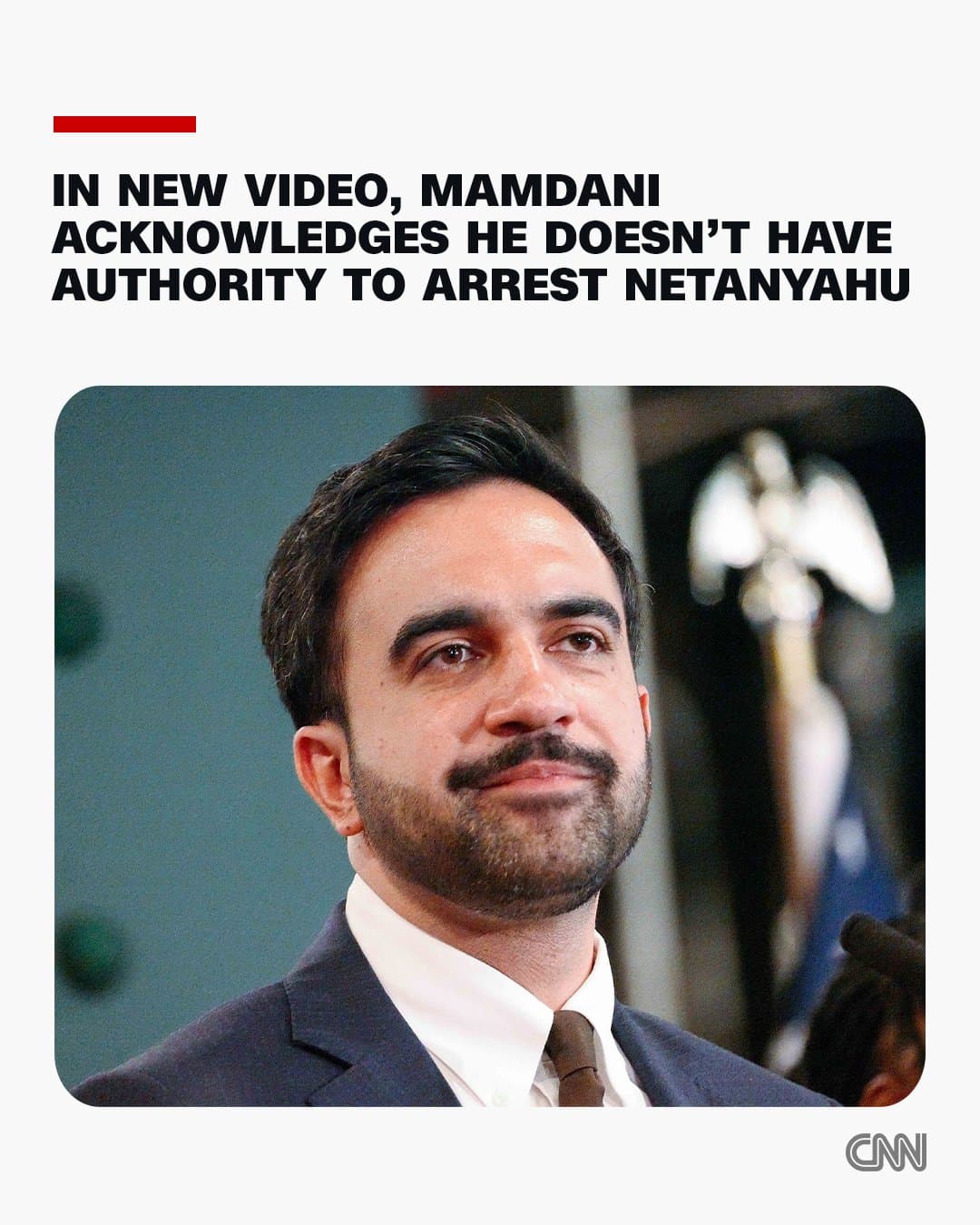
New York City Mayor Zohran Mamdani has clarified that he does not possess the legal authority to arrest Israeli Prime Minister Benjamin Netanyahu should the Israeli leader travel to New York. The statement came in response to growing public discussion surrounding the International Criminal Court's arrest warrant for Netanyahu and questions over whether local officials in the United States would be expected to act on it. Mamdani explained that while opinions surrounding international law and the conflict in the Middle East remain deeply divided, the powers of a mayor are limited by U.S. law and constitutional structures. The issue has become increasingly relevant following the ICC's efforts to pursue accountability related to the Israel-Hamas conflict. While the court may issue warrants for individuals accused of serious international crimes, enforcement depends entirely on national governments. The United States is not a member of the ICC and does not have a legal obligation to execute its warrants. As a result, state and municipal officials have no independent authority to detain foreign leaders based on ICC actions. Mamdani emphasized that law enforcement responsibilities within New York City are governed by federal, state and local statutes. Decisions involving foreign heads of government, diplomatic immunity, extradition and international legal cooperation fall under the jurisdiction of the U.S. federal government rather than city officials. His remarks were intended to clarify the legal framework rather than comment on the merits of the ICC case or the broader geopolitical conflict. The discussion illustrates the growing intersection of international justice and domestic politics. As global conflicts increasingly shape local political debates, elected officials are often asked to respond to questions extending beyond their constitutional responsibilities. The Netanyahu case has become one of the most debated examples of how international institutions interact with sovereign states, particularly countries that have not accepted the ICC's jurisdiction. Legal scholars note that arresting a sitting foreign leader involves complex questions surrounding diplomatic immunity, treaty obligations and international relations. Such decisions are typically handled through national governments and foreign ministries rather than municipal authorities. Even where international arrest warrants exist, implementation varies widely depending on each country's legal system and political commitments. Mamdani's statement serves as a reminder that while mayors oversee policing and public safety within their cities, they cannot independently conduct foreign policy or enforce international criminal rulings. The clarification aims to distinguish political opinion from legal authority, reinforcing that international legal disputes remain primarily the responsibility of national governments and international institutions.
Published by Banx Network. This article is part of the Banx decentralized media programme, powered by the BXE token on the XRP Ledger.