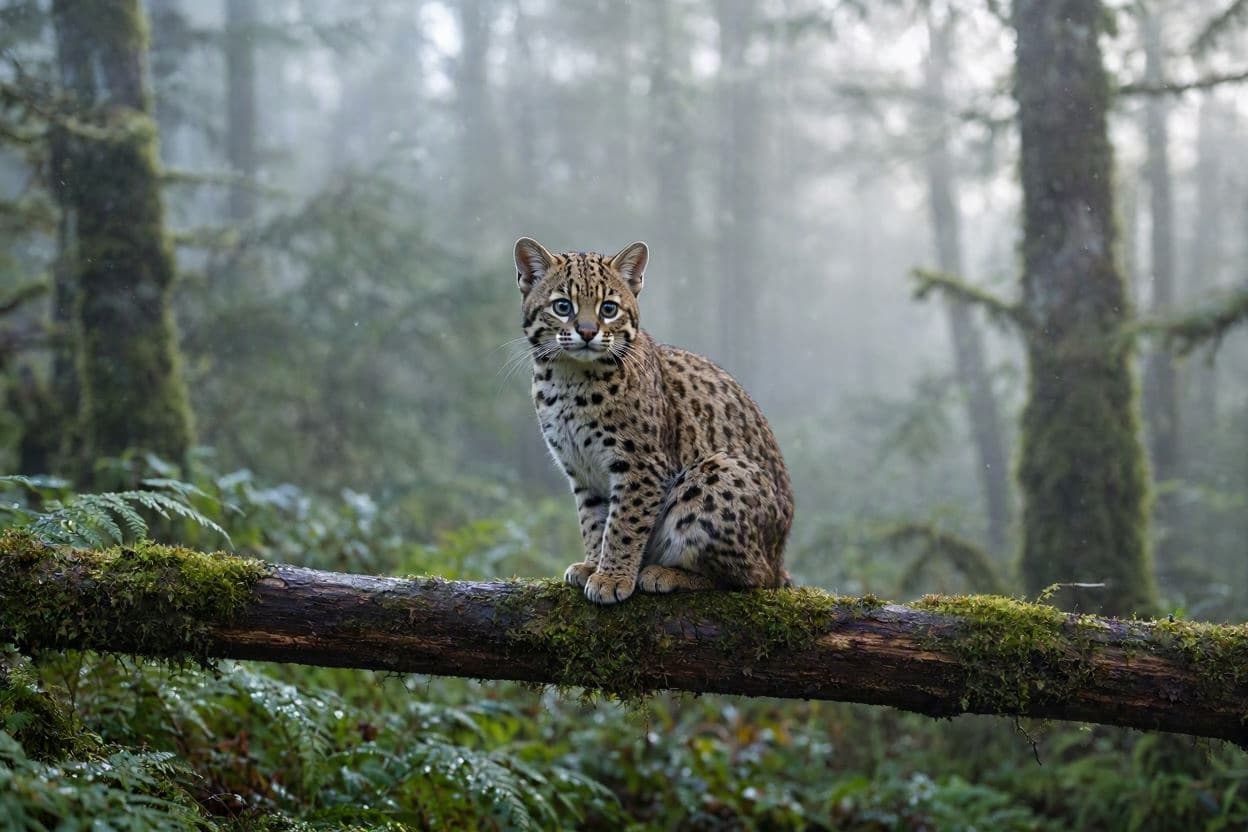
In the mist-shrouded cloud forests of Bolivia’s Yungas region, a secret has been hiding in plain sight for centuries. Scientists have officially identified a new species of wild cat, Leopardus tilcayo, marking the first description of a living feline species in over a hundred years. This tiny predator, no larger than a house cat, has captured the imagination of the public and drawn curious visitors to the Senda Verde Wildlife Sanctuary. It is a discovery that reminds us how much of the natural world remains unknown, waiting to be revealed.
The cat, known locally as the "tilcayo," was first brought to attention through a resident named Tigrino, who has lived at the sanctuary since 2017. Initially thought to be a hybrid or a rare variant of existing species, genetic analysis confirmed its unique status. Its distinct coat pattern and small stature set it apart from its relatives, such as the oncilla and the colocolo. This identification is a triumph of modern science, combining field observation with advanced genomic tools.
For conservationists, the discovery is both exciting and urgent. The Yungas cloud forest is a biodiversity hotspot, yet it faces threats from deforestation, agriculture, and climate change. Identifying a new species highlights the ecological importance of this habitat and the need to protect it. The tilcayo cat serves as an ambassador for the countless other organisms that share this fragile ecosystem. Saving one species often means saving many.
Visitors to the sanctuary are drawn by the rarity of the encounter. Seeing a creature that was unknown to science until recently offers a sense of wonder and connection to the wild. Educational programs at the sanctuary help raise awareness about the cat’s habitat and the challenges it faces. Tourism, when managed responsibly, can provide funding for conservation efforts and local communities. It transforms curiosity into action.
The scientific community celebrates the find as a reminder that exploration is not limited to distant planets or deep oceans. Even in well-trafficked regions, new discoveries are possible. It encourages researchers to look closer, to question assumptions, and to value local knowledge. The name "tilcayo" itself preserves the indigenous terminology, honoring the cultural heritage of the region. Science and culture intersect in meaningful ways.
For Bolivia, the new cat is a source of national pride. It showcases the country’s rich natural heritage and its role in global biodiversity. Government agencies and NGOs are collaborating to ensure that the species receives legal protection and monitoring. Establishing protected areas and enforcing anti-poaching laws are critical steps. Policy must follow science to be effective.
The story of the tilcayo cat also highlights the importance of wildlife sanctuaries. Places like Senda Verde provide refuge for injured or orphaned animals, allowing them to live out their lives in safety. They serve as living laboratories for research and education, bridging the gap between humans and nature. Their work is vital for preserving what remains of the wild.
In the end, the identification of Leopardus tilcayo is more than a taxonomic update. It is a celebration of life’s diversity and resilience. As visitors flock to see this tiny marvel, they carry with them a renewed appreciation for the natural world. The cloud forests of Bolivia hold many secrets, and we are only beginning to listen. Discovery is the first step toward stewardship.
AI Image Disclaimer: The images accompanying this article are AI-generated artistic interpretations of wild cats and cloud forest environments, not actual photographs of the specific specimen Tigrino or the Senda Verde Sanctuary.
Sources: AP News National Geographic PBS NewsHour
Published by Banx Network. This article is part of the Banx decentralized media programme, powered by the BXE token on the XRP Ledger.