
Key Highlights
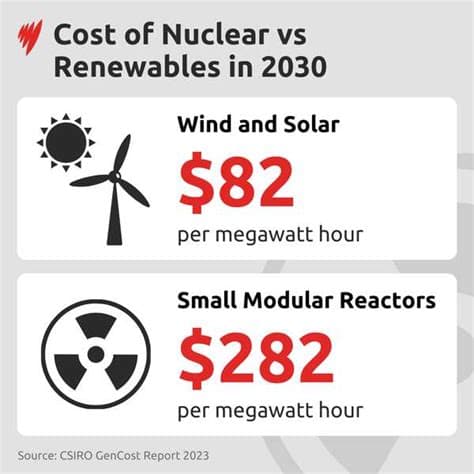
- Cost Comparison:Renewables are now 53% cheaper than nuclear energy.
- Investment Trends:Renewables see increased investment amid declining costs.
- Environmental Benefits:Renewables have a smaller carbon footprint than nuclear.
A recent analysis has revealed that renewable energy sources are now 53% cheaper than nuclear power, marking a pivotal moment in the global energy landscape. This finding underscores a growing preference for renewables, such as solar and wind, which are increasingly recognized for their cost-effectiveness and lower environmental impact.
The study conducted a comprehensive cost comparison, examining various metrics including installation, operational, and maintenance costs associated with both nuclear and renewable energy sources. The results indicate that as technology continues to advance, the costs related to renewable energy are declining at a rapid pace, making them a more attractive option for energy production.
Investment trends further illustrate this shift. Investment in renewable technologies has surged in recent years, driven by decreasing costs and supportive government incentives. In contrast, nuclear projects have encountered numerous challenges, including financial uncertainties, regulatory hurdles, and public opposition, which have hindered their growth. This divergence in investment patterns highlights a significant transition in how energy resources are being prioritized.
Environmental considerations also play a crucial role in this discussion. Renewable energy sources not only offer lower costs but also contribute to a significantly smaller carbon footprint compared to nuclear energy. As the world grapples with the pressing issue of climate change, the environmental advantages of transitioning to renewable energy sources are becoming increasingly apparent. This shift is essential for achieving global climate goals and fostering a sustainable future.
Moreover, the transition towards renewable energy enhances energy security by reducing reliance on imported fuels and diversifying energy sources. This diversification can lead to a more resilient energy infrastructure, particularly in the face of global supply chain disruptions that have become more frequent in recent years.
The implications of these findings extend to energy policy as well. The stark cost difference highlighted by this research advocates for a reevaluation of energy policies, urging governments to prioritize investments in renewable technologies. By reallocating resources towards sustainable energy solutions, nations can more effectively achieve both economic and environmental objectives.
In conclusion, the significant cost advantage of renewables over nuclear power not only reflects an economic shift but also signals a potential turning point in global energy policy. As renewables emerge as a more viable and economically favorable option, the dialogue surrounding energy production is likely to evolve dramatically, paving the way for a more sustainable energy future.
Published by Banx Network. This article is part of the Banx decentralized media programme, powered by the BXE token on the XRP Ledger.



