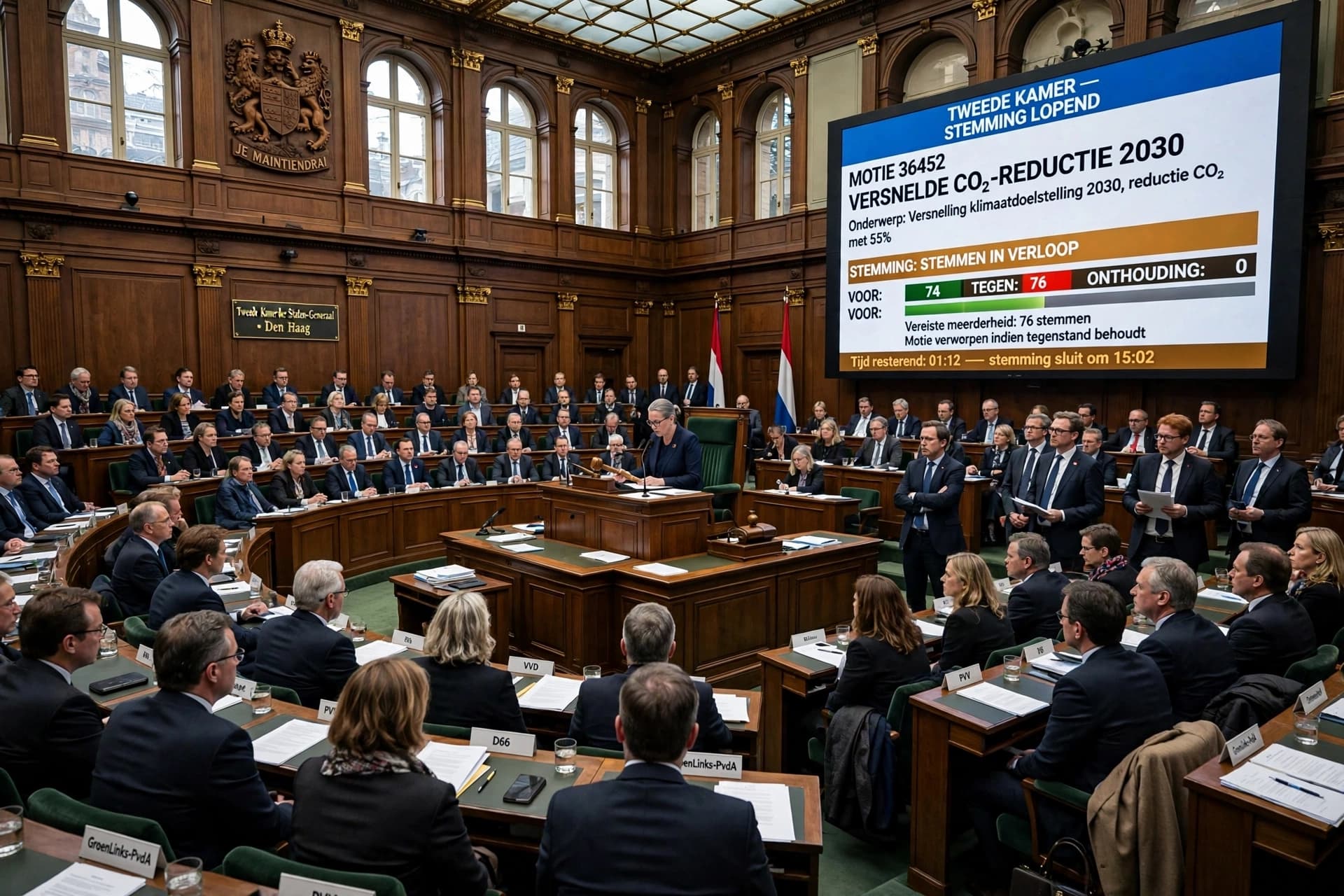
There is a particular tension that arises when a nation on Russia's border considers a shift in its nuclear posture—a tension made sharper by the memory of what happened the last time such debates were held, and by the knowledge that Moscow watches every move with the intensity of a neighbor who believes the fence between them is a provocation. In the Netherlands, that debate has returned to the center of political life. A motion supported by a majority in the Dutch parliament has called for the rejection of a French offer for nuclear weapons cooperation—a move that would, in effect, keep the door open to hosting French nuclear weapons on Dutch soil. Moscow has responded with sharp criticism, and the exchange has renewed questions about the future of nuclear deterrence in Europe.
The motion, proposed by the Socialist Party (SP) and the Party for the Animals (PvdD), specifically requested that the government "exclude that French nuclear weapons will be stationed on Dutch territory as an outcome of this dialogue" . The underlying issue is a proposed strategic dialogue with France on nuclear deterrence—a dialogue that the Dutch government has pursued as part of broader European discussions about reducing reliance on the American nuclear umbrella. But the motion's rejection of a French nuclear presence reflects a deeper division in Dutch politics about whether Europe should develop its own nuclear capabilities or continue to rely on NATO's existing arrangements.
The debate has been simmering for months. In January, Kati Piri, foreign affairs spokesperson for the PvdA-GL (the largest left-wing opposition party), told Dutch television that "there is no longer a taboo on such subjects" as a European nuclear weapon . That statement drew criticism from peace organizations, who noted that it appeared to contradict the party's own election program, which prioritizes "the protection and strengthening of the Non-Proliferation Treaty" . The tension between the party's stated commitment to nuclear disarmament and its openness to European nuclear cooperation reflects a broader shift in European security thinking—a shift driven by concerns about American reliability and Russian aggression.
The Netherlands' position on nuclear weapons is complicated by its participation in NATO's nuclear sharing arrangements. The country hosts American nuclear weapons at Volkel Air Base and has a nuclear task within NATO, operating dual-capable F-16 fighter aircraft . The Dutch government has consistently maintained that these arrangements are fully compliant with the Non-Proliferation Treaty and that the criticism from Russia and China is unfounded . In its most recent NPT review conference statement, the Netherlands emphasized that "as long as nuclear weapons exist in the world, NATO remains a nuclear alliance and nuclear deterrence continues to play an essential role in maintaining strategic balance and preventing the use of nuclear weapons" .
Moscow's reaction to the Dutch debate has been predictable in its intensity. The Russian government has long criticized NATO's nuclear sharing arrangements, arguing that they violate the spirit of the NPT. The Dutch consideration of French nuclear cooperation, even if rejected by the motion, has been framed in Russian media as further evidence of European escalation. For the Netherlands, the debate is not about acquiring nuclear weapons—it is about the terms of its participation in existing deterrence structures. But in the current security environment, even that distinction is difficult to maintain.
The motion's passage does not change government policy on its own. But it signals that a majority of Dutch parliamentarians are unwilling to see French nuclear weapons stationed on Dutch soil, even as the broader conversation about European nuclear deterrence continues. For Moscow, the debate is a reminder that its neighbors are reassessing their security arrangements. For the Netherlands, it is a reminder that the line between deterrence and proliferation is not always easy to draw—and that the choices made in The Hague are watched closely in the Kremlin.
AI Image Disclaimer: The visual elements in this article were created using AI generation tools and are intended for illustrative purposes only.
Sources: Tweede Kamer der Staten-Generaal, De Nieuwe Vredesbeweging, NPT Review Conference Statements
Published by Banx Network. This article is part of the Banx decentralized media programme, powered by the BXE token on the XRP Ledger.