Kathmandu, Nepal—Over 100 foreign tourists remained trapped in remote mountain enclaves across northern Nepal on Tuesday after massive flash floods and mudslides tore through the Budhi Gandaki River valley. Torrential mountain rainfall swept away suspension bridges, obliterated primary trekking trails, and destroyed over 200 residential structures, cutting off escape routes for hundreds of local villagers and international hikers.
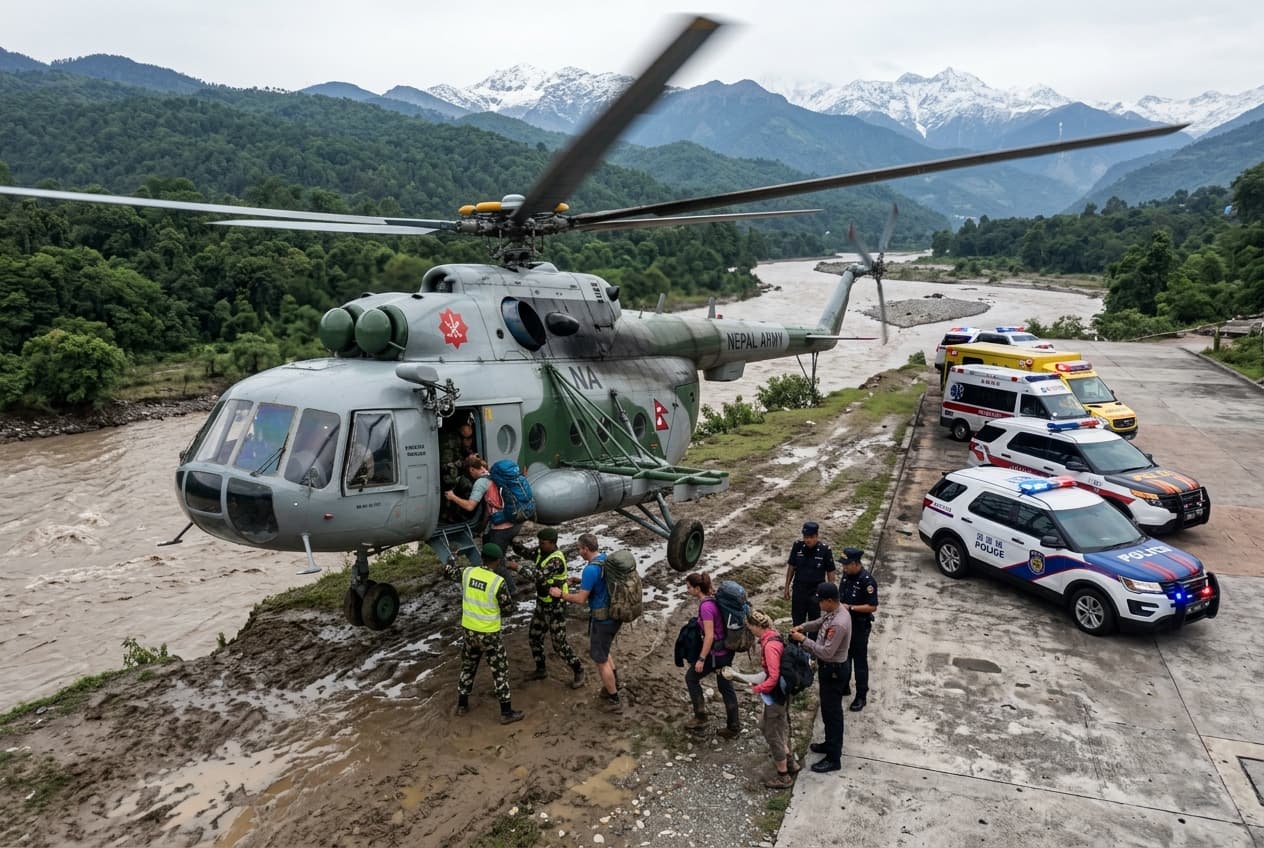
National Disaster Risk Reduction and Management Authority officials confirmed that military and civilian rescue personnel extracted 321 people from flooded zones across the worst-hit districts. Nepalese Army transport helicopters flew emergency sorties into narrow river canyons to airlift injured individuals and stranded trekking groups from isolated high-altitude outposts.
A sudden blockage of an upstream river channel triggered a catastrophic dam breach, sending a wall of mud and river debris surging down mountain valleys. The surge crushed homestays, swept away footbridges, and buried sections of the popular Manaslu circuit trail under meters of wet earth and boulders.
Field reports from Gorkha District indicated that ground search crews encountered collapsed mountainsides along key access roads, preventing heavy Earth-moving equipment from reaching isolated settlements. Over 700 security personnel armed with manual tools and ropes hiked along damaged ridgelines to reach trapped groups on foot.
International expedition agencies worked through the night to map the GPS coordinates of missing trekking parties who lost radio contact when power lines and cell towers collapsed across the region. Foreign embassies in Kathmandu established emergency response desks to track stranded citizens and coordinate evacuation logistics with local authorities.
Dozens of rescued hikers were flown directly to regional airfield hubs in Pokhara and Kathmandu for medical evaluations. Field doctors treated survivors for acute hypothermia, physical exhaustion, and minor crush injuries sustained during sudden mudflows.
Geologists warned that saturated mountain slopes remain highly unstable, posing an ongoing threat of secondary landslides across low-lying valley floors. Emergency teams established temporary relief camps equipped with medical supplies, clean drinking water, and field tents for hundreds of displaced residents whose homes were swept away.
Search and rescue operations continue under difficult weather conditions as army helicopters monitor mountain passes for signal fires lit by isolated survivor groups. Disaster management authorities confirmed that recovery crews will focus on clearing blocked river channels to prevent further sudden water surges down populated valleys.
Published by Banx Network. This article is part of the Banx decentralized media programme, powered by the BXE token on the XRP Ledger.