Key Highlights
- Lisbon ranks as the least affordable housing market in Europe, requiring 18.7 years of income to buy a home.
- Other cities facing severe affordability issues include Split, Prague, and Milan.
- The surge in house prices in Portugal outpaces wage growth, exacerbating the housing crisis.
A recent affordability ranking has shed light on the alarming state of housing markets across Europe, revealing that many cities have become increasingly out of reach for average earners. At the forefront of this crisis is Lisbon, which has been identified as one of the least affordable cities in Europe. According to the report, purchasing a home in Lisbon now requires nearly 19 years of a typical household's income, a staggering figure that underscores the growing divide between wages and housing costs.
Lisbon's price-to-income ratio stands at approximately 18.7 times the annual household income, placing it alongside Split, Croatia, as the most affected city in this analysis. Other European cities are also grappling with similar challenges, including Prague, Milan, Tirana, Vienna, Belgrade, Paris, London, and Brno, all of which report high price-to-income ratios that raise concerns for potential homebuyers.
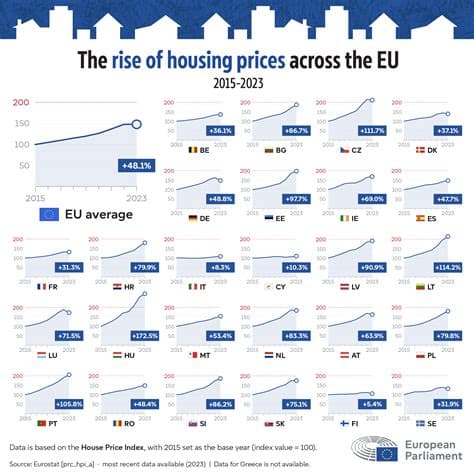
The situation in Portugal is particularly dire, as the country has experienced a dramatic increase in housing prices over the past decade. House prices have surged by around 240%, while wages have only risen by about 59%. This disparity is a key factor contributing to Lisbon's ranking among the least affordable housing markets. For instance, a small flat in central Lisbon is currently priced at approximately €338,000, which translates to nearly 19 years of income for the average worker, not accounting for other living expenses.
The implications of this affordability crisis extend beyond mere statistics. The report highlights the social consequences of rising housing costs, including protests and growing concerns that essential workers and long-time residents may be forced out of major urban centers. This trend poses a threat to local economic competitiveness and community stability, as cities risk losing the very individuals who contribute to their vibrancy and functionality.
While many economists do not foresee an imminent housing market crash, the widening gap between income and housing prices serves as a warning sign. The affordability metrics indicate that without significant changes in housing policy or economic conditions, the situation may worsen, further alienating residents from the housing market.
As cities across Europe grapple with these challenges, the need for effective solutions becomes increasingly urgent. Policymakers must address the underlying issues contributing to the housing crisis to ensure that urban centers remain accessible and livable for all residents.
Published by Banx Network. This article is part of the Banx decentralized media programme, powered by the BXE token on the XRP Ledger.