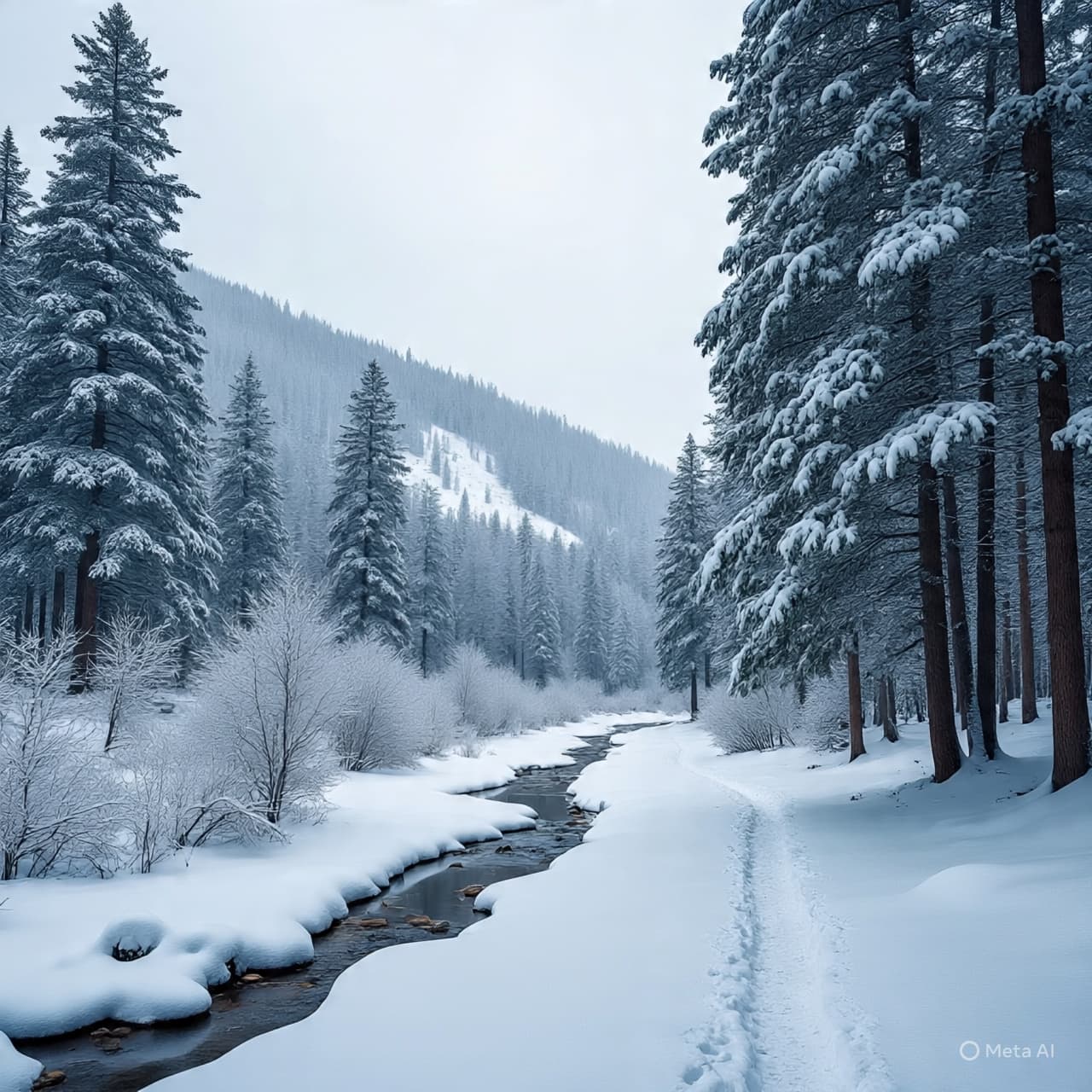
On the first day of a new year, along a wooded path winding through the foothills of Colorado’s northern mountains, a tranquil winter landscape became the setting for a rare and sobering event. What began as another hike through crisp air and scenic pines ended in tragedy for 46‑year‑old Kristen Marie Kovatch, whose life was cut short on January 1, 2026, in a suspected mountain lion attack near the Crosier Mountain trail in unincorporated Larimer County, northeast of Estes Park.
Mountain lion encounters are a part of life in Colorado’s rugged terrain, but fatal attacks are exceptionally uncommon — with the last confirmed human death from such an encounter in the state occurring in 1999. Officials said Kovatch died of asphyxia due to neck compression, injuries a Larimer County coroner determined were consistent with a mountain lion attack, and her death was ruled an accident.
Hikers discovered Kovatch’s body around noon on New Year’s Day. A mountain lion was nearby when they arrived and was driven off with thrown rocks, allowing the group to approach the scene. One hiker, a physician, checked for a pulse but found none. Subsequent operations by wildlife officers led to the euthanization of two mountain lions found in the area, one of which — a roughly 1‑year‑old male — tested positive for human DNA on all four paws, linking it to the tragic encounter. The search also included efforts to track a possible third lion seen in the vicinity, but that animal was not located. Trails in the area were temporarily closed while officials conducted their search.
Colorado Parks and Wildlife (CPW) said the state’s mountain lion population — often called cougars or pumas — numbers in the thousands, from about 3,800 to 4,400 animals, and while sightings are relatively common, attacks on people are rare. Experts note that mountain lions are generally elusive and tend to avoid human contact, though winter conditions — when deer and elk descend to lower elevations — can bring predators and hikers into closer proximity.
Local outdoor communities and officials alike have responded with a mixture of sorrow and resolve. For many, Kovatch’s death is a tragic reminder of both the allure and unpredictability of wilderness recreation. Those who knew her remembered a passionate outdoor enthusiast who loved the natural beauty of Colorado’s public lands; her family said they were devastated by the sudden loss.
As the echoes of this incident settle over the high trails and forested slopes, wildlife agencies emphasize that while such fatal encounters are extremely unlikely, visitors to mountain country should practice caution: hike in groups when possible, stay alert, make noise to reduce surprise close encounters, and follow guidance from park and wildlife officials. In these shared spaces between human exploration and wild habitats, respect for nature’s rhythms remains essential — both for safety and for the enduring wonder that draws people outdoors.
AI Image Disclaimer Visuals are created with AI tools and are not real photographs.
Sources Associated Press reporting via multiple outlets; Colorado Sun; CPR; ABC News on the suspected mountain lion attack and ensuing search.
Published by Banx Network. This article is part of the Banx decentralized media programme, powered by the BXE token on the XRP Ledger.