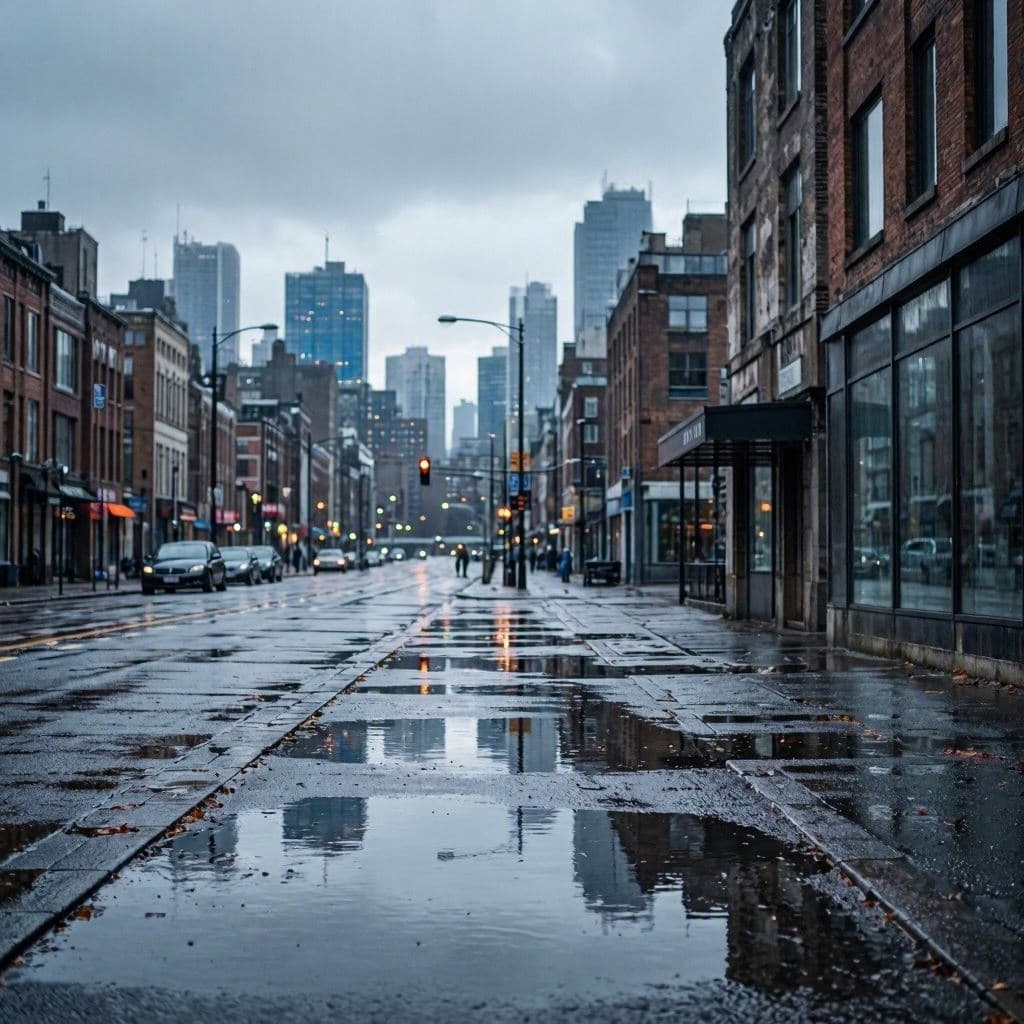
The sky over Toronto has turned a shade of gray that speaks of abundance, perhaps too much of it. As heavy rain begins to fall across the region, authorities have issued a flood watch, a gentle but firm reminder of nature’s power to reshape our daily rhythms. In a city built on concrete and steel, water remains the ultimate arbiter, finding its way through cracks and lowlands, demanding our attention and respect. This weather event is not merely a meteorological statistic but a moment of collective pause.
For residents, the sound of rain against windows can be soothing, yet it carries an undercurrent of caution. Streets that usually hum with traffic may soon become shallow rivers, and basements that store cherished memories face the threat of intrusion. The flood watch serves as a prompt to prepare, to move valuables to higher ground, and to check on neighbors who might be vulnerable. It is a time when community vigilance becomes a shared responsibility.
Urban infrastructure, though robust, has its limits. Storm drains can only handle so much volume before they overflow, turning sidewalks into streams. City workers are likely monitoring key intersections and pumping stations, working quietly to mitigate the impact. Their efforts are a testament to the unseen labor that keeps the city functioning during times of stress, a backdrop of stability amidst the storm.
The psychological impact of such weather should not be underestimated. For those who have experienced flooding before, the rising water levels can trigger anxiety and memories of loss. For others, it is a novel inconvenience. Regardless of past experience, the uncertainty of the outcome creates a shared sense of anticipation. We wait to see how high the water will rise and how quickly it will recede.
Climate patterns are shifting, making extreme weather events more frequent and intense. What was once a rare occurrence is becoming part of the seasonal narrative. This reality invites reflection on how we build and live in urban environments. Are our cities resilient enough to handle the increasing volatility of the climate? The flood watch is a small piece of a larger puzzle regarding sustainability and adaptation.
As the rain continues, life indoors slows down. Plans are postponed, commutes are lengthened, and there is a forced stillness that allows for reflection. There is beauty in this pause, a chance to appreciate the shelter we have and the resilience of the natural world. The storm reminds us that we are part of a larger ecosystem, subject to its moods and cycles.
When the clouds eventually break, the city will begin the process of drying out. Cleanup efforts will commence, and normalcy will return. But the memory of the flood watch will linger, encouraging greater preparedness for the next time the skies open up. Until then, we watch the water, respecting its power and hoping for calm.
A flood watch has been issued for Toronto as heavy rain impacts the region, prompting residents to take precautions. The event highlights the ongoing challenges of urban drainage and the importance of weather readiness.
AI Image Disclaimer: Please note that any accompanying visuals for this story are AI-generated representations intended for illustrative purposes only.
Sources: Environment Canada CBC News City of Toronto Statements
Published by Banx Network. This article is part of the Banx decentralized media programme, powered by the BXE token on the XRP Ledger.