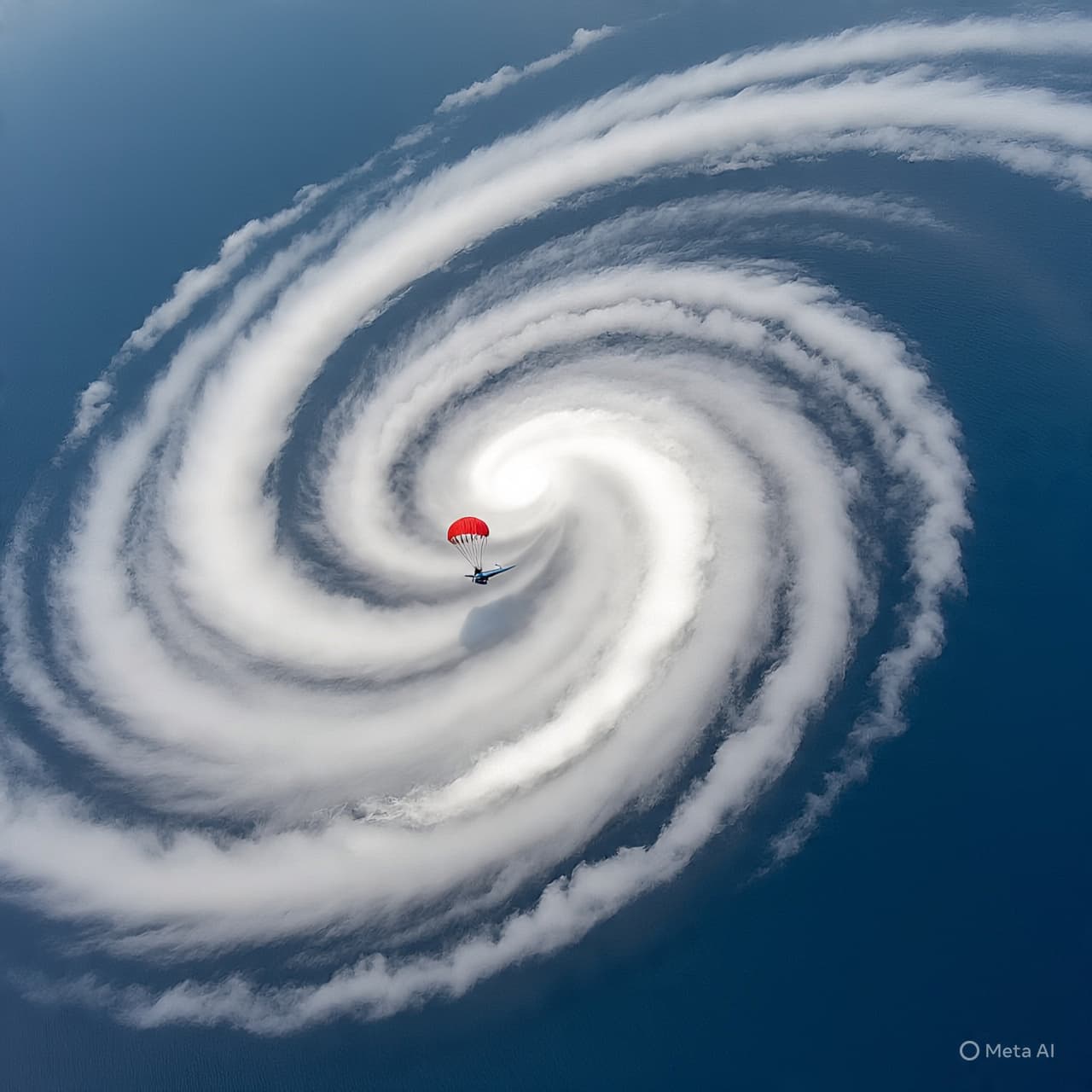
The sky over the Atlantic once again whispers stories of nature’s unyielding power — and Hurricane Melissa has just etched one of its loudest chapters yet. As scientists peer back through the data, they’re uncovering a wind so fierce that it may rewrite part of meteorological history.
Data confirmed by the National Center for Atmospheric Research (NCAR) and the U.S. National Science Foundation (NSF) shows that a dropsonde — a weather instrument parachuted from a NOAA Hurricane Hunter aircraft — recorded a 252 mph gust as it descended through the eye wall of Hurricane Melissa. In context, that is now the highest verified wind gust ever captured in a hurricane via dropsonde.
Dropsondes are remarkable — they drift down through the storm, measuring pressure, temperature, humidity, and wind at up to 4 times per second. The 252 mph reading came just before the device plunged into the ocean, at roughly 820 feet above sea level.
To make sure such a raw number wasn’t a fluke, NCAR scientists ran rigorous quality-control checks. They verified that the gust was physically plausible, consistent with the storm’s behavior, and matched expected patterns. The reading even surpassed the previous dropsonde record of 248 mph, set by Typhoon Megi in 2010.
This isn’t just a distant data point — it underscores how ferocious Melissa was as it approached Jamaica. The storm made landfall as a high-end Category 4 (sustained winds ~185 mph), but this gust suggests there may have been even more raw energy in its core.
Crew aboard the reconnaissance plane also had a harrowing experience. According to reports, turbulence inside Melissa was so severe that the aircraft was thrown hundreds of feet vertically, forcing the mission to depart early. Yet despite the risk, they released the dropsonde, and it delivered data that could reshape how we understand hurricane intensity.
In the broader picture, this extreme gust amplifies concerns about how warming oceans may supercharge storms. For meteorologists, it’s not just a record: it’s a reminder of the stakes — and how much we still have to learn about the most powerful forces on Earth.
AI Image Disclaimer “Images are created with AI tools and serve as conceptual illustrations, not actual photographs.”
Sources NCAR / UCAR News CBS News The Washington Post Fox Weather The Telegraph
Published by Banx Network. This article is part of the Banx decentralized media programme, powered by the BXE token on the XRP Ledger.