
Key Highlights
- Incident:A landslide in Shanxi Province, China, resulted in five fatalities and three injuries.
- Rescue Efforts:Over 500 personnel were deployed for search and rescue operations.
- Community Impact:Local authorities established temporary shelters for displaced families.
On the evening of [insert date], a catastrophic landslide struck Hongtong, Shanxi Province, obliterating a residential house and tragically claiming the lives of five individuals. The disaster unfolded rapidly after three days of heavy rainfall, which saturated the ground and destabilized the hillside. Villagers reported hearing a loud rumble just moments before the earth collapsed, burying the home under ten feet of debris.
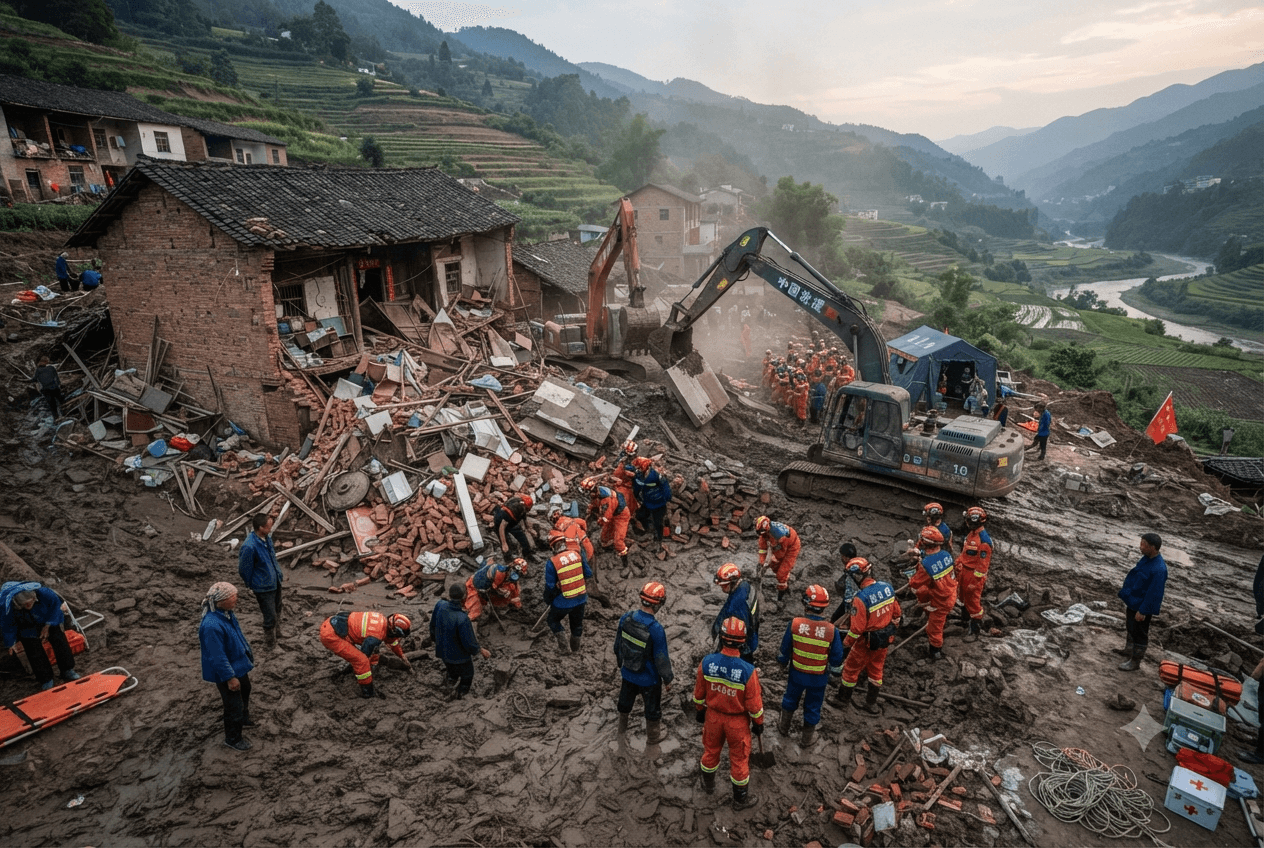
Rescue operations commenced immediately, with local police and volunteer teams rushing to the scene equipped with basic tools to search for survivors. Within the first hour, three severely injured individuals were rescued from the wreckage and transported to a nearby hospital for urgent medical care. The provincial emergency management bureau mobilized over 500 personnel, including heavy machinery and drones, to assist in the search efforts, which continued through the night despite the risk of further landslides.
By dawn, the grim reality set in as forensic teams confirmed the recovery of five bodies from the rubble. Relatives gathered at a makeshift command center, mourning the loss of their loved ones as officials worked to identify the deceased. In response to the ongoing threat of additional landslides, geologists were dispatched to monitor the area, and an evacuation order was issued for twelve nearby homes situated along the same precarious ridge.
As rescue teams navigated the challenging terrain, they faced significant obstacles, including muddy access paths and unstable ground. First responders worked tirelessly to recover personal belongings and assess the damage. A regional police commander noted the critical state of the hillside, stating, "The structural integrity of the entire hillside is fatally compromised." Investigators also began examining a nearby quarry for potential links to the landslide, focusing on work permits and earth-moving activities that may have contributed to the disaster.
Local authorities quickly established a temporary shelter in a municipal school gymnasium to accommodate families displaced by the landslide. Relief efforts included the distribution of bottled water, food, and blankets to those who had to evacuate with minimal belongings. Medical personnel treated several elderly residents for shock and exposure as temperatures dropped in the mountainous region. Meanwhile, the local power grid remained down, complicating recovery efforts further.
Insurance inspectors began assessing the damage from a distance, noting the complete loss of agricultural equipment stored near the collapsed house. Agricultural officials warned that the heavy rainfall would likely have severe repercussions for the surrounding crop fields, which were already vulnerable to runoff. Public frustration mounted as residents questioned the lack of early warning systems in known geological risk areas, highlighting budget constraints that had delayed the installation of automated mudslide alerts.
As the search for any remaining victims continued, rescue dogs were deployed to comb through the debris, ensuring that no one was left unaccounted for. Exhausted firefighters took brief rests, sipping hot tea provided by local volunteers. Just before noon, rain began to fall again, prompting the incident commander to pause excavation efforts temporarily, prioritizing the safety of the search teams as they awaited the passing storm.
The tragic events in Shanxi Province serve as a stark reminder of the dangers posed by natural disasters, particularly in regions prone to heavy rainfall and landslides. As recovery efforts continue, the community grapples with the loss and the urgent need for improved safety measures to prevent future tragedies.
Published by Banx Network. This article is part of the Banx decentralized media programme, powered by the BXE token on the XRP Ledger.



