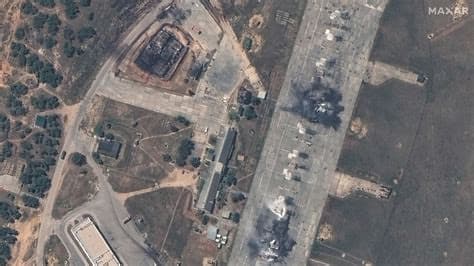
The Ukraine conflict has served as a stark reminder of the vulnerabilities that NATO air bases face in a rapidly changing warfare landscape. Recent events have demonstrated that traditional military defenses may not suffice against the innovative use of drones, which have been pivotal in Ukraine's defensive strategies.
Ukraine has utilized its growing drone capabilities to launch effective strikes, targeting both military and civilian objectives. Over the past few months, Kyiv has launched extensive drone offensives, successfully hitting strategic Russian air bases and inflicting significant damage. Such tactics underscore the new era of aerial warfare where unmanned aerial vehicles (UAVs) play a crucial role, challenging established military norms.
Defense experts warn that NATO bases are exposed and may not be adequately protected against such stealthy and agile drone attacks. The increased frequency of drone incidents has raised alarms among NATO defense officials, who now question their readiness and response capabilities. As military analysts emphasize, a well-coordinated drone strike could potentially undermine air superiority before it even begins.
In comparison to Russia, which has heavily invested in drone technology and deployed diverse systems capable of launching simultaneous strikes, NATO nations have shown slower adaptation to this new reality. For instance, China's military infrastructure includes more than 3,000 hardened shelters to protect its assets, contrasting starkly with NATO's relatively open facilities.
The recent review of Britain's military capabilities echoed these concerns, emphasizing the urgent need for NATO members to enhance their drone defenses and reconsider their operational strategies. With the technological arms race in full effect, reinforcing air bases against drone attacks has become a substantial priority.
While Ukraine’s military continues to adapt and grow, projections indicate it could produce over 5 million drones this year alone, a significant increase from the 800,000 it manufactured two years ago. This rapid scaling of capabilities highlights the importance of innovation in modern military operations and sets a precedent for how future conflicts may unfold.
As NATO confronts these expanding threats, there is a growing consensus that investment in drone technology and defensive measures will be critical. The outcome of this conflict may very well shape the future strategies of NATO and its allies, influencing how they prepare for potential engagements with technologically adept adversaries.
Published by Banx Network. This article is part of the Banx decentralized media programme, powered by the BXE token on the XRP Ledger.