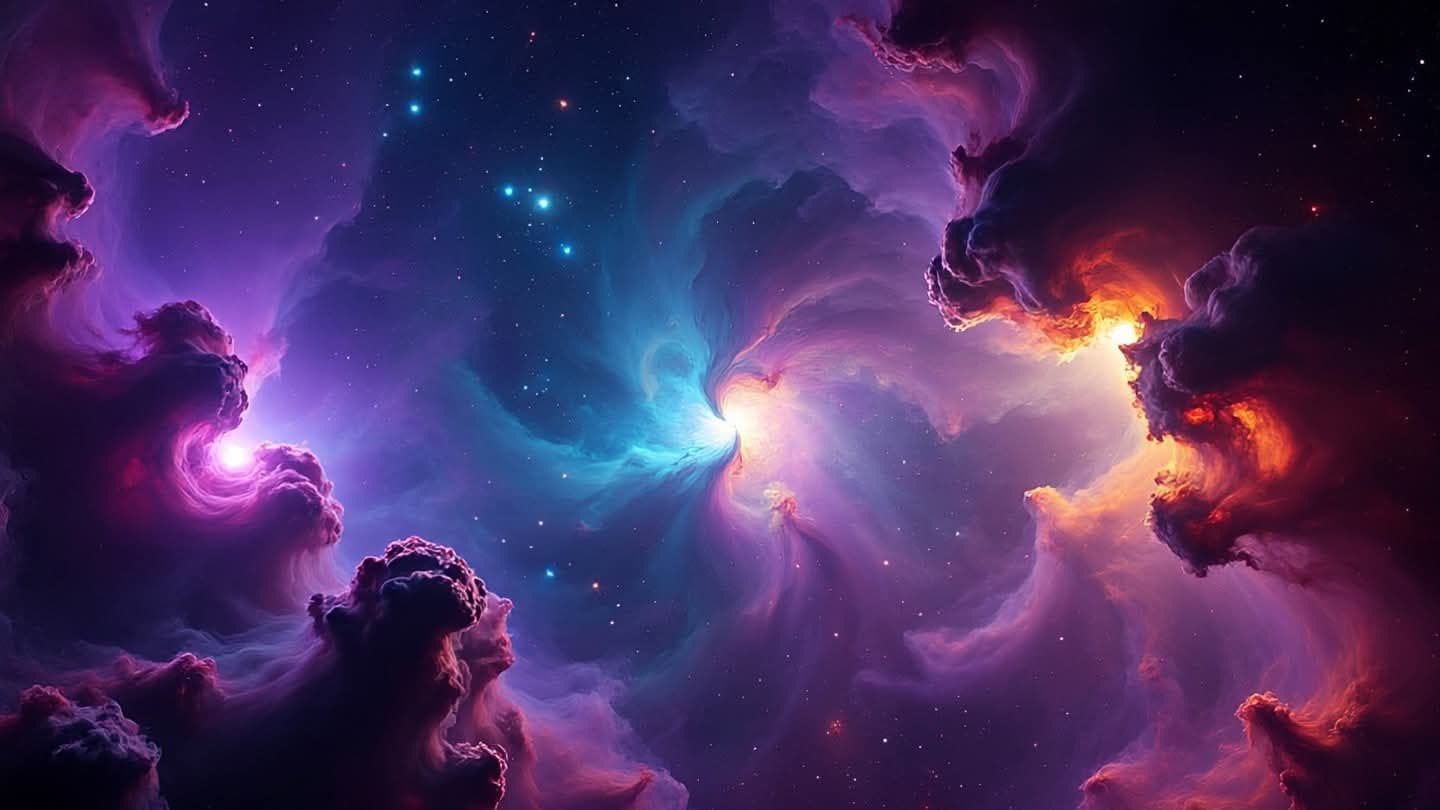
In the vast canvas of the cosmos, few sights are as breathtaking as the Tarantula Nebula, a stellar nursery located in the Large Magellanic Cloud. Recently, NASA released a stunning new composite image that layers views from the James Webb Space Telescope, the Hubble Space Telescope, and the Chandra X-ray Observatory. The result is a vibrant collage that reveals the nebula’s intricate structures in unprecedented detail, offering a multi-wavelength perspective on star formation.
The image, described by NASA as resembling "layered sheets of colored cellophane," combines data from different parts of the electromagnetic spectrum. Webb’s infrared capabilities pierce through dust clouds to reveal young stars, while Hubble’s optical views highlight glowing gas and plasma. Chandra’s X-ray data adds another layer, exposing high-energy phenomena such as supernova remnants and massive stars emitting intense radiation.
This multi-telescope approach allows astronomers to study the Tarantula Nebula in a holistic way, understanding how different physical processes interact within this dynamic region. The nebula is one of the most active star-forming areas in the local universe, making it a crucial laboratory for studying how stars are born and evolve. The new image provides a richer context for these processes, showing the interplay between heat, light, and gravity.
The colors in the composite are not merely aesthetic choices but represent specific wavelengths of light. Blue hues often indicate high-energy X-rays, while reds and oranges may correspond to infrared emissions from warm dust and gas. This careful mapping ensures that the image is both scientifically accurate and visually striking, bridging the gap between data and public engagement.
For researchers, the detailed view offers new insights into the lifecycle of massive stars. The Tarantula Nebula is home to some of the largest and brightest stars known, which influence their surroundings through powerful winds and radiation. By observing these effects across multiple wavelengths, scientists can better understand the feedback mechanisms that regulate star formation in galaxies.
The release of this image also highlights the power of international and inter-agency collaboration. The combined efforts of NASA’s various observatories demonstrate how complementary technologies can enhance our understanding of the universe. It is a reminder that no single instrument can capture the full complexity of cosmic phenomena, but together, they create a more complete picture.
Public response to the image has been overwhelmingly positive, with many marveling at the beauty and complexity of the nebula. Such visuals serve as a powerful tool for science communication, inspiring curiosity and appreciation for the wonders of space. They remind us of the vastness of the universe and our place within it.
As astronomers continue to analyze the data, further discoveries are expected. The Tarantula Nebula remains a focal point for future observations, promising to yield more secrets about star formation and galactic evolution. This colorful collage is not just an endpoint but a starting point for deeper exploration.
AI Image Disclaimer: The images referenced in this article are based on real astronomical data, but any illustrative graphics used here are AI-generated interpretations of cosmic beauty.
Sources: NASA, ESA/Webb, Chandra X-ray Observatory, Purdue Exponent
Published by Banx Network. This article is part of the Banx decentralized media programme, powered by the BXE token on the XRP Ledger.