As humanity prepares to send another eye into the heavens, the focus is not just on seeing farther, but on understanding deeper. The Nancy Grace Roman Space Telescope, NASA’s next major astrophysics observatory, is poised to tackle one of the most profound questions in modern cosmology: the nature of dark energy. This mysterious force, responsible for the accelerating expansion of the universe, has eluded explanation for decades, but the Roman telescope promises to shed new light on this cosmic enigma.
Named after NASA’s first chief astronomer, the Roman telescope is designed with a wide field of view, significantly larger than that of the Hubble Space Telescope. This panoramic capability allows it to survey vast swathes of the sky, capturing images of billions of galaxies. By mapping the distribution and shapes of these galaxies over time, scientists hope to trace the history of the universe’s expansion and measure the influence of dark energy with unprecedented precision.
Dark energy makes up about 68% of the universe, yet its fundamental nature remains unknown. Is it a constant property of space, as Einstein’s cosmological constant suggests? Or does it change over time? The Roman telescope will employ two primary methods to investigate this: weak gravitational lensing and baryon acoustic oscillations. Both techniques rely on statistical analysis of large-scale structures to infer the underlying forces at work.
Weak gravitational lensing involves measuring the subtle distortions in the shapes of distant galaxies caused by the gravity of intervening matter. By analyzing these distortions across billions of galaxies, researchers can create a 3D map of matter distribution in the universe. This map reveals how structure has grown over cosmic time, providing clues about how dark energy has competed with gravity to shape the cosmos.
Baryon acoustic oscillations, on the other hand, serve as a standard ruler for measuring cosmic distances. These are regular fluctuations in the density of visible matter, remnants of sound waves from the early universe. By measuring the scale of these oscillations at different epochs, astronomers can track the expansion rate of the universe with high accuracy. The Roman telescope’s wide field is ideal for detecting these large-scale patterns.
The launch of the Roman telescope represents a significant investment in fundamental science. It complements other missions like the Euclid space telescope and ground-based surveys, creating a multi-pronged attack on the problem of dark energy. Collaboration across international borders and institutions ensures that data is shared and analyzed comprehensively, maximizing the scientific return.
Beyond dark energy, the Roman telescope will also study exoplanets and infrared astrophysics. Its coronagraph instrument will directly image giant planets around nearby stars, testing technologies for future habitable world searches. However, its primary legacy is likely to be its contribution to cosmology, potentially reshaping our understanding of the universe’s fate.
With the upcoming launch of the Nancy Grace Roman Space Telescope, NASA aims to turn the page on one of science’s biggest mysteries. By observing the universe on a grand scale, it hopes to reveal the true nature of dark energy. As we stand on the brink of this new era of discovery, the promise of understanding why the universe expands faster each day brings us closer to comprehending our place in the cosmos.
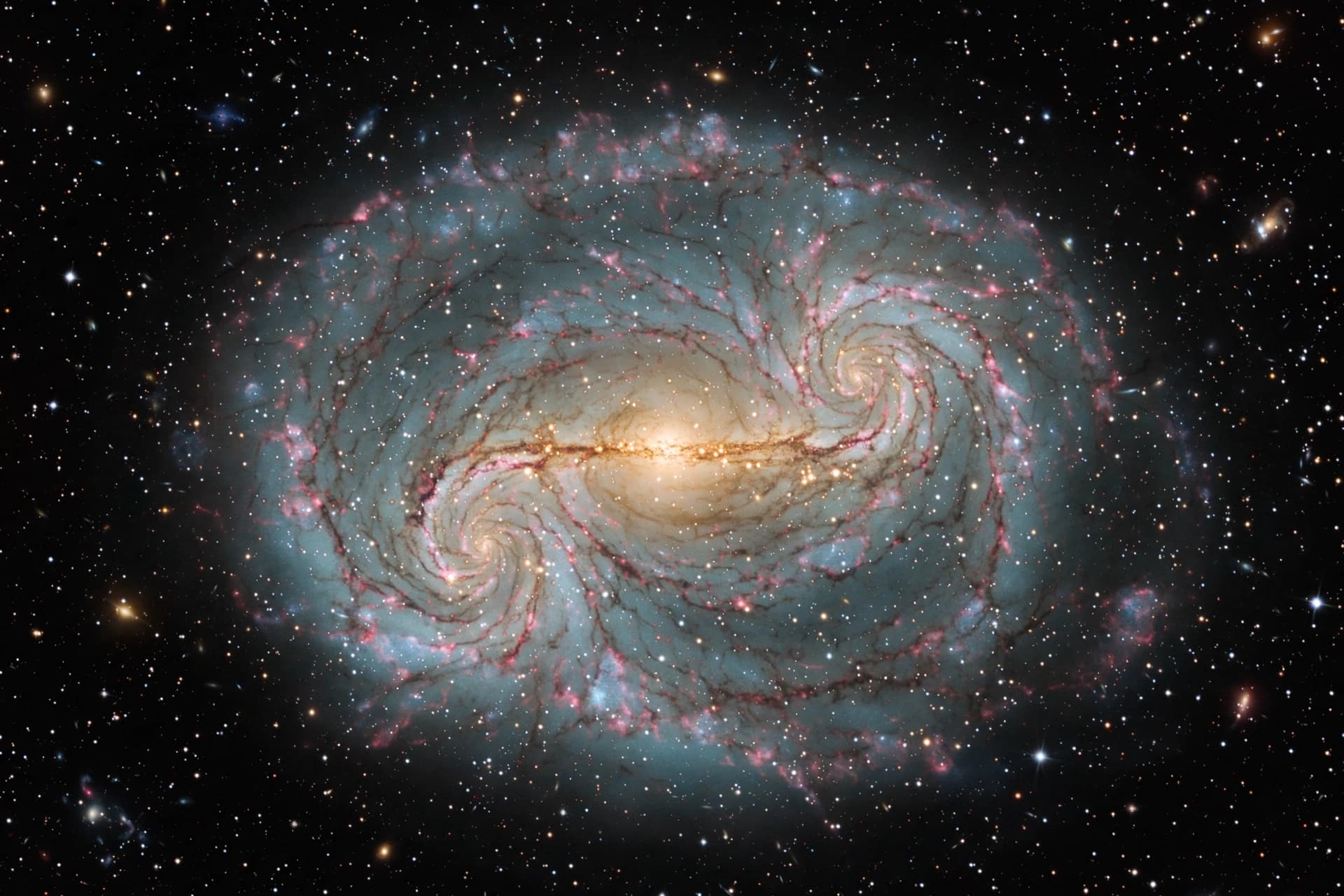
AI Image Disclaimer: Please note that any accompanying visuals for this article are AI-generated representations intended for illustrative purposes only.
Sources: NASA, SpaceNews, Scientific American, The Planetary Society
Published by Banx Network. This article is part of the Banx decentralized media programme, powered by the BXE token on the XRP Ledger.