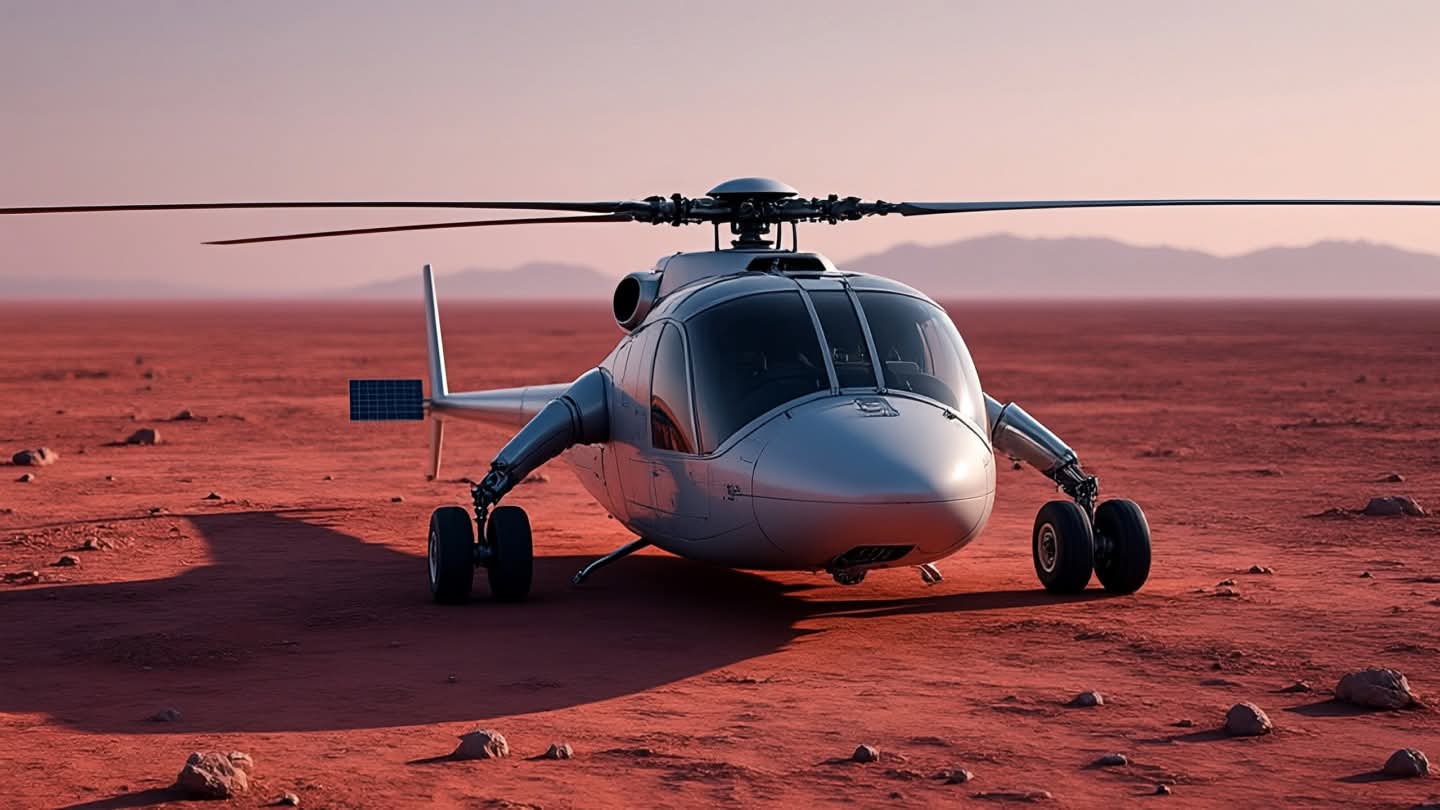
On the red plains of Mars, communication is the lifeline that connects human ingenuity with robotic exploration. As NASA prepares for the next generation of Martian aviation with the SkyFall helicopter project, engineers have unveiled a groundbreaking innovation: a featherweight, fabric-based antenna. This design promises to enhance data transmission while minimizing weight, a critical factor in the harsh and resource-constrained environment of the Red Planet.
The new antenna, developed at NASA’s Jet Propulsion Laboratory, replaces traditional rigid metal structures with a flexible, woven material. This fabric-based approach allows the antenna to be integrated seamlessly into the helicopter’s body, reducing aerodynamic drag and saving precious mass. Every gram counts in space missions, and this lightweight solution frees up capacity for additional scientific instruments or extended flight times.
Testing has shown that the fabric antenna maintains high performance across various frequencies, ensuring reliable communication with orbiters and Earth. Its durability has also been rigorously assessed, withstanding the extreme temperature fluctuations and radiation levels characteristic of Mars. This resilience is essential for long-duration missions, where equipment failure is not an option and repair is impossible.
The SkyFall helicopters aim to build on the legacy of Ingenuity, the first aircraft to fly on another planet. While Ingenuity proved the concept of Martian flight, SkyFall will focus on expanded exploration capabilities, including terrain mapping and sample reconnaissance. The improved communication system enabled by the new antenna will allow for faster data transfer, enabling real-time decision-making and more complex autonomous operations.
Engineers describe the design as a blend of simplicity and sophistication. By using advanced materials science, they have created a component that is both robust and efficient. This innovation reflects a broader trend in aerospace engineering toward multifunctional structures, where every part of the vehicle serves multiple purposes, optimizing performance and reliability.
The implications extend beyond Mars. This technology could revolutionize communication systems for other planetary missions, including drones on Venus or Titan. It demonstrates how constraints can drive creativity, leading to solutions that are not only practical for space but potentially beneficial for terrestrial applications in remote sensing and emergency communications.
As the SkyFall project moves closer to launch, the anticipation grows within the scientific community. The combination of advanced aviation and innovative communication technology promises to unlock new insights into Martian geology and climate. It is a testament to human perseverance and the relentless pursuit of knowledge in the final frontier.
This revolutionary antenna design is more than a technical upgrade; it is a symbol of progress. It reminds us that even in the most challenging environments, human ingenuity can find ways to connect, explore, and understand the universe around us.
AI Image Disclaimer: Images accompanying this report are AI-generated conceptual renderings of futuristic Mars helicopters and advanced antenna technologies.
Sources: NASA JPL, Space.com, IEEE Spectrum, The Verge
Published by Banx Network. This article is part of the Banx decentralized media programme, powered by the BXE token on the XRP Ledger.