Key Highlights
- Najib Razak:Former Malaysian Prime Minister begins house arrest.
- 1MDB Scandal:Najib served four years for corruption linked to $4.5 billion embezzlement.
- Political Fallout:Transport Minister Anthony Loke resigned in protest over Najib's release.
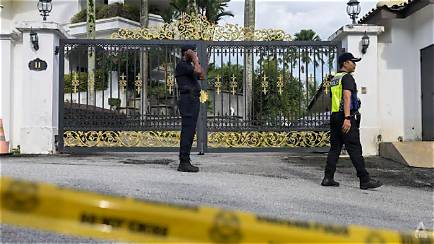
Former Malaysian Prime Minister Najib Razak has officially begun serving the remainder of his reduced corruption sentence under house arrest at his residence in Kuala Lumpur. This significant development follows a royal pardon granted to Najib and a recent court order that resolved a contentious dispute regarding his transfer from prison. Najib had previously served four years of his sentence related to the infamous 1MDB scandal, which involved the embezzlement of approximately $4.5 billion from the state investment fund.
Najib's house arrest is set to last until August 2028. However, it is important to note that this arrangement does not encompass a separate 15-year prison sentence that he is currently appealing. The 1MDB scandal has been a pivotal issue in Malaysian politics, leading to widespread public outrage and significant political repercussions. Najib's conviction in 2020 marked a historic moment in Malaysia's fight against corruption, as he became the first prime minister in the country to be found guilty of corruption after leaving office.
The political landscape in Malaysia has been notably affected by Najib's legal battles. Following the announcement of his house arrest, Transport Minister Anthony Loke resigned in protest, expressing his discontent with the decision to allow Najib to serve his sentence at home rather than in prison. Loke's resignation underscores the ongoing divisions within the Malaysian government regarding how to handle the fallout from the 1MDB scandal and the implications of Najib's legal status on the ruling coalition.
The 1MDB scandal has had far-reaching consequences, not only for Najib but also for Malaysia's international reputation. The scandal has drawn scrutiny from global financial institutions and has led to investigations in multiple countries. The U.S. Department of Justice has been involved in efforts to recover assets linked to the scandal, further complicating Malaysia's diplomatic relations.
As Najib begins his house arrest, the public's reaction remains mixed. Supporters argue that he has been unfairly targeted due to his political affiliations, while critics maintain that his actions have severely damaged Malaysia's integrity and governance. The ongoing legal proceedings and Najib's appeal against his additional sentence will likely continue to dominate headlines in the coming months.
In conclusion, Najib Razak's transition to house arrest marks a new chapter in a saga that has captivated Malaysia and the world. As the implications of the 1MDB scandal continue to unfold, the political ramifications of Najib's legal battles will undoubtedly shape the future of Malaysian politics.
Published by Banx Network. This article is part of the Banx decentralized media programme, powered by the BXE token on the XRP Ledger.