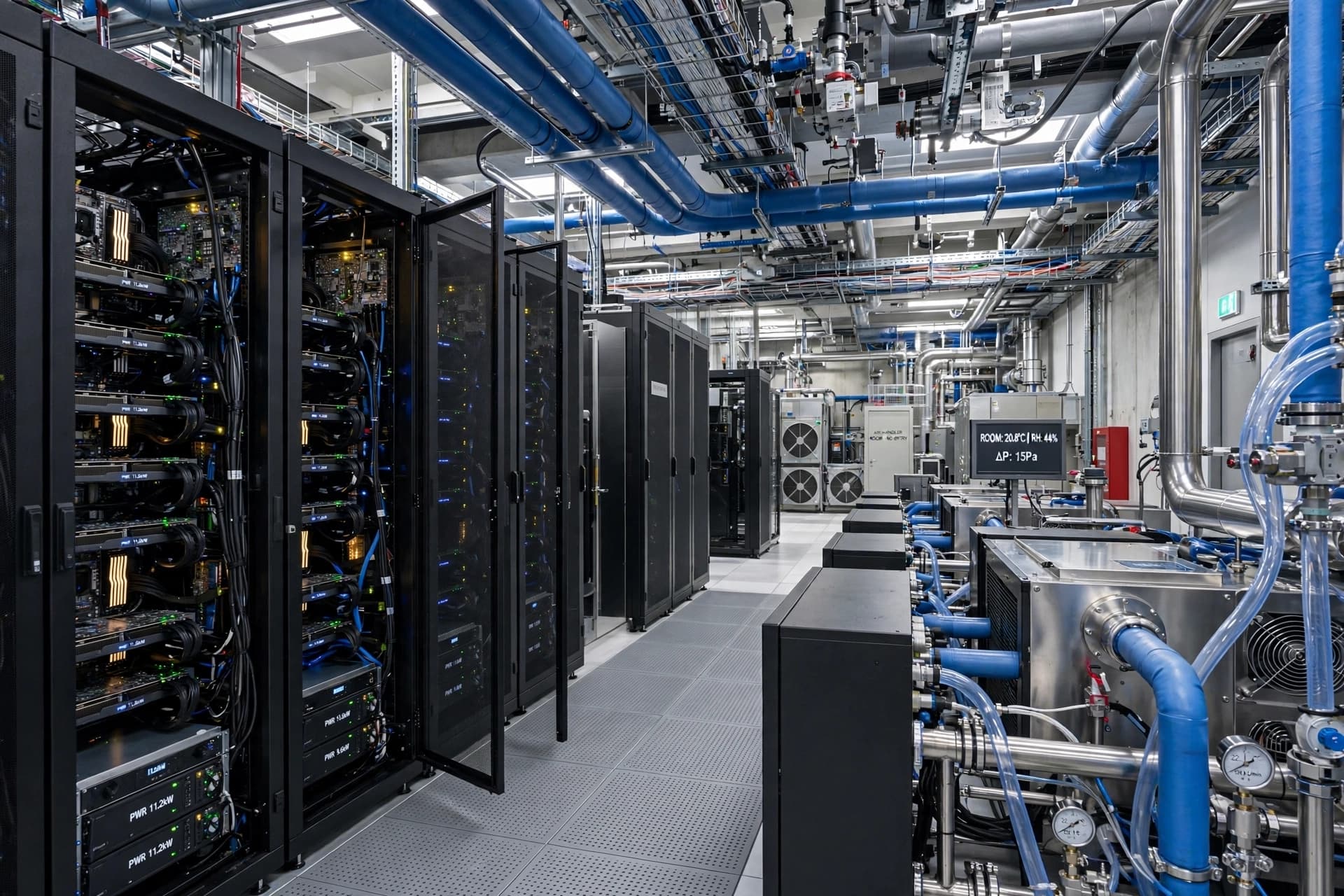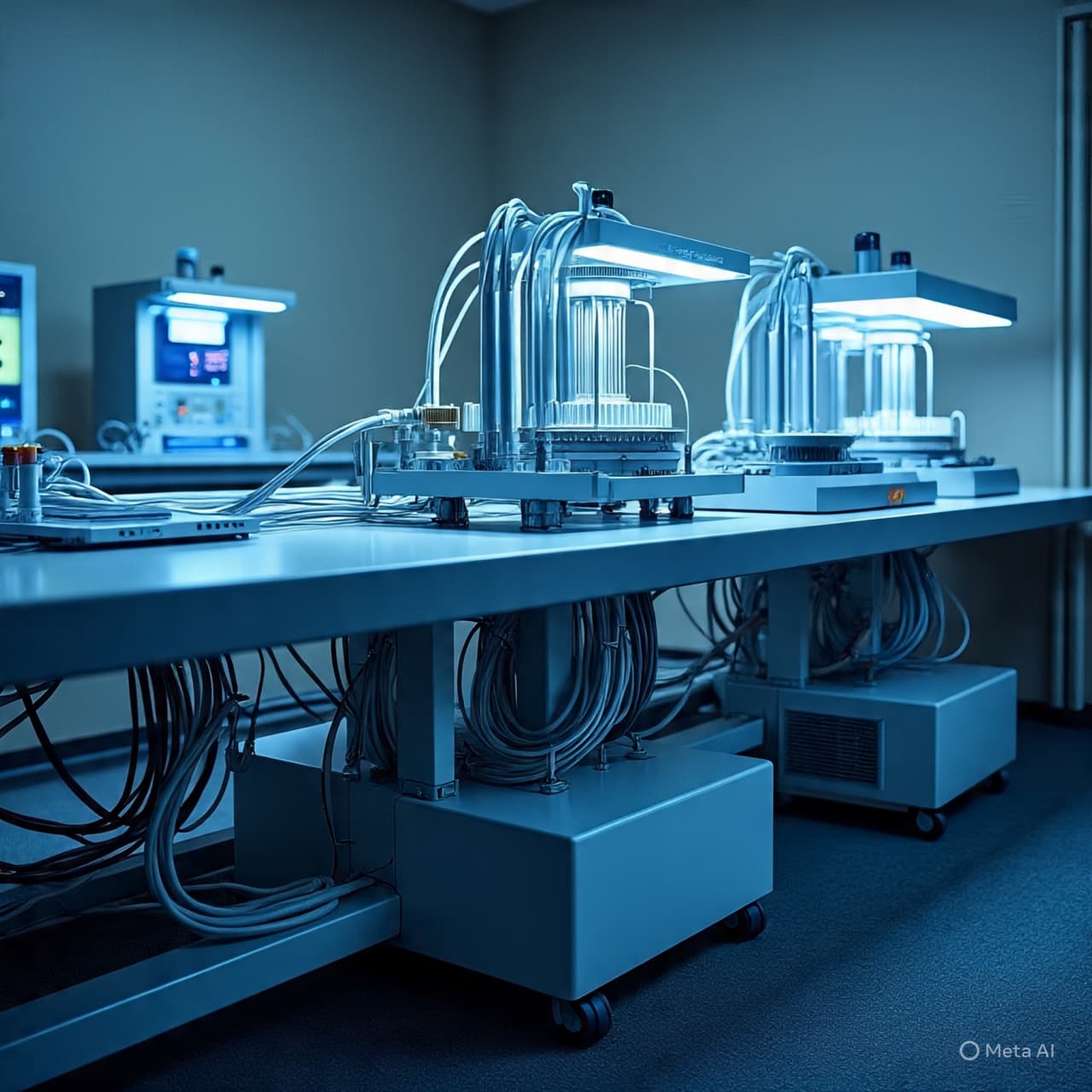
In laboratories where temperatures approach the edge of physical possibility, silence is more than absence of sound — it is precision. Metal chambers hum softly. Wires descend into cryogenic darkness. Inside, particles behave in ways that defy everyday intuition, flickering between states, holding information in fragile balance.
For decades, scientists have pursued a form of computing that could harness that strangeness. Quantum computers promise extraordinary speed for certain problems — modeling complex molecules, optimizing vast systems, breaking or strengthening cryptography. Yet the path has been uneven, constrained by instability and energy loss that disrupt delicate quantum states.
Now, researchers say they may have identified a rare metal alloy with properties that edge closer to what some call the “holy grail” of quantum computing: materials capable of supporting ultra-stable, energy-efficient quantum bits.
At the heart of the excitement lies superconductivity — the phenomenon in which electrical resistance drops to zero under specific conditions. In classical systems, resistance wastes energy as heat. In quantum systems, even small disturbances can collapse computation. A material that conducts electricity without loss and supports exotic quantum states could significantly improve coherence times, allowing qubits to remain stable longer.
The alloy under study appears to exhibit characteristics associated with topological superconductivity, a rare and highly sought-after state of matter. In such systems, quantum information can be encoded in ways that are inherently protected from certain types of noise. Theoretical physicists have long proposed that this approach could enable so-called topological qubits — devices that are more robust and less error-prone than many existing designs.
Experimental confirmation remains ongoing. Detecting topological states requires subtle measurements and careful replication across independent labs. Still, early results have generated cautious optimism. If validated, the material could reduce the need for complex error-correction protocols that currently consume significant computational overhead in quantum architectures.
The implications extend beyond speed. Today’s most advanced quantum processors require elaborate cooling systems and considerable energy to maintain operational stability. A material that supports near-lossless conduction and improved resilience could make scaling quantum hardware more practical and sustainable.
The search for such materials has spanned decades, involving layered semiconductors, nanowires, and engineered superconducting circuits. Many promising leads have faltered under closer scrutiny. Claims of breakthrough states have sometimes proven difficult to reproduce. For that reason, researchers are careful not to declare victory prematurely.
Yet the allure persists. Quantum computing remains one of the most ambitious frontiers in science and technology. Governments and private companies alike have invested billions into developing hardware that can surpass classical machines in specialized tasks. Each incremental discovery — a longer coherence time, a cleaner signal, a new material phase — nudges the field forward.
In the chilled quiet of experimental chambers, the alloy now being studied represents more than a compound of elements. It embodies a possibility: that the chaotic dance of quantum particles might be coaxed into reliable performance.
Whether this material ultimately fulfills its promise will depend on further validation and engineering refinement. But in a field defined by patience and precision, even the suggestion of a stable, low-energy quantum platform carries weight.
For now, the metal rests beneath layers of instrumentation, suspended between theory and application. And in that narrow space, the long pursuit of quantum computing’s elusive foundation continues — steady, deliberate, and still unfolding.
Published by Banx Network. This article is part of the Banx decentralized media programme, powered by the BXE token on the XRP Ledger.