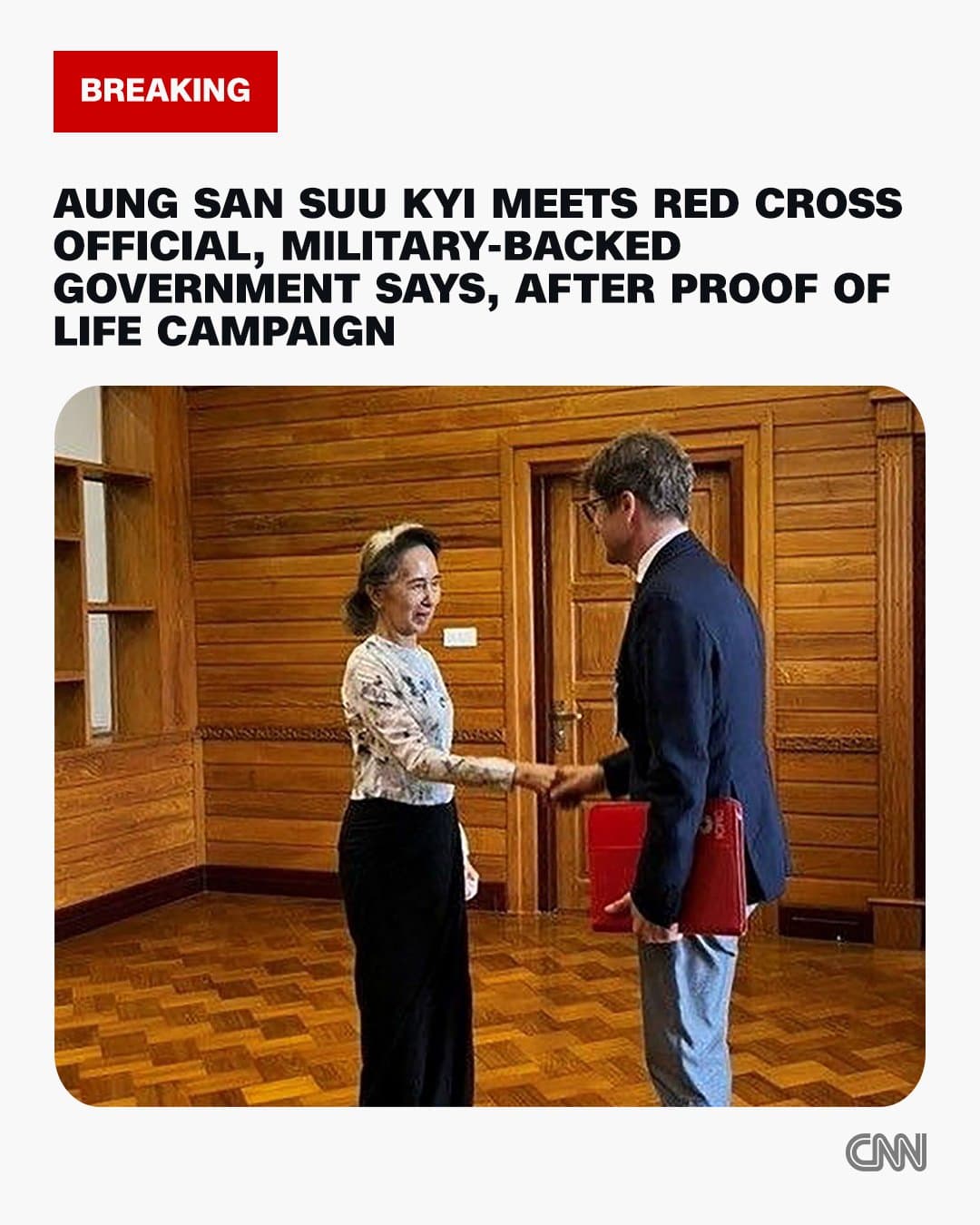
Myanmar's former civilian leader Aung San Suu Kyi has reportedly met with a representative from the International Committee of the Red Cross, marking one of her first known meetings with a foreign official since being detained following the military takeover. The meeting has drawn international attention because access to the Nobel Peace Prize laureate has remained extremely limited during her years in detention. The reported discussion comes amid continued international concern over Myanmar's humanitarian situation. Since the military assumed power, the country has experienced prolonged political instability, armed conflict and economic disruption. Millions of civilians have been affected by violence, displacement and shortages of essential services, while humanitarian organizations continue working to expand access to vulnerable communities. The International Committee of the Red Cross maintains neutrality in conflict zones and focuses on humanitarian assistance, detainee welfare and protection of civilians. Meetings between Red Cross officials and detainees are generally intended to assess humanitarian conditions rather than political developments. Aung San Suu Kyi remains a central figure in Myanmar's modern political history. While supporters continue calling for her release, the military government maintains legal proceedings against her under various charges. International governments and human rights organizations have repeatedly urged greater transparency regarding her treatment and broader political dialogue within Myanmar. Observers believe the meeting may represent a limited humanitarian development rather than a significant political breakthrough. Nevertheless, renewed international engagement could provide opportunities for additional humanitarian access and confidence-building measures if similar contacts continue. The crisis in Myanmar remains one of Southeast Asia's most pressing humanitarian challenges. International organizations continue advocating for peaceful dialogue, protection of civilians and expanded humanitarian assistance while encouraging diplomatic efforts to reduce violence. Although the long-term political outlook remains uncertain, humanitarian engagement remains an essential channel for supporting affected communities and maintaining communication during periods of prolonged instability.
Published by Banx Network. This article is part of the Banx decentralized media programme, powered by the BXE token on the XRP Ledger.