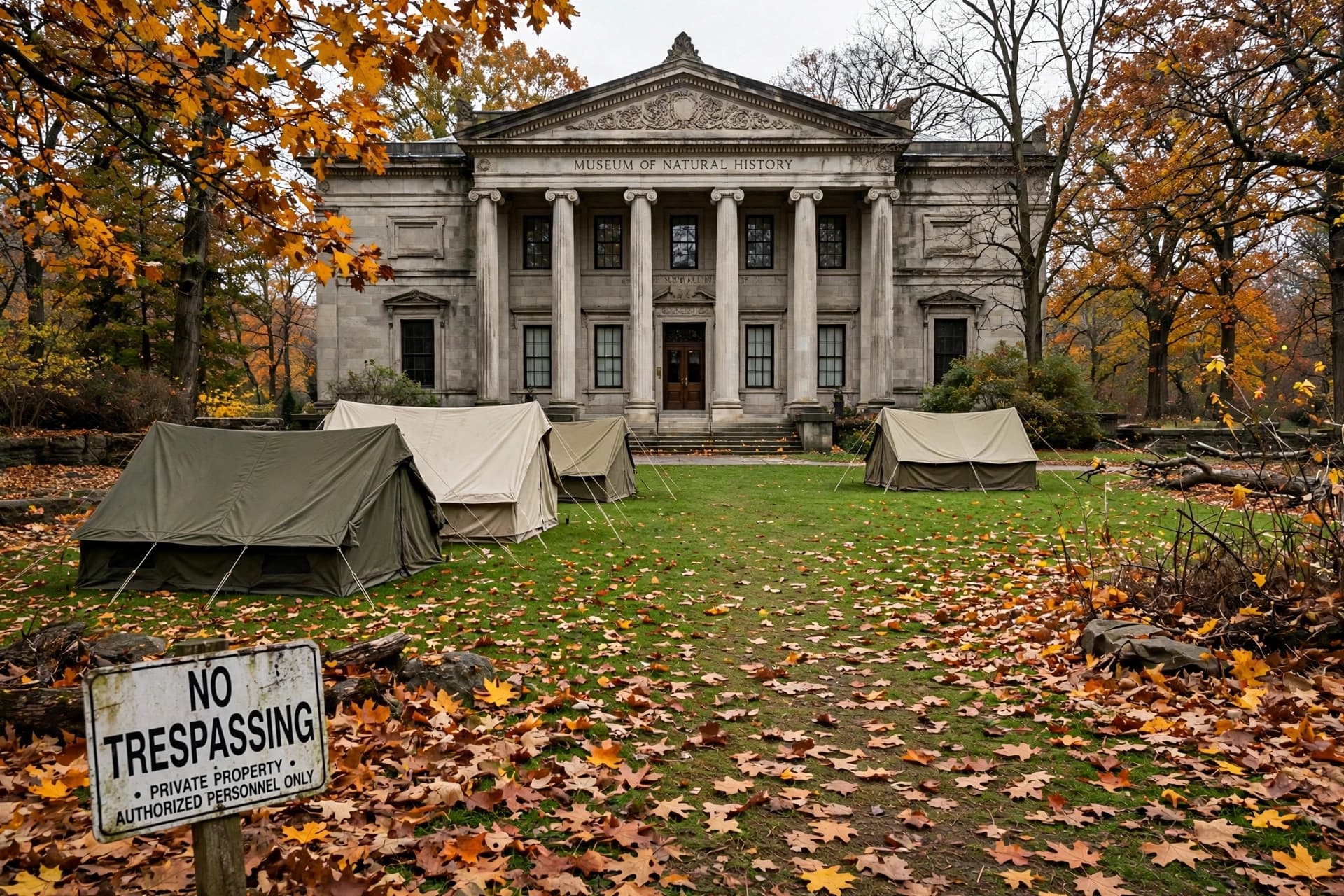
There is a particular tension that arises when a community institution becomes the frontline of a housing crisis—a tension between the obligation to maintain the property and the recognition that the people occupying it have nowhere else to go. In Oshawa, Ontario, that tension has taken the form of a municipal fine. The Oshawa Museum, a local heritage institution, is facing nearly $3,000 in city fines over homeless encampments on its property. The museum says it is caught between its responsibilities as a property owner and its compassion for people who have no shelter.
The encampments appeared on museum grounds earlier this year, as homelessness in Oshawa and across Durham Region has increased. The museum, which is located on a large property near the Oshawa Creek, became a site for people living in tents. The city has issued fines for property standards violations, including unsanitary conditions and debris. The museum has said it cannot control the encampments and that fining it for the presence of homeless people is not a solution to the crisis.
The situation is part of a broader challenge facing municipalities across Ontario. Homeless encampments have appeared in parks, under bridges, and on vacant lots as the cost of housing has risen and the availability of shelter space has shrunk. Cities have struggled to respond, balancing the need to maintain public spaces with the reality that people are living in them. Some cities have cleared encampments, prompting protests and legal challenges. Others have allowed them to remain while seeking longer-term solutions.
For the museum, the fines are a financial burden that adds to the challenges of operating a heritage institution. But the museum has also said it does not want to see the encampment residents displaced without a place to go. The city has said it is working to connect people with services and housing, but the process is slow and the need is immediate. The museum has asked for a meeting with city officials to discuss the situation and find a resolution.
The fines are a symptom of a larger problem. The housing crisis is not just about the cost of rent or the shortage of homes; it is about the people who fall through the cracks and end up living in tents on the grounds of a museum. The museum is not the cause of the crisis, and the fines are not the solution. But the situation has forced the museum, the city, and the community to confront a reality that is difficult to ignore. The encampments are there. The fines are accumulating. And the people who live in the tents are still there, waiting for something better.
AI Image Disclaimer: All images in this article are AI-generated and are intended for illustrative purposes only.
Sources: CBC News, Oshawa This Week, The Canadian Press
Published by Banx Network. This article is part of the Banx decentralized media programme, powered by the BXE token on the XRP Ledger.