There are weeks when the news from the worlds of science, media, and education seems to gather around a single theme: the question of how institutions adapt to change while holding fast to what matters. This week offered a cluster of such stories—a telescope mapping the universe’s earliest light, a public broadcaster reckoning with artificial intelligence, and universities honoring the teachers who shape their students. Each, in its own way, is a study in navigation: how to move forward without losing one’s bearings.
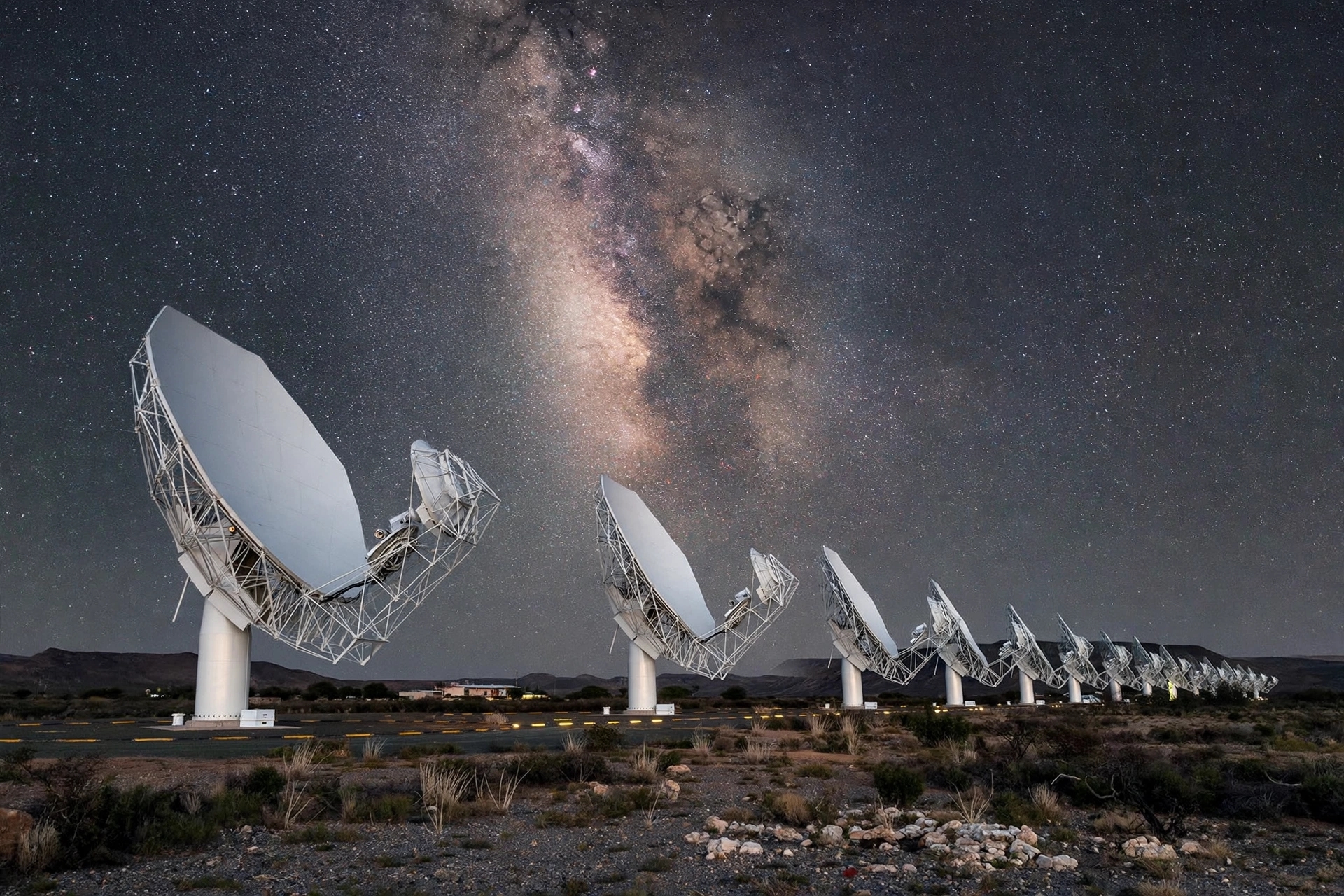
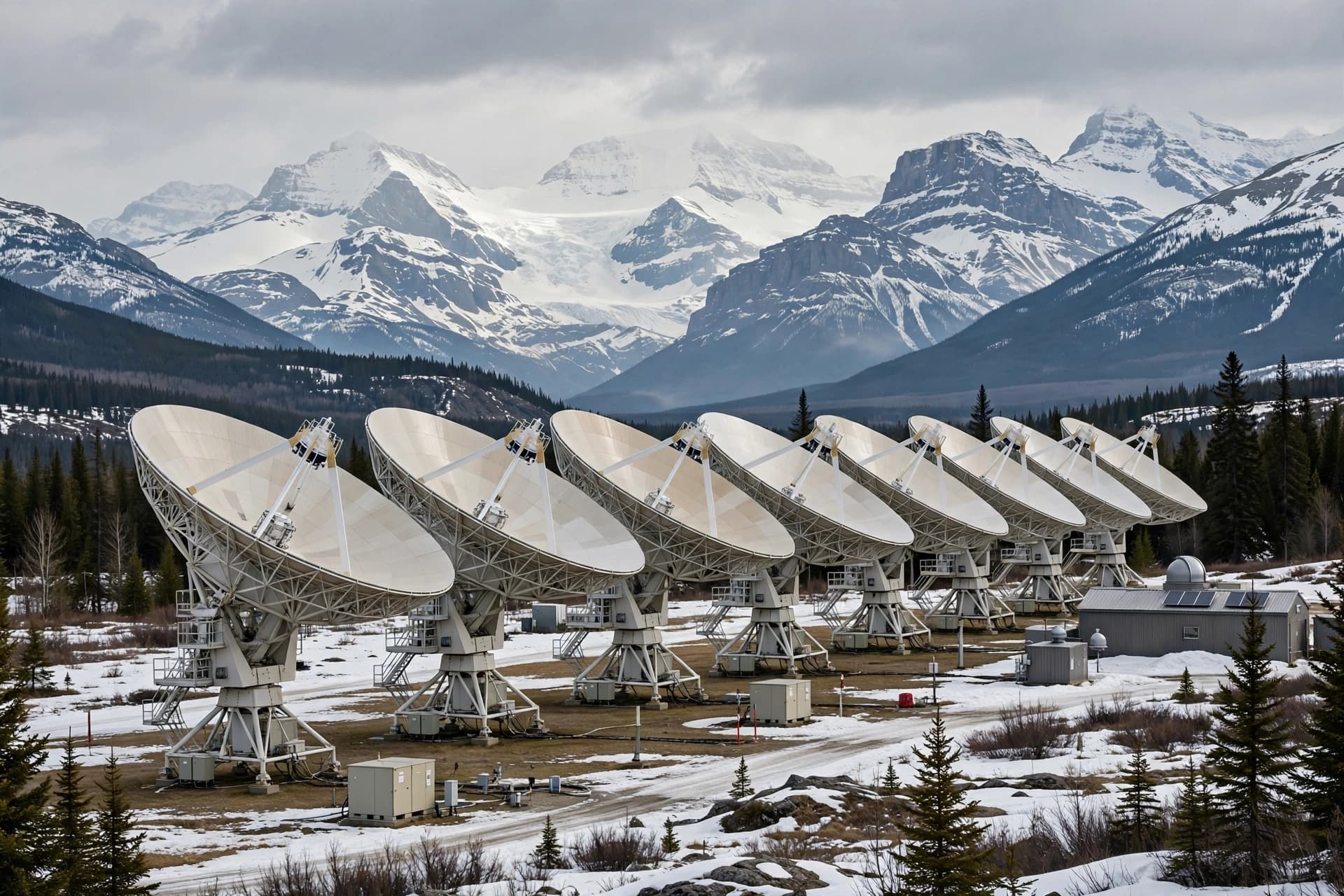
The Canadian Hydrogen Intensity Mapping Experiment, known as CHIME, has achieved a milestone that astronomers have anticipated for years. The radio telescope, located near Penticton, British Columbia, has for the first time detected the faint glow of hydrogen gas from the early universe using only its own data . This matters because hydrogen is the most common element in existence, and its distribution across space and time is a key to understanding dark energy—the mysterious force driving the universe’s accelerating expansion. Previously, CHIME had to cross-reference its observations with galaxy surveys conducted by other telescopes, a costly and time-consuming process. Now, it can map the cosmos independently .
The signal CHIME detected comes from a time when the universe was about five billion years old. Researchers spent more than a year testing the finding to ensure it was not a false alarm. “We worked very hard to convince ourselves that this wasn’t a false alarm,” said Dr. Arnab Chakraborty, a postdoctoral fellow at the University of Toronto who first proposed the analysis . “After all the tests, the signal remained.” The data indicates that roughly two percent of the hydrogen in the universe was in neutral atomic form at that time, consistent with other measurements . The finding opens a new, less expensive window onto dark energy and the evolution of galaxies.
Meanwhile, the Australian Broadcasting Corporation has been quietly developing its own approach to another kind of signal: the use of artificial intelligence in news production. According to a report from a Thai PBS fellow who visited the ABC in June, the broadcaster has built a custom AI interface called “ABC Assist” that operates on a secure, multi-cloud framework . The system processes the ABC’s archive of more than 1.6 million historical assets, generating contextual scene-by-scene metadata descriptions that allow producers to search for footage using natural language queries. Crucially, the infrastructure is governed by enterprise contracts that protect the broadcaster’s data sovereignty, ensuring its intellectual property is not used for public model training .
But the ABC’s approach is not merely technological. The visit report emphasized that the broadcaster maintains a strict policy prohibiting any audience-facing news content from being generated autonomously by AI. A pilot program uses ABC Assist to reformat radio news bulletins into digital text articles, but the entire workflow is bound by human oversight . The News Verify team, a specialized five-person unit, combines open-source intelligence, satellite mapping, and data forensics with traditional journalism, adhering to a rule requiring two independent, verified sources before any content is cleared for broadcast. Accuracy, the report noted, fiercely overrides speed .
These institutional adaptations are not confined to media and science. At the University of Wisconsin–Madison, the L&S Honors Program has announced its 2026 Distinguished Honors Faculty Award recipients, recognizing educators who have had a special impact as instructors, mentors, and supervisors of undergraduate research . The awardees include Chelsea Andrews, Tessa Conroy, Jelena Diakonikolas, Nike Gnanateja, Jonathan Martin, Marwa Shalaby, Audra Sterling, and Kate Walsh. The awards are based on student nominations, a reminder that the most meaningful recognition often comes from those who have been taught .
At the University of Iowa, five faculty members have been named recipients of the Hubbard-Walder Award for Excellence in Teaching: Theresa Bechtel, Stella Elias, Elizabeth Heineman, Brian Lai, and Jan Steyn . The award, conferred by the Council on Teaching, honors sustained excellence in the classroom and beyond. These are the quieter stories of institutional life—the ones that do not make headlines but shape the people who will go on to make them.
Taken together, this week’s developments suggest a pattern. Institutions—whether telescopes, broadcasters, or universities—are learning to adapt to new tools and new conditions without abandoning their core purposes. CHIME expands its view of the cosmos. The ABC integrates AI without surrendering editorial control. Universities honor the teachers who make their missions real. Each is a small act of navigation, a way of moving forward while keeping sight of what matters.
AI Image Disclaimer: The images in this article are AI-generated and are provided for illustrative purposes only
Published by Banx Network. This article is part of the Banx decentralized media programme, powered by the BXE token on the XRP Ledger.