
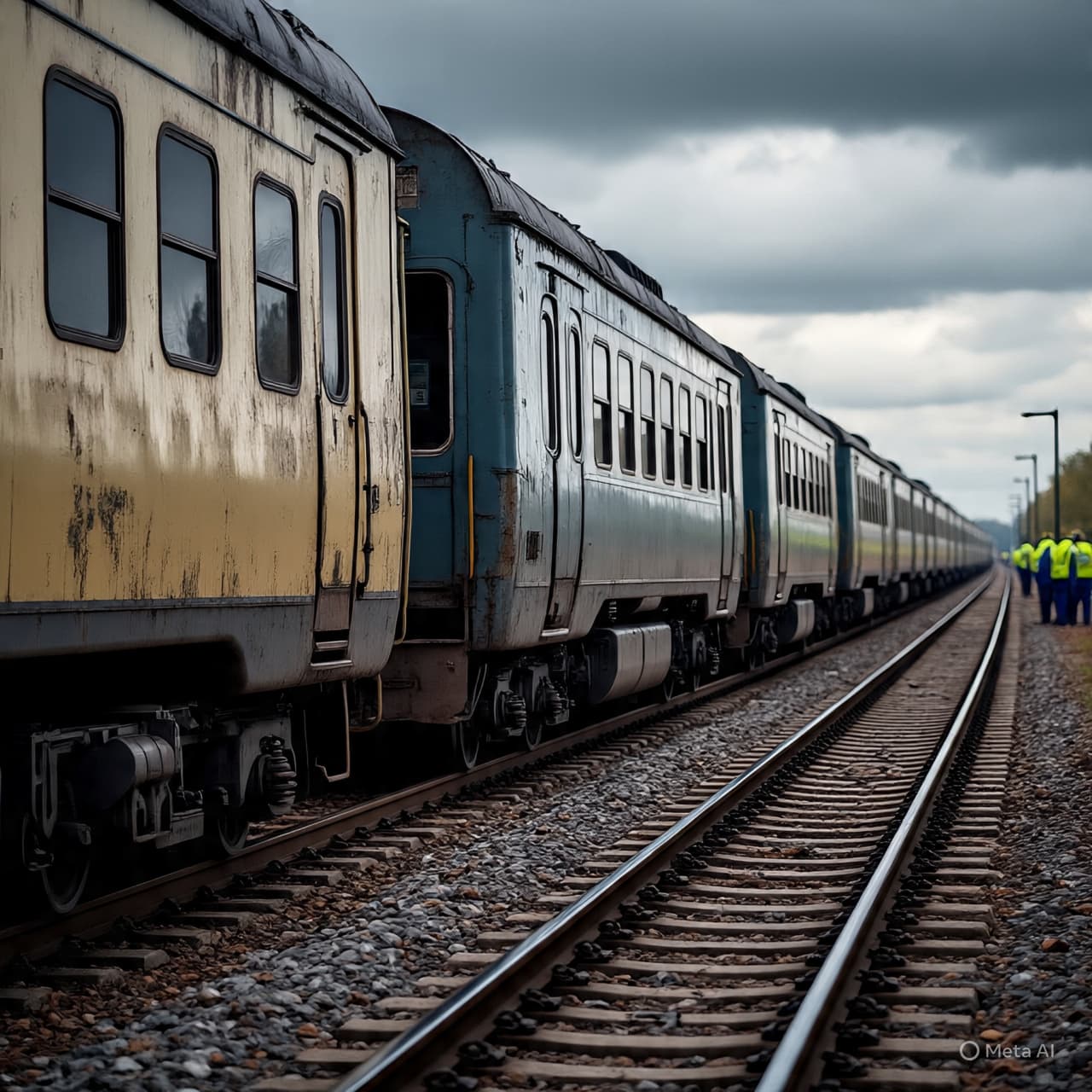
Key Highlights
- Attack Details:A Russian drone strike on a civilian train in Ukraine resulted in at least five fatalities and multiple injuries.
- Presidential Response:President Zelensky condemned the attack as an act of terrorism, emphasizing the targeting of civilians.
- Broader Implications:The incident underscores the risks faced by civilians in conflict zones, blurring lines between military and civilian targets.
On a typical day, trains symbolize progress and connection, ferrying people across distances and linking lives. However, in Ukraine, this symbol was shattered when a civilian train was struck by Russian forces, resulting in a tragic loss of life. Reports indicate that at least five individuals were killed and several others injured in this attack, which occurred far from the front lines of the ongoing conflict.
Ukrainian officials confirmed that the train was carrying civilians, reinforcing the notion that this was not a military target. President Volodymyr Zelensky characterized the strike as an act of terrorism, highlighting the deliberate nature of the attack aimed at instilling fear among the population. This incident is part of a troubling pattern of violence that has increasingly blurred the lines between combatants and non-combatants in the war.
The train was on a routine route, part of a vital rail network that has served as a lifeline for evacuations and humanitarian aid throughout the conflict. The attack not only disrupted the journey of those onboard but also served as a stark reminder of the vulnerabilities inherent in civilian infrastructure during wartime. Emergency responders quickly arrived at the scene, working to rescue survivors from the wreckage of twisted metal and shattered glass, a scene that transformed the ordinary into chaos in an instant.
Zelensky's condemnation of the attack reflects a broader concern about the erosion of protections for civilians in conflict. By labeling the strike as terrorism, he emphasizes that such actions are not just violations of wartime norms but part of a systematic effort to undermine the morale of the Ukrainian people. This incident echoes previous attacks on civilian structures, including residential buildings and hospitals, which have drawn international condemnation and raised questions about the rules of engagement in modern warfare.
As investigations into the attack continue, the implications of this strike resonate deeply within Ukrainian society. It serves as a reminder that even the simplest acts of movement—traveling to work, visiting family, or simply commuting—can carry significant risks in a war-torn nation. The railways may still operate, but each journey now carries the weight of uncertainty and fear.
In the broader context of the conflict, this incident highlights the human cost of war, which is often measured not just in territory gained or lost, but in lives interrupted and futures altered. The train will eventually be repaired, and services will resume, but the psychological scars of such attacks linger, reminding civilians that their everyday lives can be transformed into targets at any moment.
As the situation evolves, the international community watches closely, hoping for a resolution that prioritizes the safety and security of civilians caught in the crossfire of this ongoing conflict. The need for accountability and adherence to international humanitarian law has never been more pressing, as the world grapples with the realities of modern warfare.
Published by Banx Network. This article is part of the Banx decentralized media programme, powered by the BXE token on the XRP Ledger.



