Santiago, Chile—A massive wall of mud and shattered rock tore across a vital Andean mountain pass. Unseasonal heavy rains triggered the slope failure, burying a maintenance convoy operating along the treacherous route. Highway authorities confirmed one worker died instantly when his heavy grader was swept into a deep ravine. The slide severed the primary trade artery connecting the high-altitude region to the capital.
Maintenance teams were attempting to clear minor rockfalls when the main mountain flank gave way. The sheer volume of wet earth overwhelmed the heavy machinery in seconds. Surviving workers abandoned their vehicles and fled on foot toward the nearest concrete tunnel. The landslide destroyed several miles of reinforced asphalt and guardrails.
Regional civil protection agencies struggled to deploy rapid response units through the impassable terrain. Heavy cloud cover and freezing rain blocked aerial reconnaissance flights. Ground teams moved cautiously up the steep inclines, navigating fresh fissures opening across the remaining pavement. The unstable slopes threatened to release secondary slides onto the recovery crews below.
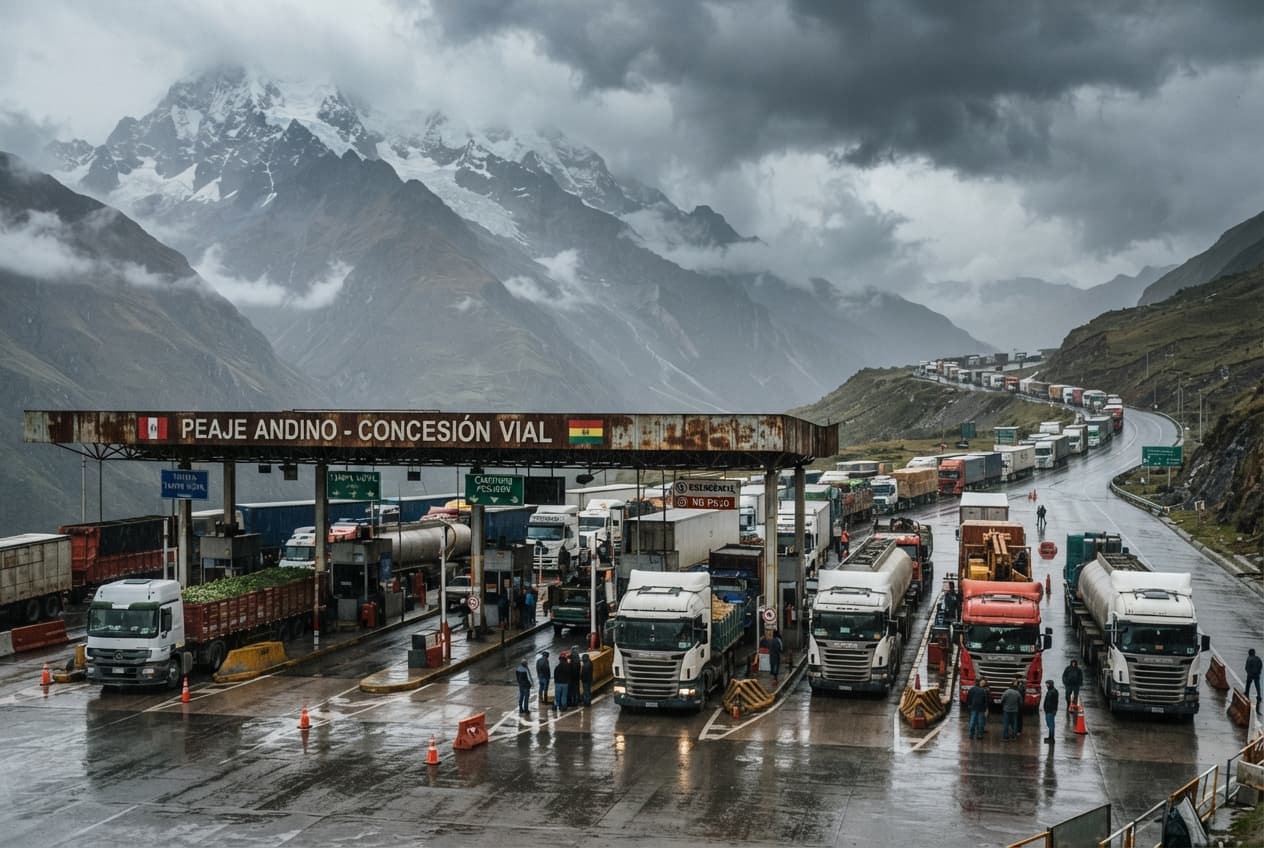
Geotechnical engineers had surveyed the route weeks prior, noting dangerous soil saturation levels. Budget constraints forced the highway department to delay the installation of new steel retention nets. That neglected section of the mountainside collapsed entirely under the weight of the abnormal rainfall. Commuter and freight traffic piled up for miles at the lower toll plazas.
Transport Minister Carolina Reyes addressed the media from a makeshift crisis center near the mountain base. "The geological conditions remain highly volatile across the entire pass," Reyes stated. "Our crews face a dynamic and lethal environment up there. We are holding all civilian traffic indefinitely until the terrain stabilizes."
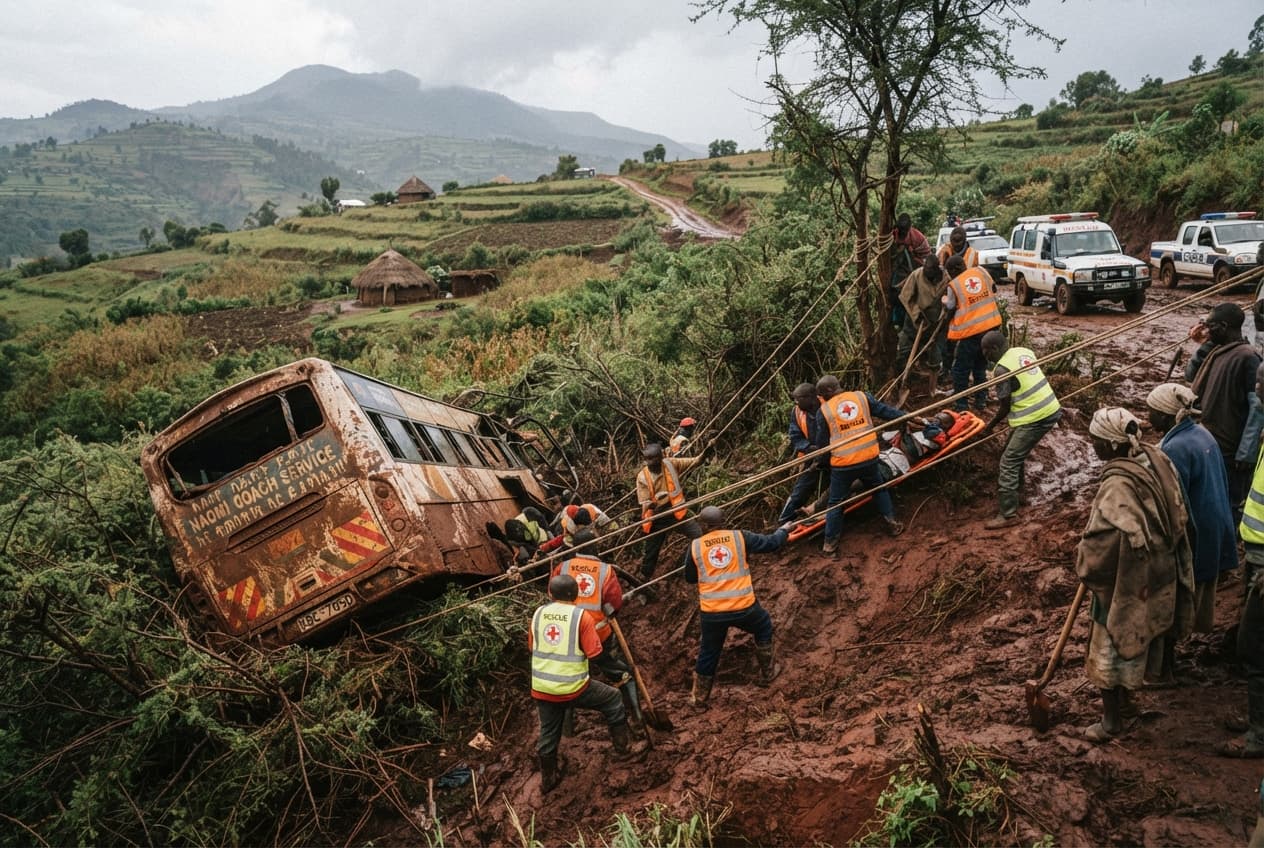
Rescue personnel reached the crushed grader using heavy winches and industrial cutting gear. They extracted the worker's remains from the deformed cabin after three hours of intense manual labor. Medical staff treated two other crew members for severe concussions and broken limbs at the tunnel entrance. The injured men were transported down the mountain via heavily armored snowcats.
Meteorologists forecast an additional 48 hours of heavy precipitation across the cordillera. Water runoff carved deep channels into the exposed earth, weakening the foundations of several structural bridges along the route. Engineers installed laser monitoring sensors to track the creeping movement of the upper rock faces. Transport operators braced for massive logistical disruptions affecting cross-border trade.
Police barricades remained locked down across all access points to the mountain pass. Heavy excavation equipment idled at the safe zone, waiting for clearance to approach the primary debris field. Fresh mud began spilling over the concrete barriers near the tunnel entrance. The rain continued to fall heavily against the damaged slope.
Published by Banx Network. This article is part of the Banx decentralized media programme, powered by the BXE token on the XRP Ledger.