Quito, Ecuador—A violent landslide swept a residential passenger bus off a steep mountain pass near Quito today, killing two people and injuring nine others. The transit vehicle was traveling along a high-altitude highway route when a hillside collapsed above the roadway. Thousands of tons of liquefied mud, clay, and heavy boulders slammed into the side of the bus, forcing it over the outer shoulder.
The vehicle tumbled down a steep seventy-meter ravine before wedging against dense vegetation and rock outcroppings. Rescue crews deployed rappelling ropes and specialized winch equipment to descend the mud-covered slope toward the mangled chassis. Paramedics confirmed two passengers died instantly from extreme impact injuries, while nine survivors were pulled from the wreckage with varying degrees of trauma.
Rescue teams worked under continuous rain and falling rock hazards to extricate trapped passengers from inside the crushed cabin. Emergency responders stabilized the injured along the slippery ravine floor before hauling them up to the roadway using basket stretchers. Ambulances transported the wounded to central medical centers across Quito, with three individuals listed in critical condition.
Highway authorities immediately halted all traffic along the corridor, as secondary soil movements threatened frontline rescue personnel. "The hillside buckled without warning after days of continuous, heavy rain across the pass," reported Captain Jorge Silva of the transit rescue unit. "The sheer force of the mud torrent completely overpowered the bus as it navigated the curve."
Heavy transit corridors surrounding Quito cross fragile geological formations subject to rapid soil saturation during rainy periods. Unstable slopes above paved routes frequently lack retaining walls or drainage catchment systems, exposing commercial and passenger traffic to sudden mud slides. Local transit unions have repeatedly demanded enhanced slope monitoring along high-risk mountain routes.
Heavy earth-moving machinery arrived at the ridge late this afternoon to clear thick mud deposits blocking the roadway above the crash site. Highway police established roadblocks several kilometers back, redirecting intercity bus traffic onto longer, lower-elevation detours. Specialized tow cranes were positioned along the highway shoulder to prepare for vehicle recovery operations.
Forensic personnel completed body recovery efforts at the base of the ravine before nightfall. Transport ministry inspectors launched an investigation into highway safety protocols and slope maintenance records for the mountain pass sector. Local officials urged motorists to avoid high-altitude mountain routes during ongoing downpours.
Crews installed floodlights along the mountain ridge as emergency workers concluded primary search-and-rescue sweeps around the wreckage. Engineers are evaluating whether additional slope sections above the highway pose an immediate collapse hazard to recovery workers below.
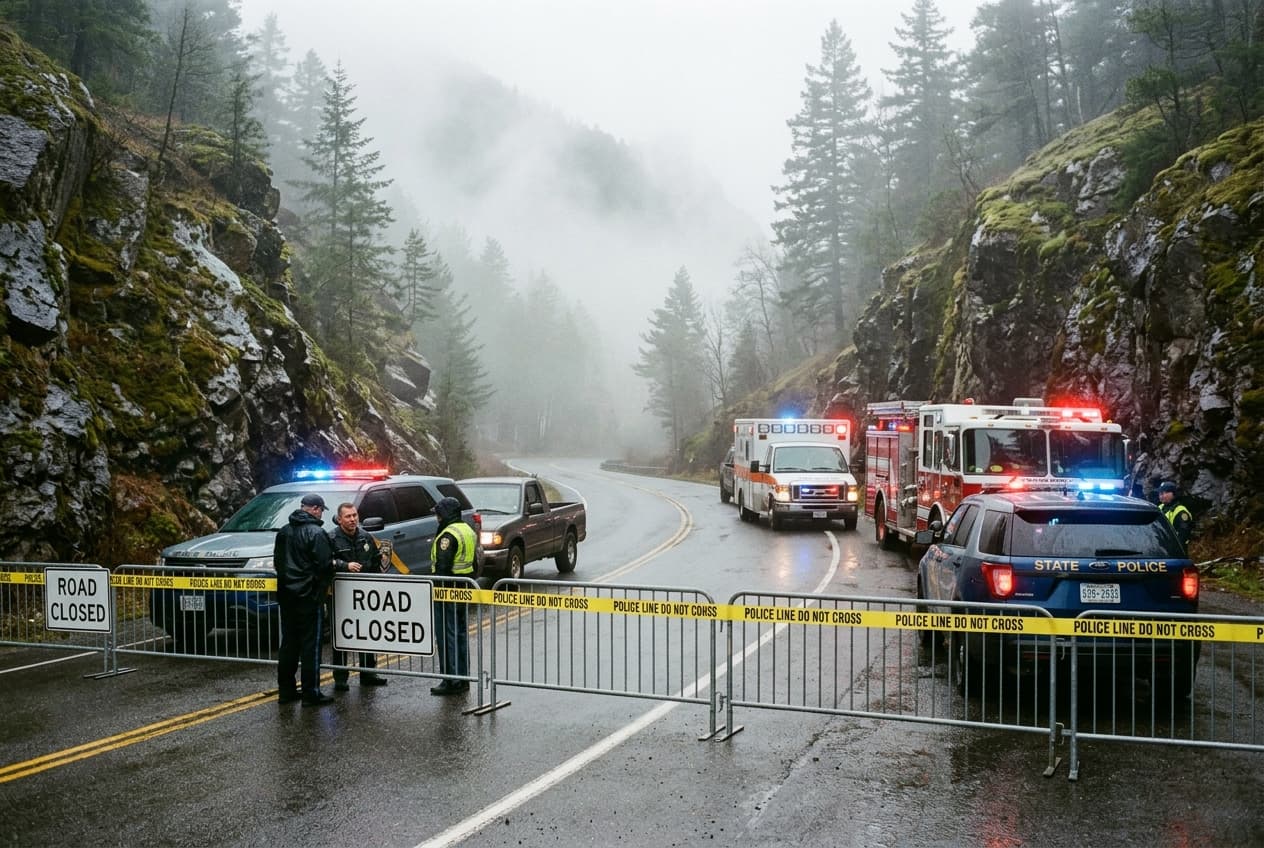
The mountain pass remains closed to all vehicular traffic while heavy equipment clears the road surface. Police patrols maintain a perimeter along the highway ridge as geotechnical teams inspect the upper cliff line.
Published by Banx Network. This article is part of the Banx decentralized media programme, powered by the BXE token on the XRP Ledger.