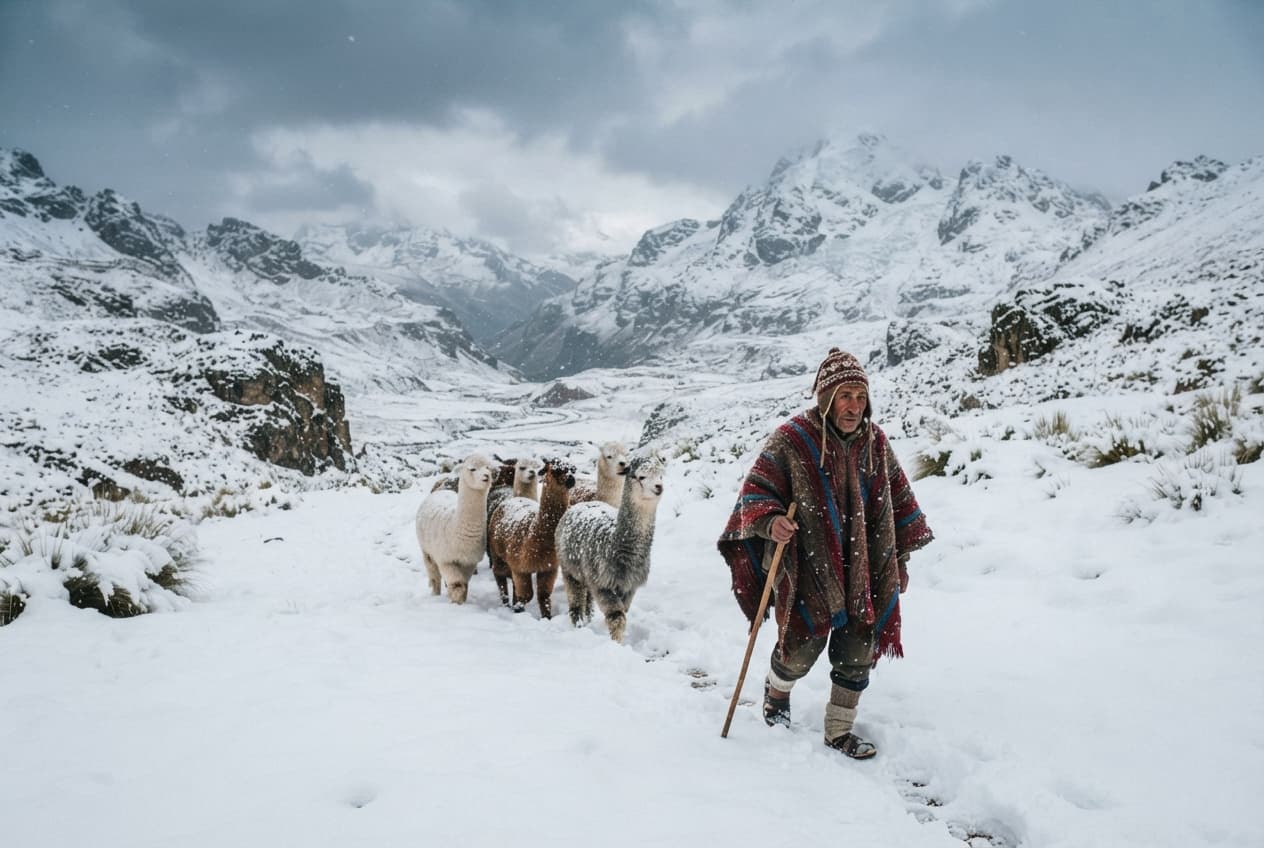
Cusco, Peru—Unseasonal Andean frost and heavy blinding snowfall trapped vulnerable rural herders across high-altitude southern Peru on September 28, 2026, resulting in one confirmed hypothermia fatality and widespread distress among isolated pastoral communities. A sudden drop in barometric pressure drove temperatures down below minus fifteen Celsius across elevations exceeding four thousand meters, catching farming families unprepared during livestock grazing activities. Regional health directorate officials confirmed that rescue patrols are deployed to locate isolated shepherd families stranded in remote ravines.
In the high Puna grasslands of Puno department, thick snowdrifts piled up over a meter deep, cutting off traditional stone dwellings and freezing water sources solid. Local municipal authorities recovered the body of a sixty-two-year-old alpaca herder who succumbed to acute hypothermia while attempting to secure his scattered flock during the blizzard. Emergency response coordinator Mario Huanca noted that freezing winds and zero visibility severely hampered early morning extraction efforts by local police squads.
Livestock survival rates are plunging rapidly as sub-zero ice sheets lock pastures beneath impenetrable crusts, preventing alpacas and llamas from reaching forage. Pastoral cooperatives report hundreds of newborn crias dying from exposure overnight as makeshift stone corrals fail to block the bitter alpine gales. Agrarian ministry representatives announced emergency feed distribution plans, though impassable snow-blocked mountain passes continue to delay convoy transport.
Rural medical outposts in high-altitude provinces report treating numerous cases of acute respiratory infections and severe frostbite among vulnerable elderly residents. Stocks of basic antibiotics, bronchodilators, and thermal blankets are running critically low at remote district clinics. Public health nurses struggle to reach patients as frozen roads remain treacherous for standard wheeled vehicles.
Transportation networks connecting regional highland hubs to isolated farming hamlets remain entirely paralyzed by deep snowpack accumulation. Commercial truck transport carrying essential fuel and food supplies is parked in long queues along high mountain passes awaiting snowplow clearance. Department of transportation crews deployed rotary snowblowers to carve single-lane tracks through high mountain drifts.
Meteorological service analysts attribute the extreme weather anomaly to an intense polar air influx sweeping northward across the high Andean plateau. Forecast models indicate that freezing nighttime temperatures will persist for at least three consecutive nights across the southern cordillera. Regional authorities maintained yellow alert levels for all provinces situated above three thousand eight hundred meters elevation.
Power distribution networks across two highland districts experienced localized failures following ice accumulation snapping low-voltage rural lines. Rural community members rely on traditional dried dung fuel for primitive indoor heating as commercial propane deliveries remain suspended. Hospital administrators in regional provincial centers maintain continuous heating using emergency backup systems.
Search and rescue units continue combing through remote grazing sectors under clear but freezing skies as night falls over the plateau. Command headquarters coordinate satellite phone check-ins with remote community leaders to assess ongoing emergency requirements. Response teams prepare for expanded deployment of veterinary and medical supplies at first light.
Published by Banx Network. This article is part of the Banx decentralized media programme, powered by the BXE token on the XRP Ledger.