
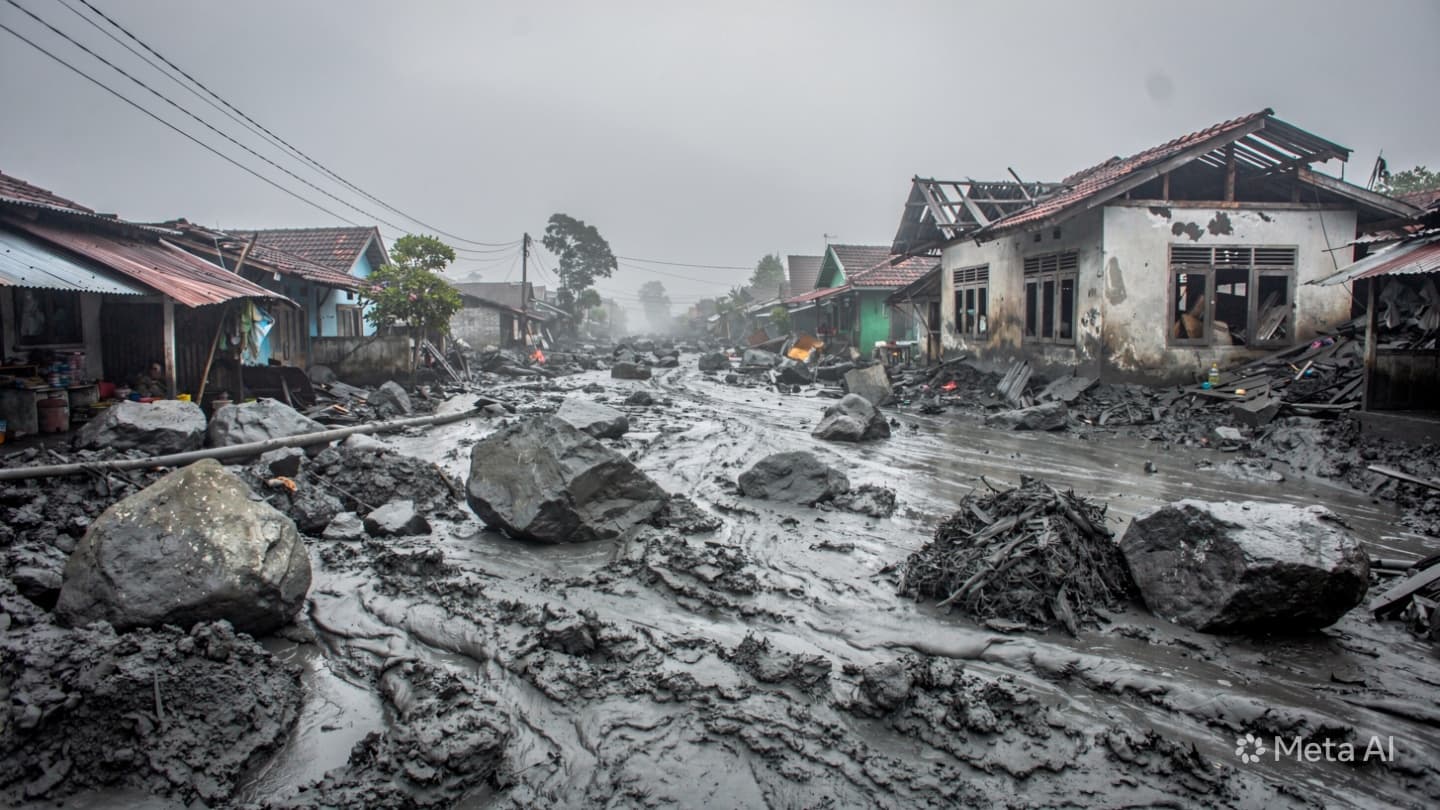
Key Highlights
- Date of Incident:June 11, 2026, marked by heavy rainfall triggering a lahar.
- Casualties:Five villagers confirmed dead, with three others hospitalized.
- Evacuations:Over 1,200 families ordered to evacuate from the danger zone.
On June 11, 2026, heavy rainfall on the slopes of Mount Marapi unleashed a catastrophic lahar, resulting in the tragic deaths of five villagers in West Sumatra. The intense downpour, which measured over eighty millimeters in just two hours, remobilized loose volcanic material from previous eruptions, creating a torrent of cold lava and ash that surged downriver and devastated a hillside agricultural settlement.
The victims were trapped in their homes as the fast-moving mud wall crashed through concrete walls, filling their living spaces with debris in mere seconds. Rescue operations, involving military personnel and local volunteers, faced significant challenges as they worked to extract the bodies from the dense debris. Three other residents suffered severe injuries and were airlifted to a hospital in Bukittinggi for urgent medical care.
The volcanic monitoring post reported that the lahar's rapid formation was exacerbated by the heavy rainfall, which transformed the volcanic ash into a viscous mud capable of carrying large boulders. This sudden surge not only destroyed homes but also obliterated two major bridges, isolating several high-altitude farming communities from essential transport routes.
As the aftermath unfolded, thick gray ash continued to fall across the valleys surrounding Mount Marapi, drastically reducing visibility and complicating rescue efforts. Local authorities expanded the exclusion zone to six kilometers from the volcano's crater, mandating the evacuation of over 1,200 families. Temporary shelters are being established in government sports complexes to accommodate those displaced by the disaster.
Farmers returning to the area to rescue livestock expressed frustration over the lack of warning systems along the river. They reported that the lahar arrived with little warning, leaving them insufficient time to escape to higher ground. In response, the local volcanology agency defended its monitoring capabilities, explaining that rain-triggered lahars can develop far from the summit without detection by standard seismometers.
Logistical challenges have arisen as emergency teams work to deliver food and clean water to displaced residents. Thick layers of volcanic silt have obstructed main roads, causing several emergency vehicles to become stuck. The local water authority has also shut down distribution networks due to contamination from fine volcanic ash, further complicating relief efforts.
Experts warn that the threat from Mount Marapi is far from over. Independent geological analysts indicate that the risk of secondary mudflows will persist for months, even if volcanic activity ceases. The provincial government has imposed a ban on agricultural and sand-mining activities in the affected river valleys until further notice to mitigate risks.
The ministry of energy and mineral resources has not provided a timeline for when the evacuated areas will be safe for resettlement. Search operations for potential additional victims are ongoing, contingent on weather conditions. Forensic teams are working diligently to identify the recovered bodies before they can be released for traditional burials, ensuring that families can mourn their losses appropriately.
Published by Banx Network. This article is part of the Banx decentralized media programme, powered by the BXE token on the XRP Ledger.



